Jul 14, 2026 Industry Insights
Global Sourcing in 2026: Trade Shifts, Supply Chain Realignment, and Why China Still Matters More Than Ever
Geopolitical tensions, tariff reshuffling, and supply chain realignment are reshaping global procurement in 2026. Here's what every sourcing professional needs to know about China's evolving role.
Global Sourcing in 2026: Trade Shifts, Supply Chain Realignment, and Why China Still Matters More Than Ever
In 2026, the question is no longer "should I source from China?" It's "how should I source from China in a world that has fundamentally changed?"
The last five years have reshaped global trade more dramatically than any period since the Second World War. Pandemic disruptions, escalating US-China technology competition, tariff realignments under shifting administrations, the rise of "de-risking" as a policy framework, and the emergence of Southeast Asia as a manufacturing alternative — all of these forces have converged to create a sourcing landscape that looks radically different from a decade ago.
Yet here is the paradox: despite all the talk of decoupling and diversification, China's share of global manufacturing output remains above 30% — nearly as high as the next nine countries
combined. Its export volumes have continued to grow. Its industrial ecosystem remains the most vertically integrated on the planet.
The truth is more nuanced than either the "China is finished" or "China is unstoppable" narratives suggest. In 2026, successful global sourcing requires understanding a complex, multi-polar landscape — and knowing exactly where China fits within it.
The Macro Forces Reshaping Global Sourcing in 2026

1. The "De-Risking" Era Has Replaced "Decoupling"
The shift in language from "decoupling" to "de-risking" — first adopted by the European Union and later echoed by other major economies — is not just semantics. It reflects a pragmatic
recognition that total decoupling from China is neither feasible nor desirable for most industries.
What this means practically:
- Critical sectors (semiconductors, advanced AI hardware, defense-related technologies) face genuine restrictions and screening
- Consumer goods, industrial components, home products, and non-strategic manufacturing face minimal direct disruption
- The regulatory burden has increased: more documentation, more compliance checks, longer customs clearance times for certain categories
- Companies are maintaining China operations while building secondary supply lines — not replacing one with the other
The sourcing implication: For 80% of products — consumer electronics, home goods, hardware, outdoor equipment, lifestyle products — China remains the most cost-effective, highest-quality sourcing destination. The key is working with partners who understand the compliance landscape and can navigate it efficiently.
2. Tariff Policy: A New Layer of Complexity
Tariff policy has become a strategic variable that sourcing professionals must monitor continuously. The 2024 US election brought renewed attention to trade policy, and regardless of
administration, the trajectory is toward more selective, targeted tariffs rather than blanket increases.
Key developments to watch:
- Section 301 tariffs on Chinese goods — periodically reviewed, with exclusions granted and removed based on supply chain impact assessments
- Anti-circumvention measures — tighter enforcement against rerouting goods through third countries
- De minimis rule changes — proposed changes to the $800 duty-free threshold that could affect small-package e-commerce
- Cross-border VAT enforcement — stricter collection on e-commerce imports in the EU and UK
The sourcing implication: Tariff management is now a core competency of sourcing, not an afterthought. The right sourcing partner helps with HS code classification, free trade agreement utilization, and strategic routing — turning tariff complexity from a cost center into a competitive advantage.
3. Southeast Asia Rises — But Not as a Replacement
Vietnam, Thailand, Indonesia, and India have all grown their manufacturing bases significantly. Foreign direct investment into these countries has surged, particularly in electronics assembly, textiles, and basic manufacturing.
But the reality is more nuanced than headlines suggest:
Metric | China | Vietnam | India | Thailand |
|---|---|---|---|---|
Manufacturing value-add (global share) | ~30% | ~0.8% | ~3% | ~1% |
Industrial ecosystem depth | Complete | Assembly-focused | Growing but fragmented | Niche strengths |
Infrastructure quality | World-class | Improving, inconsistent | Major gaps remain | Good for certain zones |
Labor cost advantage | Rising but productivity-adjusted | Lower cost, lower productivity | Lower cost, mixed skill base | Competitive in specific sectors |
Speed to market | Fastest iteration cycles | Limited by supply chain depth | Slower, more bureaucratic | Moderate |
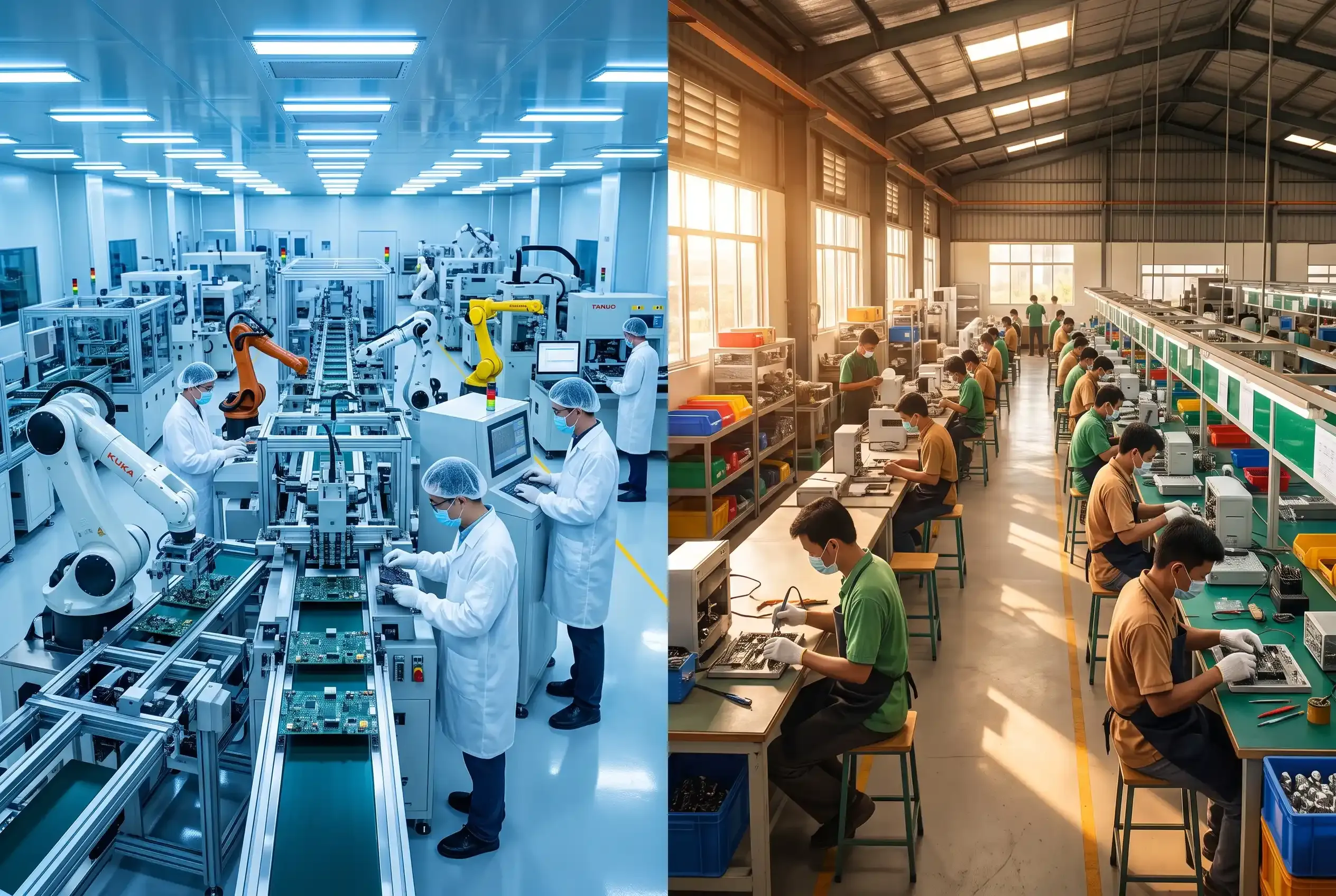
The sourcing implication: Southeast Asia is an excellent complement to China sourcing — particularly for simple assembly, textile-based products, and tariff-sensitive categories. But for products requiring complex supply chains, tight tolerances, rapid iteration, or deep industrial expertise, China's ecosystem remains irreplaceable. The winning strategy is dual-sourcing: leveraging China for complex, quality-critical products while using secondary markets for simpler, tariff-sensitive categories.
4. Technology and Supply Chain Visibility
Technology is transforming how cross-border sourcing works. In 2026, the companies that succeed are those with real-time visibility into their supply chains.
Key technological shifts:
- AI-powered supplier matching — machine learning platforms that match product specifications to factory capabilities with increasing accuracy
- Real-time production monitoring — IoT sensors and live video feeds that give buyers visibility into factory floors without being there physically
- Digital quality management — automated defect detection using computer vision, replacing random sampling with continuous inspection
- Blockchain for compliance — immutable audit trails for certifications, material sourcing, and ethical compliance
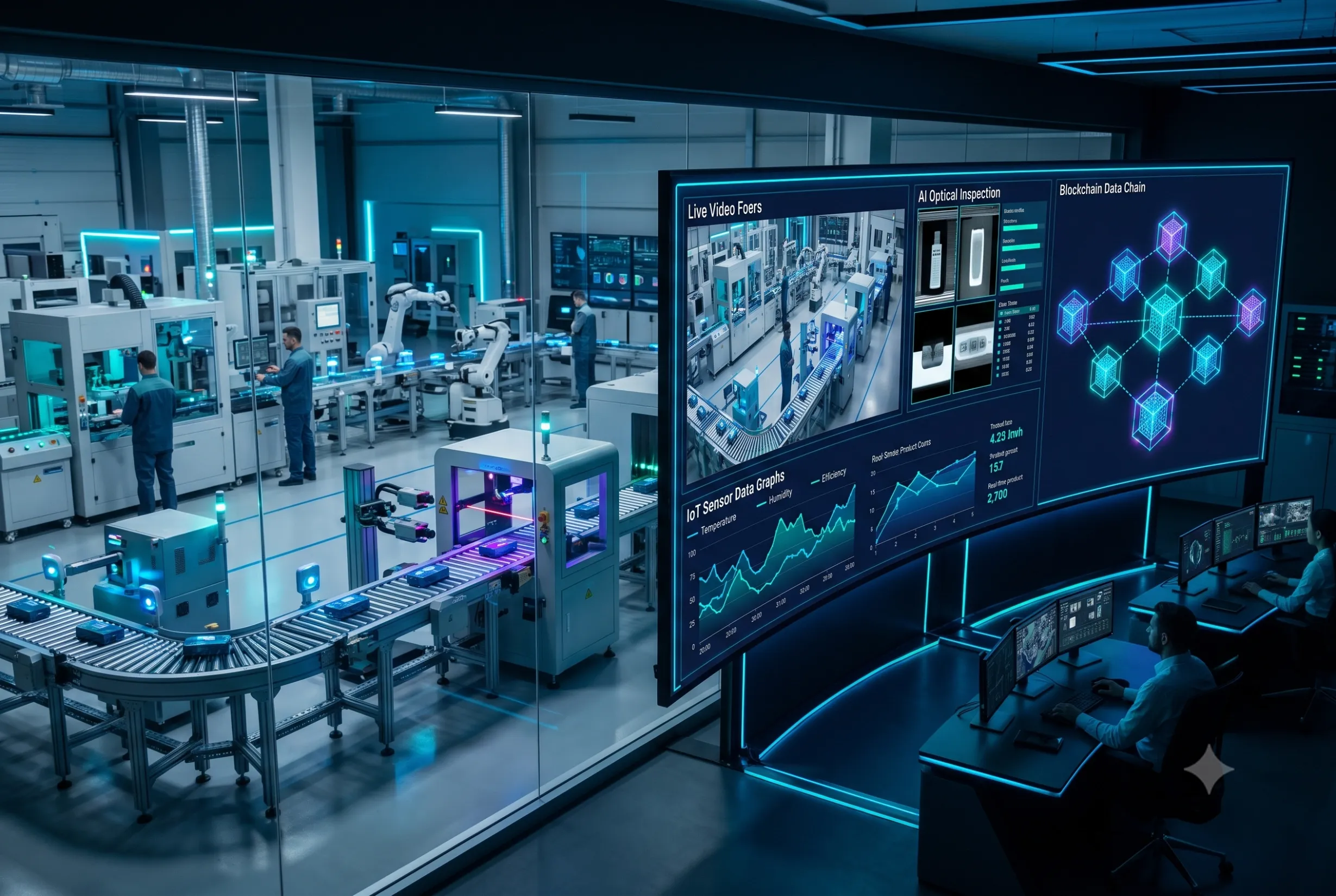
The sourcing implication: The gap between "sourcing from an agent" and "working with a technology-enabled supply chain partner" is widening. Partners who invest in these capabilities — not just talk about them — provide a measurable competitive advantage.
5. ESG and Ethical Sourcing Become Non-Negotiable
Environmental, social, and governance criteria have moved from "nice to have" to "must have" in corporate procurement policies. The EU's Carbon Border Adjustment Mechanism (CBAM), stricter forced labor import bans, and growing consumer demand for transparency are making ESG compliance a sourcing prerequisite, not a differentiator.
What this means in practice:
- Factory audits must now cover environmental compliance and labor practices alongside quality
- Supply chain traceability — knowing where every material component originates — is becoming standard
- Carbon footprint calculation and offsetting are increasingly part of sourcing RFQs
- The burden of proof has shifted: companies must demonstrate compliance, not just claim it
The sourcing implication: Working with an on-the-ground partner who can conduct thorough ESG audits, document compliance, and manage remediation is no longer optional. It's a
requirement for selling in Europe and increasingly in North America.
China's Evolving Role: From "World's Factory" to "World's Engineering Workshop"
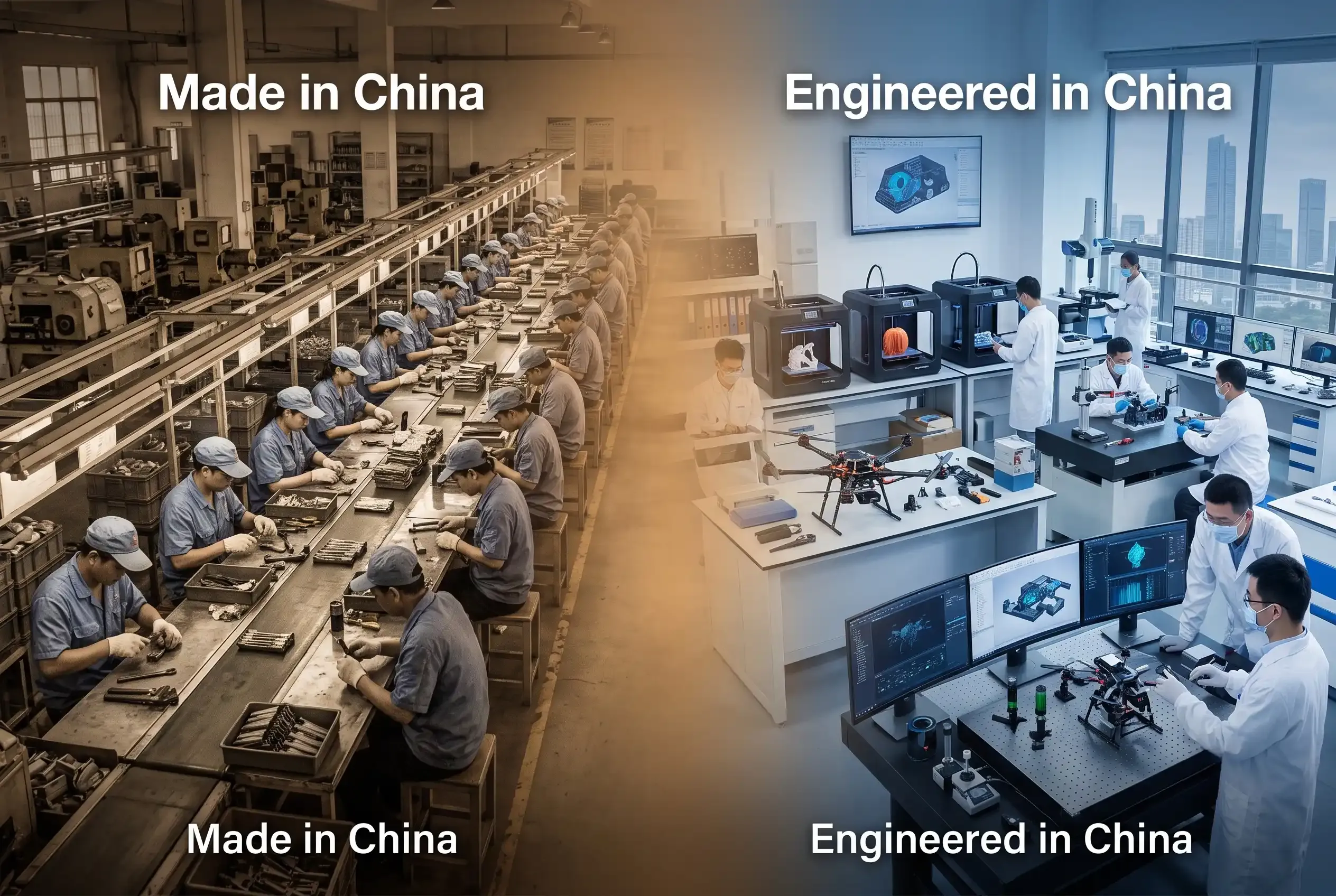
Perhaps the most important trend of 2026 is not China's decline but its transformation.
The China of 2026 is not the China of 2016. Labor costs have risen significantly — but so has labor productivity. Factory wages in Shenzhen have tripled over the past decade, but output per worker has more than kept pace through automation and process improvement.
What China is losing in cost advantage, it is gaining in:
Engineering depth. The sheer density of engineering talent in cities like Shenzhen, Suzhou, and Dongguan is unmatched anywhere in the world. When you need a challenging product
manufactured to tight specifications, the engineers who can solve the problem are in China.
Speed of iteration. China's manufacturing ecosystem is the fastest in the world for prototyping, tooling, and ramping production. A product that takes 6 months to develop in another country can often be ready in 6-8 weeks in Shenzhen.
Supply chain concentration. The 50km radius around Shenzhen contains the entire supply chain for electronics: PCB fabrication, injection molding, metal stamping, battery production, packaging, and logistics. No other location on earth can match this density.
Maturity and experience. Chinese manufacturers have spent decades serving the world's most demanding customers — Apple, Tesla, Siemens, Philips, and thousands more. The institutional knowledge embedded in China's industrial base is not easily replicated elsewhere.
What This Means for Your Sourcing Strategy in 2026
Do:
- Maintain China as your primary sourcing base for complex, quality-critical, or time-sensitive products
- Build secondary sourcing capacity in Southeast Asia for simpler, tariff-sensitive categories
- Invest in supply chain visibility — work with partners who provide real-time production tracking and documentation
- Prioritize compliance capability — the regulatory environment is not getting simpler
- Look for technology-enabled partners — those who use AI, IoT, and digital quality systems
Don't:
- Don't diversify for the sake of diversifying — every new supply line adds complexity and cost. Diversify only when there's a clear risk or cost benefit.
- Don't assume "China is cheap" — China is no longer the lowest-cost option. It is the best-value option for products where quality, speed, and engineering matter.
- Don't neglect relationship depth — in a volatile geopolitical environment, the depth of your relationships in China matters more than the number of factories in your spreadsheet.
- Don't ignore documentation — customs compliance, ESG reporting, and supply chain traceability are now baseline requirements, not optional extras.
The Bottom Line
The global sourcing landscape of 2026 is more complex than ever — but complexity creates opportunity for those who understand it.
China remains the world's most capable manufacturing ecosystem, not because it's the cheapest, but because it offers a combination of engineering depth, supply chain density, speed, and experience that no other country can match. The smartest sourcing strategies don't abandon China — they optimize how they engage with it, combining China's industrial power with secondary markets, technology-enabled oversight, and compliance-ready partnerships.
At B&C Sourcify, we've spent 30+ years inside China's manufacturing ecosystem — first as manufacturers ourselves, now as sourcing and fulfillment partners. We've watched these trends develop from the factory floor, not from a head office abroad. And we believe that the companies that navigate the new landscape best will be those with the deepest on-the-ground understanding, the strongest supplier relationships, and the clearest view of where the world is heading.
The world has changed. But the fundamentals of great sourcing — engineering discipline, supply chain transparency, and relationships built on trust — have not.