Jul 14, 2026 Industry Insights
Orders Are Flowing Back to China — Here's Why 2026 Is a Turning Point for Global Sourcing
After years of "China+1," manufacturing orders are flowing back to China in 2026. Why speed, quality, and ecosystem depth are outweighing low-cost alternatives in Vietnam, Mexico, and India.
Orders Are Flowing Back to China — Here's Why 2026 Is a Turning Point for Global Sourcing
For the better part of a decade, the narrative around global manufacturing was locked in a single direction: move production out of China, diversify into Southeast Asia, shift to Mexico, explore India.
In 2026, that narrative is being rewritten.
Manufacturing orders are flowing back to China — not as a trickle, but as a measurable trend backed by hard data, corporate strategy shifts, and on-the-ground reality across the Pearl River Delta.
The Numbers Tell a Clear Story
Let's start with what the data says. In the first four months of 2026, China's exports grew 11.3% year-over-year. But the composition of that growth matters more than the headline:
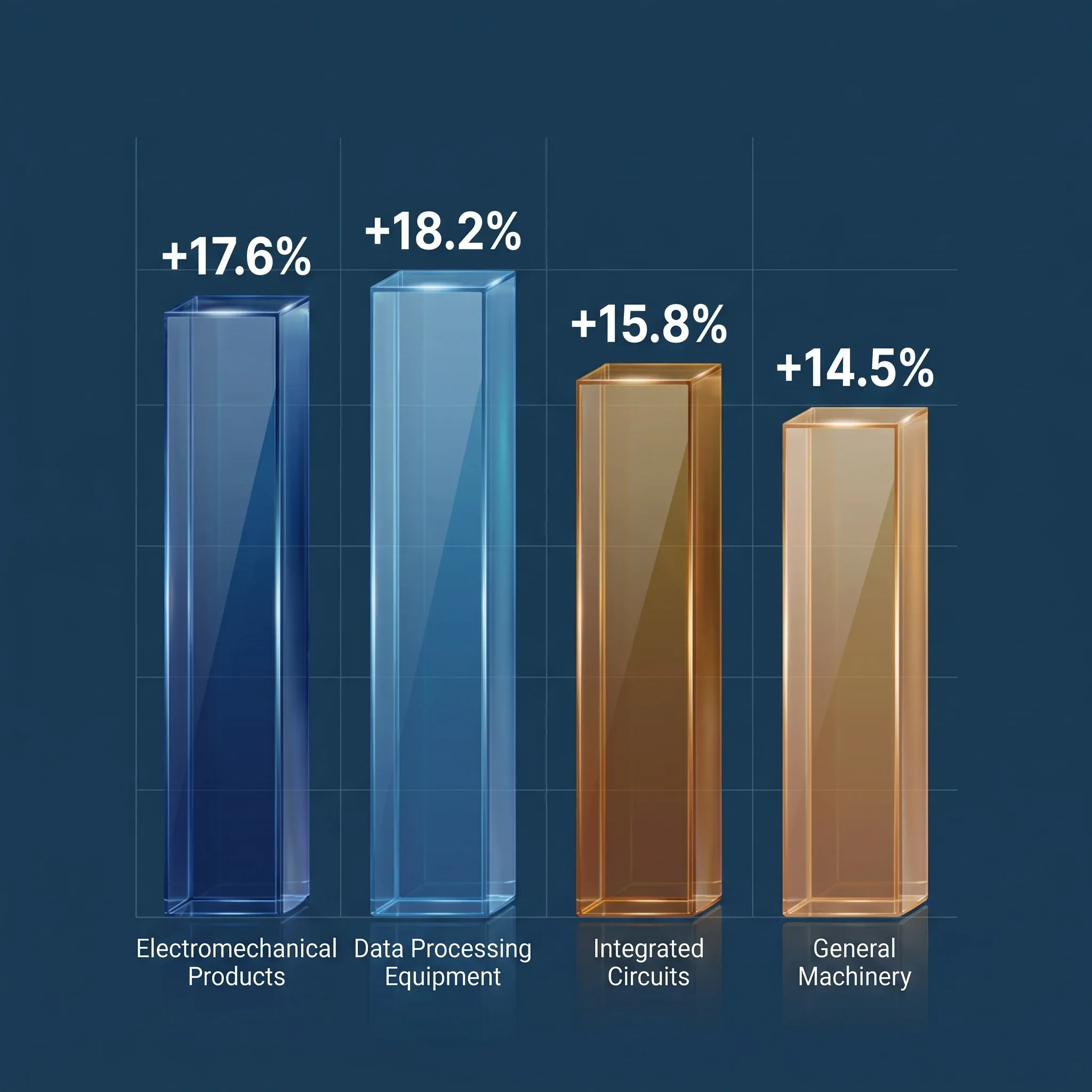
High-value electromechanical products rose 17.6%, now accounting for 63.5% of total exports. Automatic data processing equipment grew 18.2%. Integrated circuits increased 15.8%. General machinery rose 14.5%.
These are not "cheap goods" categories. These are sophisticated, engineered products that require deep supplier ecosystems, experienced engineering talent, and production precision. These are exactly the categories where moving to a lower-cost country often means sacrificing the very capabilities that make products competitive in the first place.
What Happened to the Alternatives?
The "China+1" strategy made logical sense. Diversification is prudent business. But the execution has proven far more challenging than the theory suggested.
Vietnam has been the most successful alternative manufacturing destination. Yet in 2026, cracks are appearing:
- Industrial parks in some regions face up to 30% power shortages during peak production months
- Wages have risen over 40% since 2020, narrowing the cost gap significantly
- Land costs in key industrial zones around Ho Chi Minh City and Hanoi have tripled in five years
- Skilled labor shortages are chronic, particularly for technical and engineering positions
Mexico has emerged as a nearshoring favorite for North American markets. But the on-the-ground reality tells a more cautious story:
- One factory manager reported their Mexico facility took three years to reach just 60% of the productivity of the Chinese plant it was meant to replace
- Supplier density is a fraction of what's available in the Greater Bay Area — a critical constraint for complex manufacturing
- Day-to-day operational volatility remains significantly higher than most investors anticipated
India offers enormous long-term potential, but infrastructure gaps and regulatory complexity continue to slow the ramp-up for export-oriented manufacturing. The domestic market remains the primary draw; world-class export manufacturing is still in early stages for most categories.
The Deeper Shift: From Cost to Certainty
Here's what the data doesn't capture directly but every factory manager in Shenzhen feels: the conversation has fundamentally shifted. International buyers are no longer asking "what's
your cheapest price?" They're asking "can you deliver on time, every time?"
This shift from cost optimization to certainty optimization is the most important strategic change in global sourcing since offshoring began.
European Chamber of Commerce surveys from mid-2026 confirm the trend:
68% of European companies are maintaining or expanding their China operations Nearly 75% say their China factories are more efficient than facilities elsewhere 60% of German companies plan to increase investment in China — the highest level since 2023
Schneider Electric reported 90%+ local procurement in China. AstraZeneca announced plans to invest over ¥100 billion in China by 2030. These are not companies planning an exit. They are doubling down.
What "System-Level Certainty" Actually Means
The term we hear from multinational executives is "system-level certainty" — the ability to innovate, prototype, manufacture, and deliver within a single integrated ecosystem. Here's
what that looks like:
1. Supplier Density
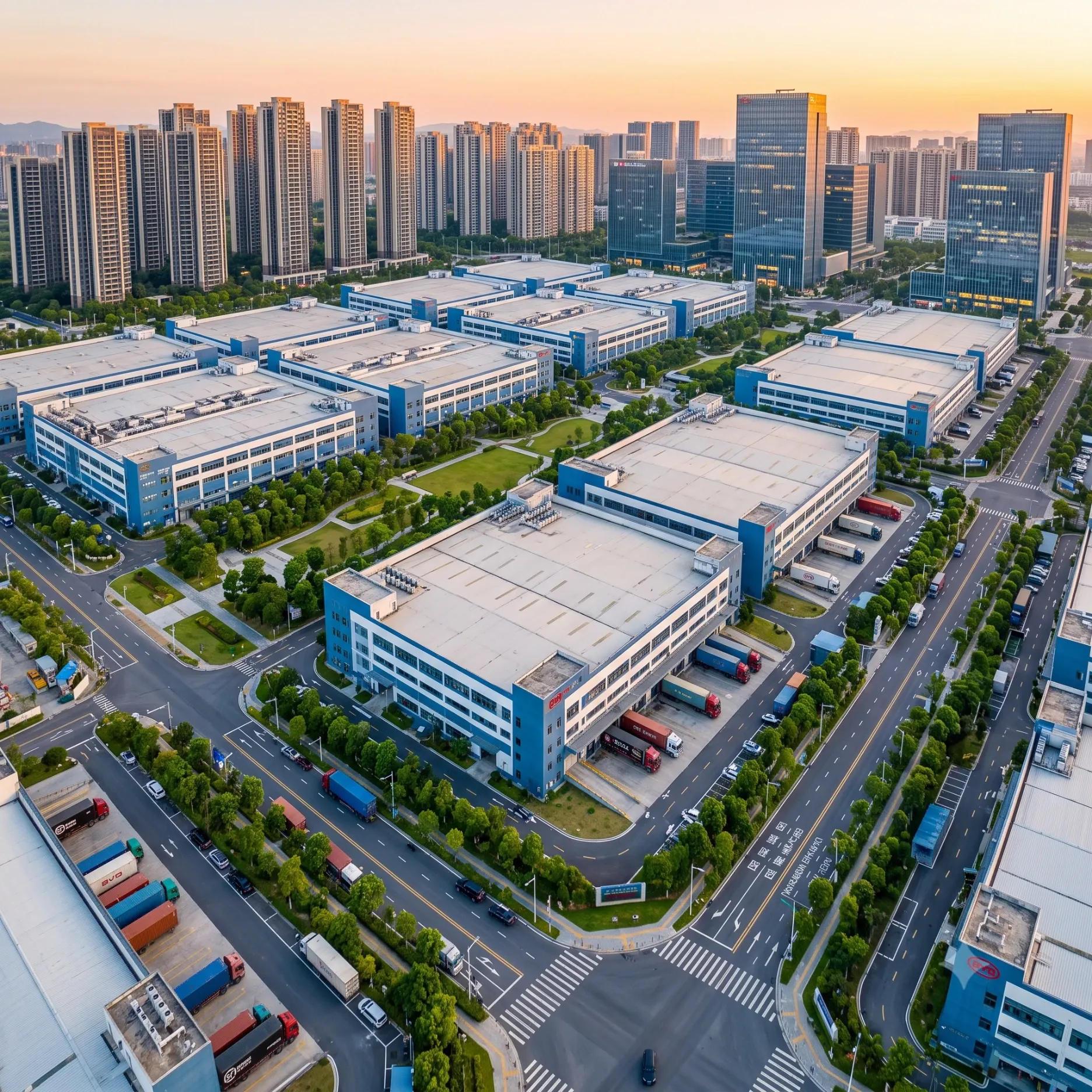
Within a 50-kilometer radius of our Shenzhen office, you can find specialized factories for injection molding, CNC machining, PCB assembly, packaging, and logistics — all within a day's coordination. Need a tooling modification? The mold shop is 15 minutes away. Need an alternative material supplier? There are three within 10 kilometers.
This density doesn't exist in Vietnam, Mexico, or India. Not yet.
2. Engineering Talent
Three decades of industrial growth have created a deep pool of manufacturing engineers who understand both traditional processes and the latest automation. When a drawing arrives with a challenging tolerance, we can find engineers who have solved that exact problem before — because they've been working in this ecosystem for 20+ years.
3. Infrastructure
World-class ports, highways, high-speed rail, and digital infrastructure mean design changes, samples, and production adjustments happen in days, not weeks. A prototype designed on Monday can be in testing by Wednesday and in production by Friday. This speed translates directly into faster time-to-market.
4. Problem-Solving Culture
This is the hardest to quantify but most important factor. When something goes wrong in manufacturing — and it always does — the response in China's industrial clusters is not to write a report. It's to gather the relevant people, walk to the machine, figure out what happened, and fix it. Today.
Practical Framework for International Buyers
Product Type | Recommended Strategy |
|---|---|
High-precision engineered components | Source from China — ecosystem depth directly impacts quality outcomes |
High-volume, low-complexity consumer goods | Consider China+N — diversify assembly while sourcing components from China |
New product development and prototyping | China first — speed of iteration is the critical priority |
Tariff-sensitive products for US market | Evaluate partial assembly in Mexico or ASEAN using Chinese core components |
Products requiring rapid scaling | China — no other ecosystem can scale production as quickly |
How B&C Sourcify Helps Clients Navigate This Shift
We were born inside the system we're describing. Our founder Alex spent 30 years running a precision mold shop in Shenzhen — he didn't just observe China's manufacturing ecosystem, he helped build it. This gives our clients a practical, on-the-ground advantage.
Factory Access Beyond "Verified"
Our 3,000+ factory network spans industrial components, consumer electronics, automotive parts, and custom solutions. But more important than the count is the depth: we know which factories genuinely deliver quality and which ones just talk a good game.
Engineering-Grade Quality Control
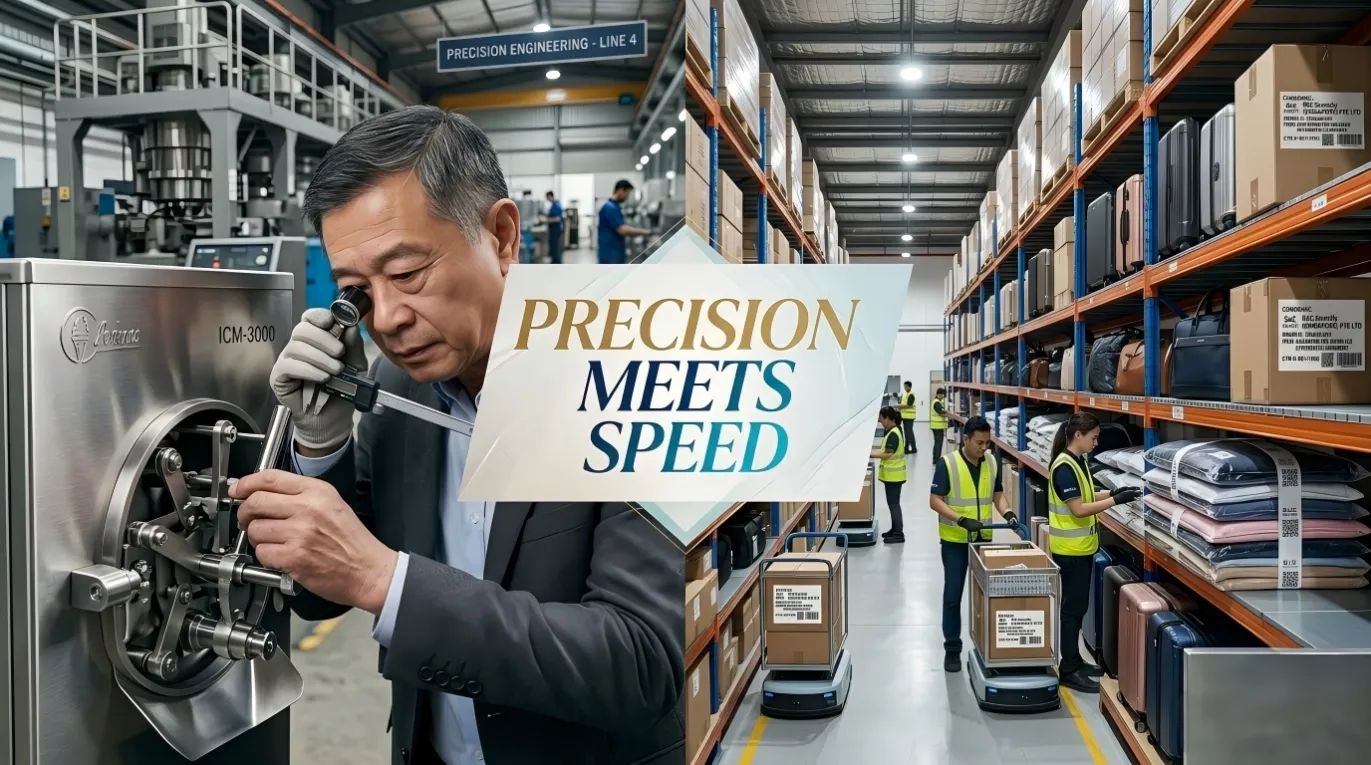
When Alex walks into a factory, he reads the production floor the way a mechanic reads an engine. Equipment condition, operator training, material flow, quality documentation — he spots issues that standard audit checklists miss. After 30 years as a manufacturer himself, he knows what good looks like.
On-the-Ground Presence, Every Day
Our team is in Shenzhen, not a remote office thousands of kilometers away. We visit factories regularly, build genuine relationships with production managers, and know which lines are running smoothly and which need attention.
Multi-Category Flexibility
From precision-machined industrial components to consumer electronics to custom promotional products — we source across categories using the same engineering-grade quality framework. This breadth means we can often find creative solutions that single-category agents can't.
The Bottom Line
The "end of China manufacturing" narrative has been greatly exaggerated. What's actually happening is more nuanced: manufacturing orders are returning to China because on-the-ground execution matters more than low-cost labor in a complex, speed-driven global economy.
For international buyers, the winning strategy isn't choosing between China and its alternatives. It's having a sourcing partner who understands the Chinese ecosystem deeply — and can help you leverage its strengths while strategically managing its risks.
B&C Sourcify was built for exactly this moment. 30 years of manufacturing DNA. A global perspective. And the engineering discipline to make sure every shipment delivers what it promises.