Oct 30, 2026Sourcing Guides
China Sourcing Agent or Alibaba: Where the Cost Actually Diverges
The platform quote and the agent fee are both visible. The cost that decides the comparison sits in four other lines: seller identity, customization, problem cost and your time.

The question arrives in a familiar form: should a brand buy on Alibaba or use a sourcing agent? It usually comes with two numbers attached, a unit price from a platform listing and a commission quote from an agent. Those two numbers are the least useful part of the decision. One is a price for a product whose seller may not be the factory. The other is a fee for work that may or may not be needed. The cost that matters is the sum of four lines. Just one shows up on a quote.
We have run both sides of this comparison for buyers. We have sourced standard products from platform sellers and we have built custom programs through factories that never list a catalog online. The channel is not the decision. The order profile is. This piece sets out where the cost actually diverges, and the cases where the platform is the better answer.
The Quote Is Not the Cost
A platform listing gives a buyer a unit price, a minimum quantity and a delivery estimate. That is enough to compare two listings of the same product. It is not enough to compare two channels, because the listing price already contains the seller's margin and says nothing about who made the goods.
Before the price, identify the seller. A factory with a trading arm, a trading company with several factory relationships and a factory selling its own line can all present a similar storefront. The unit price usually differs because the cost base differs, not necessarily because one seller is more efficient. A buyer who compares only the number is comparing a factory price with a reseller price and calling the gap a saving.
The second question is what the price includes. A listing price may exclude tooling, logo setup, retail packaging, certification testing, inland freight or the cost of a sample. Those items arrive later as separate quotes, and each one changes the total. A sourcing agent's fee is also incomplete on its own, because it does not include the goods, the tooling or the freight. Neither number is a total.
We build a cost sheet before we recommend a channel. It has the same rows for both options: product, tooling, samples, packaging, testing, inspection, inland movement and the buyer's own time.
What Alibaba Is Good At
The platform is good at exposure and price discovery. A buyer can see dozens of offers for a standard product in an afternoon, compare specifications, ask for samples and place a trial order without a local team. For a product that already exists, from a seller the buyer has tested, that is a real advantage.
It is also good at small starts. A buyer testing a market can order a modest quantity, learn what sells and avoid committing to a tooling program. The platform's dispute process gives a buyer a route when goods arrive late or do not match the listing, though it does not turn a weak specification into a strong one.
What the platform hides is the part that matters at scale. The storefront does not show whether the seller owns the line, which sub-tier supplies the critical component, how the factory handles a change, or who answers when a batch fails. Those facts sit behind the listing, and a platform chat is a thin way to reach them.
The platform is also built for transactions, not programs. It can quote a product. It is less suited to a product that does not exist yet, a color that has to match a previous batch, a packaging structure that needs a dieline, or an order that draws on three suppliers.
Where the Agent Fee Comes From
An agent fee is not a discount. It pays for work that someone has to do between the buyer's requirement and the factory's loading dock. The work starts with a specification that a factory can quote, continues through supplier search and verification, and runs into samples, negotiation, order follow-up, inspection and consolidation.
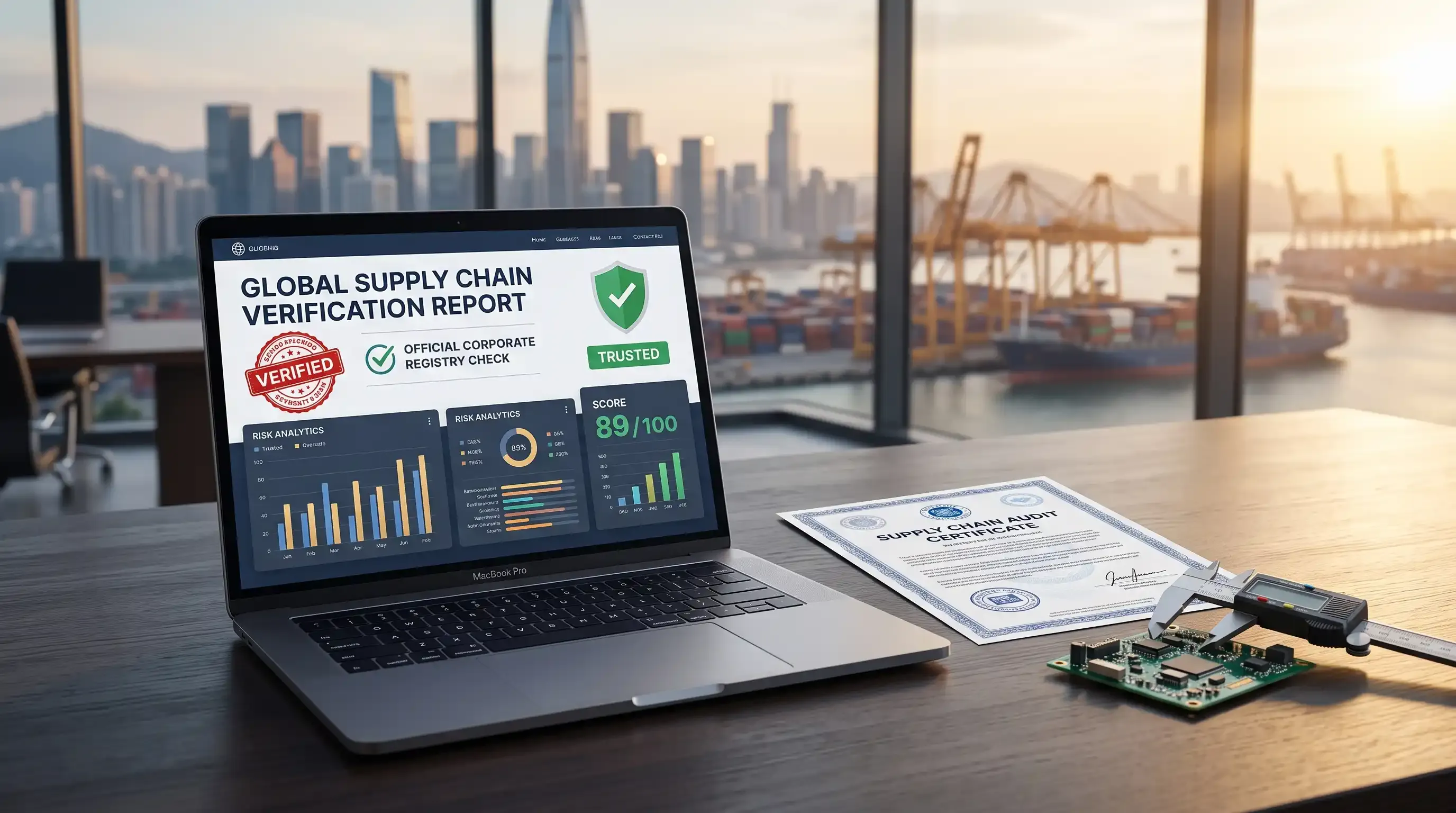
The verification step is where the fee earns part of its keep. We read the company registration, its stated scope, the site, the production equipment and the relationship between the seller and the factory. We ask who owns the mold, who signs the test report and who has the authority to halt production. A storefront does not answer them, and a buyer who never asks is buying a name.
The sample step is the second. A factory sample is a promise, a production sample is evidence, and the difference is a record. We manage the sample loop, compare the parts, and keep the approved version sealed. A buyer who runs that loop alone spends weeks learning what a sample is supposed to prove.
The fee also buys a local presence. Someone visits the floor, watches the first article, checks the packaging and stands at the loading dock. That presence is not a guarantee, but it catches a problem while the fix is still cheap. The fee is the price of that work, and a buyer should compare it with the cost of doing the work internally or skipping it. The ground checks behind that presence are described at /b2b-sourcing.
Four Lines That Decide the Gap
The first line is seller identity. A platform quote from a trading company carries a margin that a factory quote does not. A factory may cost more on a small order; a trading company may coordinate better. Ask whether the money buys production or a layer.
The second line is customization. A standard product needs a price and a quantity. A custom product needs a drawing, an engineering review, a tool, a sample loop and a packaging structure. Each step has a cost and a calendar. A platform listing can start the conversation, but it cannot carry the program.
The third line is the expected cost of a problem. A failed batch, a late shipment or a specification that was never written down produces rework, air freight, a lost season or a refund. The probability is not the same for every order. A new supplier, a new product and a tight deadline raise it. An agent's inspection and follow-up reduce it, and the reduction is part of the return on the fee.
The fourth line is the buyer's time. Comparing offers, chasing samples, checking documents and managing a factory in another time zone is work. A buyer with a team in China can do it. A buyer without one either pays someone or absorbs the hours. The hours are real even when they do not appear on an invoice.
Add the four lines and the comparison changes shape. A low unit price with a weak seller identity, a custom requirement and a high problem cost is not cheap. A higher unit price with a verified factory, a clean sample record and a lower problem cost can be the better number.
Custom Work Changes the Math
Custom work is where the two channels stop being comparable. A platform listing describes a product that already exists. A custom program starts with a drawing and a question: can this be made, at what tooling cost, with what tolerance and in what time?
The factory answers it, not the listing. We take the drawing to a tool room, ask for an engineering response, and price the tool separately from the unit. The first shot is measured, the sample is revised, and the approved version is sealed. That sequence is the product development, and it has a cost that no unit price captures.
Custom work also changes who owns the tool. A mold paid for by a buyer should belong to that buyer, with upkeep duties and the right to relocate it written into the agreement. A platform seller may not offer that structure, and a factory may not volunteer it. The question has to be asked before steel is cut.
The same logic applies to packaging. A retail-ready carton needs a dieline, a material, a print method and a proof. A platform listing may show a photo of a box; it does not show who owns the artwork, who approves the color and who pays for a new plate. Those details determine whether packaging arrives as designed or as a surprise.
A custom program can still use a platform for components. A standard charger, a stock cable or a commodity insert can be bought from a listing and combined with a custom part. The channel decision is not always one or the other. It is a decision per line item, and the buyer who splits it correctly usually gets the lower total.
When Alibaba Wins Anyway
There are orders where the platform is the right answer, and saying so is part of doing this work honestly. A standard product, from a supplier the buyer has already tested, in a repeat order with a stable specification, is a transaction. Adding an agent fee to that transaction buys coordination the buyer may not need.
A small trial is another case. A buyer testing a product with a modest order may not be able to justify a program, a factory visit or a tooling review. The platform lets the buyer learn at a lower commitment.
A buyer with a China team is a third case. If the buyer has staff who can visit the factory, check the sample and manage the order, the agent's local presence is less valuable. The fee still buys supplier search and negotiation, but the buyer may be able to do those internally.
The platform also wins when speed matters more than optimization. A proven product, a known seller and a repeat order can ship faster than a new supplier program. The buyer who needs stock next month is not running a sourcing project. The buyer is replenishing.
The mistake is to treat one good platform order as proof that the channel works for everything. The same buyer, moving to a custom product or a second supplier, enters a different problem. The channel that worked for the trial may not carry the program.
A Decision Rule for This Week
We use four questions to decide where a buyer should start. Is the product standard or custom? Is the seller the factory or a layer above it? Can the buyer inspect and follow up without local staff? What does a failure cost in money and time?
If the product is standard, the seller is verified, the buyer can manage the order and a failure is cheap to fix, the platform is a sensible starting point. If the product is custom, the seller is unclear, the buyer has no local presence or a failure would cost a season, the agent route is the better use of the first dollar.
The order value matters, but not in the way most buyers expect. A USD 10,000 order of a standard product can be a platform transaction. A smaller order of a custom product can justify a program, because the tooling and the specification are the expensive parts. The threshold is the complexity, not the invoice.
We also ask what the buyer wants to own. A buyer who wants the tool, the written spec and the supplier relationship is building an asset. A buyer who wants stock is buying a product. The first buyer needs the agent's records. The second buyer may only need a reliable listing.
Send the product, the order value and the market you are buying for (/contact-us). We will read the four lines against your order and tell you which channel we would use, including the case where the answer is the platform. Dore Technology Co., Ltd. accepts the order. We work with buyers whose annual order value passes USD 10,000. A channel is a tool. The cost sheet is the decision.