Oct 20, 2026Sourcing Guides
The First Order Is a Stress Test: Three Things We Got Wrong, and What We Changed
A quote priced on the scale, a delay answered with apologies, a fragile item's packing filmed at the bench. Three mistakes from one first order, and the changes that came after the seller's feedback.

A Turkey-based Etsy seller came to us with a store that was already running and orders already coming in. The store sold into the United States and Australia. The reason for the switch was not price. An intermediary had added margin without showing where it came from, and fragile items had arrived damaged because of the packing. The damage turned into negative reviews. That is the account we were asked to take on: a seller who wanted Turkish communication, a quote with visible lines, a protective standard built around bubble wrap, and procurement, QC and single-piece dispatch under one partner. First order here means the first order with us. The seller had been importing before we met. Three things went wrong with the goods. Payment and the channel were two more parts of the order that needed fixing.
The Quote Missed the Box
Our first quote was priced on the scale. The carrier prices the box. We quoted the item at its actual weight, 550g, and sent a total of USD 21. The carton was light and the product took up space, so the charge was calculated on the space instead. The billable weight was 1.2 kg. The carrier bills the larger of the two. The corrected total came to more than USD 30. Nothing about the product had changed. The carton had been there all along, and our quote had not.
We did not defend the first number. We said the quote was wrong, explained the rule in plain terms, and rebuilt the quote as separate lines. The rule: a carrier charges on actual weight or on the space the carton occupies, whichever is greater. The reissued quote was itemized, with each cost on its own line. Each number sat next to the line it belonged to, not inside one lump sum. The error was ours, and the new document had to stand on its own. The lines were complete, and any further change would come with a reason. The seller stayed on the order. That was the reaction we had earned.
Now a quote starts with the carton, not the product. Before pricing, we ask for the outer carton dimensions and the packed weight, not just the item weight. When a box looks oversized for what it holds, the quote flags the volume question before the customer reads a total. The quote is built to be checked, so each line has a name and a figure. Three questions catch this before you pay: is the line priced on actual weight or on the space the box takes, what are the outer carton dimensions, and which costs sit outside this quote? Ask them before the deposit, not after the carton is packed. The freight-side explanation of volumetric weight is a separate subject, and this piece stays on the quote.
An Apology Is Not a Plan
The supplier shipped late. The domestic courier lost time on the way to the warehouse. Mid-Autumn and National Day fell in the same window, and the holiday slowed everything behind them. None of that is a defense. The customer's message said we only apologized, no action. It was accurate. We had sent sympathy and explanations, and no plan.
We stopped writing apologies. The next message listed what would happen: staff on duty at the warehouse through the holiday, processing pulled forward where the goods allowed it, and the procurement trail sent as a document with each step. We put the plan in writing because a phone call would not survive the holiday. The procurement trail showed where the goods had been and where they were waiting. Every unit that reached the warehouse was opened and checked against that order: how it looked, what came with it, whether it matched the spec.
Now a delay gets a written plan before it gets an explanation. The plan names the next action, the person who owns it, the time of the next update, and where the goods actually are. A plan with no owner is a wish. The reason comes after the plan, as context rather than a substitute. A supplier delay, a courier delay and a public holiday are facts we report. They are not the answer. If you are comparing sourcing agents, ask what happens when a shipment slips. Ask for the next action, the owner, the update time and the location, not for reassurance.
A Fragile Item Needs a Standard, Not a Promise
The seller had been burned by packing before. Fragile items had reached buyers damaged, and the damage showed up in the reviews. The seller had asked for a protective standard before the first order, and that order put it to the test. We did not argue that the new packing was fine. We filmed it.
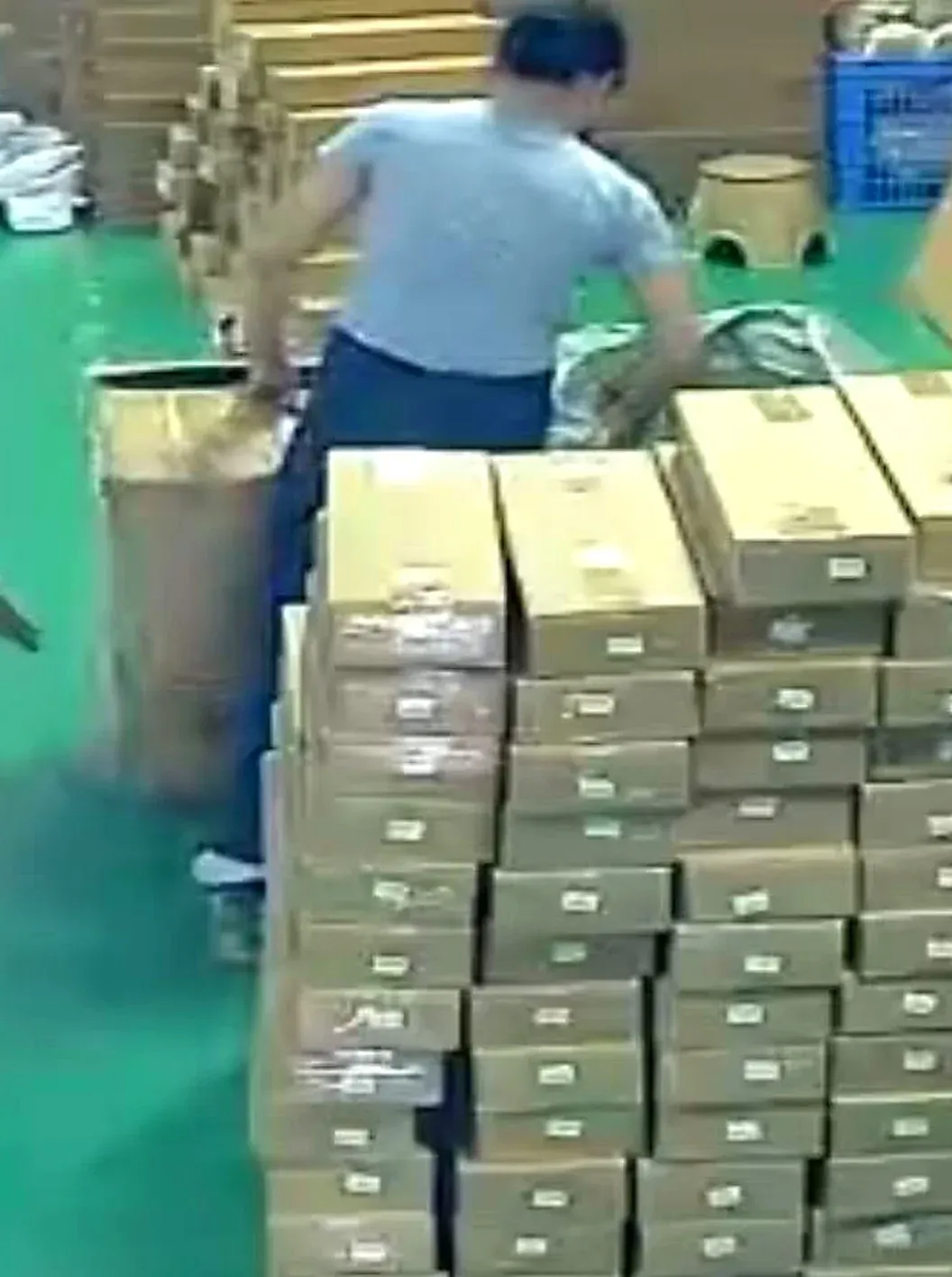
The first video showed the inbound check as it happened. The second showed the packing itself, with multi-layer bubble wrap going on one layer at a time. The check video was not a highlight reel. It was the ordinary intake, on the bench, with the carton still on the table. The seller could see every step. The reply came back: use this standard from now on. The standard belonged to the seller, not to us.
Now a fragile SKU gets its protection standard before anything is packed. Multi-layer bubble wrap is the core of it, and the rest follows the product: corners, edges, the space inside the outer carton. The method is filmed, and the seller confirms it. That confirmation is written into the order for that SKU, so a later batch does not start from memory. If the material or the method changes, the video is made again and the standard is re-confirmed. Ask for the standard and the video, not a sentence about careful packing. Ask how the bubble wrap is layered, how the corners are handled, and what fills the space inside the box. A packing standard you can film is a standard you can repeat. Brand packaging is a different subject, and this piece is about protection.
The Payment Path Broke Before the Order Did
The payment route failed before the order did. The service the seller tried first did not work in Turkey, and the seller did not want to prepay. A payment method that does not work in the buyer's country is not a small detail. It stops the order at the last step. We could have called that the seller's problem. We did not.
We ran the first order on a credit card link. The seller paid, and the order went ahead. After that, we switched to a transfer link. Each step was explained in plain language: what the link does, what it costs, what the limit is, and where a refund would go.
Now the payment question comes with the quote, not after it. Before the first order, we ask which payment methods work in the seller's country and whether prepayment is acceptable. The first order gets one working path before anyone optimizes the cost of it. Before you send a deposit, ask which method works where you are, what the fees and limits are, and how a refund would travel. A method that works in one country is not a method that works in yours. The payment path is part of the quote, not an afterthought.
The Channel Was Part of the Service
Our WhatsApp replies from mainland China were slow, because the network path needed a VPN to work well. The seller was on the other side of that gap. No buyer should have to guess whether the silence is a time zone, a network problem or a lost message. We explained the cause instead of letting the delay read as indifference.
We moved the conversation to WeChat. The seller set the app to Turkish and used real-time translation, so language was less of a barrier. We kept key confirmations in text, not just in voice notes, because a voice note cannot be searched, and it is a weak record to forward. The time difference was real, and it was ours to manage. The seller added us on WeChat without being asked. We read that as a sign the channel worked for them, and nothing more.
Now the channel is settled before the first order, along with the language and when someone is online. Key confirmations get a written recap, so a voice call does not become the only record. A slow reply is our problem to explain, not the seller's fault to absorb. Ask which channel the team actually answers on, which language the confirmations will be written in, and when someone is online. A fast answer in the wrong channel is still a slow answer.
What We Changed After the First Order
Five things changed after that order. Quotes now start with the carton dimensions and the packed weight, and every quote is itemized. A delay gets a written plan and a procurement trail. A fragile SKU gets a packing standard and a video. The payment path and the channel are settled before the order starts. Each one is a step we can show in a document or a video. A quote can be checked line by line, and a packing standard can be watched. The question to carry into your next comparison: is this quote built on the carton or on the scale?
We do not control the supplier's line, the domestic courier or the public holiday calendar. We control what we say early, the trail we hand over, the evidence we keep and the next step we name. That is the part we can put in writing. The rest is the part we report. The first order shipped on a small-parcel line. A second order followed, at USD 43.24. The number matters less than what happened before it. We did not rewrite the company. We changed the next order.
The work on this order covered sourcing, QC and dispatch, with the quote itemized, the packing standard confirmed with the seller, and communication in two languages. The sourcing side, from supplier checks to production follow-up, is described at (/b2b-sourcing). The warehouse side, from inbound checks to single-piece dispatch, is described at (/b2c-fulfillment). What the warehouse bench checks on its own has its own write-up. None of that removes the risk from the next shipment. It is a description of how we work now. The same five changes now sit at the start of the order, not after the problem shows up.
Bring the Product You Are Selling
The product you are selling and the quote on your desk are the two things we read first. Bring both to (/contact-us). We read the quote line by line, including the chargeable weight and the packing standard, and reply with what we would change before the first order, plus a packing plan for the product. If the payment path or the communication channel is still unclear, put that in the same message.