
Oct 25, 2026Sourcing Guides
Buying Horse Stable Equipment in China: Six Checks for a Mixed First Order
A stable order looks like one purchase and behaves like four. The checks that keep steel, mats, soft goods and hardware from arriving as one expensive pile.
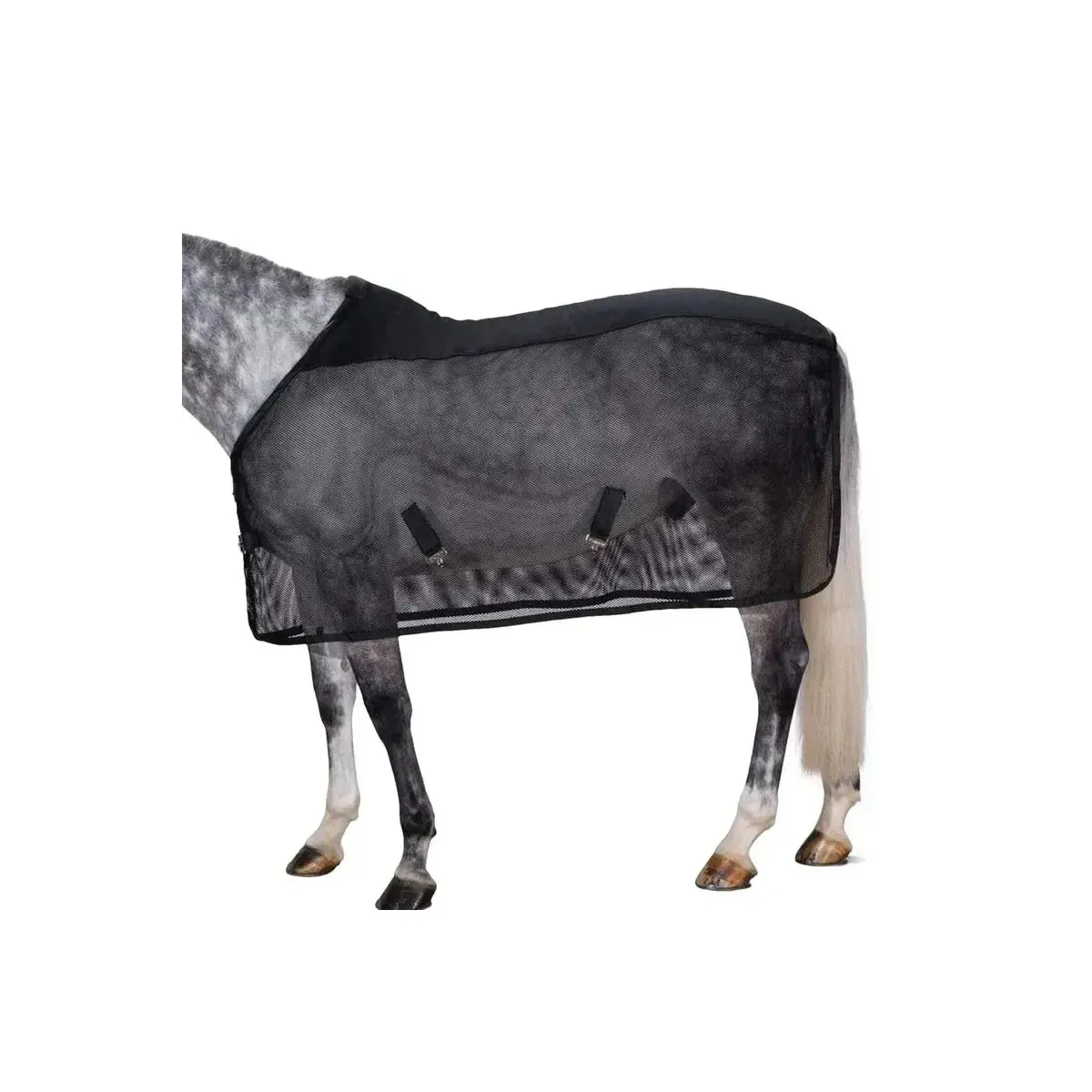
A stable order rarely arrives as one product. One buyer needs stall fronts, rubber mats, fly sheets, hay nets, buckets and gate hardware. The catalog makes it look like one purchase. The factory floor makes it four.
Each family has its own failure point. A stall panel fails at a weld or a latch. A rubber mat fails at an edge. A fly sheet fails at a shoulder or a buckle. A hay net fails at a cord. The first mixed order is where those differences either get caught in China or arrive at the barn as one expensive pile.
We source and inspect. These are the six checks to run before the first order is placed: the building drawing; the stall panels and their coating; the mats; the soft goods; the hardware; and the packing.
Start With the Building, Not the Catalog
Draw the stable before you open a supplier catalog. Mark the number of stalls, the aisle width, the door swing, the ceiling height, the drainage, the bedding and the size of the horses. That drawing decides panel length, door type, mat coverage and where a gate can open without hitting a bucket.
We start with the drawing, not the catalog. Then split the order into four families. Structural items include stall fronts, panels, partitions and doors. Floor items are rubber mats. Soft goods include fly sheets, hay nets and stall guards. Feeding and handling covers buckets, tie rings, snaps, hinges and latches.
The split matters because a horse stable equipment supplier in China rarely covers all four families well. A steel fabricator may make a good panel and a poor fly sheet. A soft goods factory may sew a clean sheet and buy its hardware from a third party. A mixed order means several factories, one consolidation point and one loading plan.
Ask one thing before the first quote: which items must fit the building, which must fit the horse, and which are consumables? The answer sets the sample budget and the inspection list.
Stalls and Panels: Steel, Coating, and the Edges a Horse Rubs Against
We read the drawing before the price. A stall panel is not a warehouse shelf. The load is a horse leaning, rubbing and testing the same latch every day. The first check is the drawing, not the word heavy duty. Ask for the steel grade, the wall thickness and the coating spec in writing. If the quote says heavy duty and the drawing says nothing, you do not have a spec.
Coating is where a cheap panel shows itself. Galvanizing or powder coat can look complete on a flat face and be thin at a cut edge, a weld seam or an inside corner. Those are the places rust starts. Run a hand along the edges. Look at the back of the weld. Ask how the factory touches up a cut end.
Then look at what the horse touches. There should be no sharp edge at head height, no exposed bolt thread where a muzzle can catch, and no gap that a hoof or a nose can wedge into. The latch should be operable with gloves and difficult for a horse to nose open. A photo of the latch is not enough. Ask for a sample and work it.
Door swing belongs in the same review. A sliding door needs clearance at the aisle. A swing door needs room to open without trapping a handler. Hinges should be replaceable, and the mounting plates should match the floor or the post you actually have. Ask who supplies the fasteners. A panel that arrives without the right anchors is not installed.
Packing matters before the panel is finished. Steel bundles rub against each other in a container. Ask for edge protection, strapping and a bundle label that matches the stable section. Small parts such as pins, bolts and latch pieces should travel in a labeled box, not loose inside the bundle.
Rubber Mats: Weight, Edge, and the Smell Test
A rubber mat has one job: stay flat and give a horse a sure surface. The first number to ask for is the actual weight per mat, not a density claim. Heavier mats tend to stay down and resist curling. Light mats can slide or lift at the edge, which creates a trip line.
Ask about both sides. The top should have a texture that grips a hoof without holding water. The bottom should have channels or a profile that lets moisture move. A smooth bottom on a wet floor is a problem waiting for a horse to turn.
We test the edge on a flat floor. The edge is the second check. An interlocking edge joins mats into one surface. A straight edge needs a border or a wall to hold it. Ask for an edge sample and put two mats together on a flat floor. If the joint lifts under a boot, it will lift under a hoof.
Smell is not a joke. A strong rubber smell that stays after airing can point to a compound you do not want in a closed stable. Air the sample for a few days. Ask what the factory uses and whether the compound changes between batches.
Mats are heavy and awkward. A pallet of mats can eat container weight and floor space. Decide whether they ship flat on a pallet or rolled, and whether the unloading point has a forklift. Do not let a supplier stack steel on top of mats to save space. Mats stored under steel can take a set, and the first stall may get a wavy floor.
Soft Goods: Fit Comes Before Denier
We wash the sample first. A fly sheet is a fit problem before it is a fabric problem. Measure the horse from chest to tail, around the neck and across the shoulder. Ask for a size chart from the actual factory, not a generic chart from a catalog. Then compare that chart with one real horse. A sheet that is tight at the shoulder will rub, and a sheet that is long at the tail will collect manure.
Look at the construction. A shoulder gusset gives the horse room to move. A wither relief panel keeps pressure off the spine. Belly coverage and leg straps decide whether the sheet stays in place at turnout. The hardware usually fails before the fabric: buckles, clips, surcingles and tail straps. Ask for the hardware sample and work every closure with gloves.
Denier is a useful number, but it is not the whole fabric. Ask for the fabric weight and the test method behind the claim. A tighter weave can matter more than a bigger number on the page. If the factory cannot explain how the number was measured, treat it as marketing.
Hay nets and stall guards follow the same rule. A hay net needs the right mesh, a strong top cord and a seam that does not pull open. A stall guard needs the right width and height, corner straps that reach the hardware, and snap hooks that close with a positive click. Both are small-ticket items that generate large returns when a cord or a hook fails.
Wash the sample. Color fastness and shrinkage are not visible on a new sheet. A wash test will not prove the whole production lot, but it will show whether the factory understands the question.
Feeding and Handling Hardware: The Small Parts That Fail
We order spares with the first container. The smallest parts cause the most annoying failures. A bucket handle pulls out. A tie ring seizes. A snap hook bends. A latch pin goes missing. None of these stops a stable from being built, but each one turns a finished barn into a maintenance list.
Start with the bucket. Ask about wall thickness and how the handle is attached. A bucket that is color-coded for feed and water saves mistakes in a busy yard. If the stable is unheated, ask how the plastic behaves in cold weather.
Ask how the tie ring releases under load, and test the release on the sample. The mounting plate and screws matter as much as the ring. A short screw into soft wood is a failure waiting for a tied horse.
Snaps and hooks should be tested with gloves. The gate should open with a thumb, not a tool. The spring should not catch a glove. Ask for the same hardware family across soft goods, so a replacement buckle fits more than one item.
Then order spares. Put extra snaps, pins, latches and cord in the first container. The cost is small compared with a second shipment for one broken part. A labeled spare box also tells the barn which parts belong to which item.
Packing a Mixed Order Without Wrecking the First Delivery
We label by area, not by supplier. A mixed stable order is a packing problem before it is a shipping problem. Steel bundles are heavy, mats are awkward, soft goods are light and hardware is small. If they are loaded in the wrong order, the container arrives with bent panels, compressed mats and a box of missing parts.
Load the heavy steel first, then mats, then soft goods. Brace the steel so it cannot shift. Keep mats off the steel and away from sharp bundle edges. Put soft goods in cartons with a moisture barrier. Put hardware in one labeled box per stable section, not scattered through the container.
Label by area, not by supplier. The unloading crew should be able to find the panels for stall row A without opening every bundle. A packing list that follows the stable plan is more useful than a list sorted by factory.
Ask for installation drawings and a spare parts list in the same envelope as the packing list. If the drawings live in an email from a salesperson, they will be lost before the barn is built. One document set, one owner, one revision.
Before loading, inspect what you can. Count the bundles. Check the coating touch-up. Count the hardware. Take photos of the bundle labels. A mixed order from several factories should be consolidated at one point, where each supplier's packing can be checked before it goes into the container.
What to Put in the First Inquiry
Send the building, not just a product list. A stable plan with stall count, aisle width, door type and horse sizes is where we start. Add the four-family list with quantities and the market the goods will be sold in. If you have a sample of the latch, the mat edge, the fly sheet fabric or the hay net cord, send it.
Ask the supplier for a packing plan and a loading plan with the quote. A price without a packing plan is only half an answer. Ask which parts are replaceable and which are custom. Ask what the factory will do if a bundle arrives with a bent panel or a box is short.
For B2B orders, the yearly purchase floor is USD 10,000. The contract is with Dore Technology Co., Ltd. We read the stable plan and the four lists, list the gaps, then send a short verification list plus a consolidation plan. Send the stable plan, the four equipment lists and the supplier quote you have (/contact-us).
---