Jul 8, 2026Case Studies
OEM/ODM in China: From Concept to Mass Production
Bringing a product from concept to mass production in China requires engineering, tooling, and QC. This guide covers the full OEM/ODM process from design to delivery.
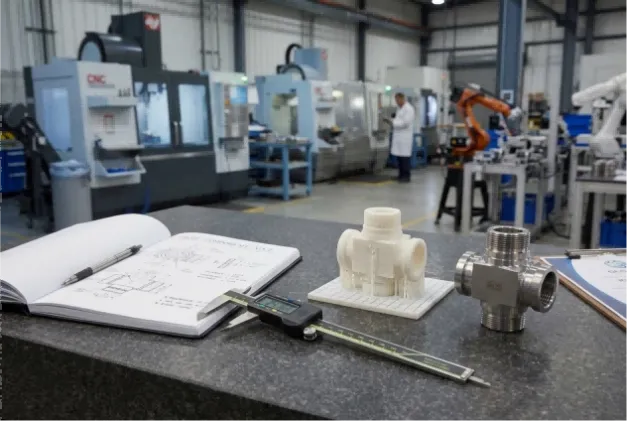
OEM/ODM in China: From Concept to Mass Production
So you have a product idea. Maybe it is a rough sketch on a napkin, a detailed CAD file, or an existing product you want to improve. You know China can manufacture it — but you are not
sure how to get from idea to finished product without costly mistakes.
This is where OEM (Original Equipment Manufacturing) and ODM (Original Design Manufacturing) come in.
OEM means you provide the design and a factory builds it to your specifications. ODM means the factory has an existing design that you customize with your branding, colors, and packaging.
Both are viable paths — but they require different approaches, different contracts, and different levels of engineering involvement.
This guide walks you through the entire journey, from concept to mass production.
Phase 1: Product Definition & Design
Before any factory can quote you, you need a clear product specification. The level of detail you provide directly determines the accuracy of your quotes and the quality of your samples.
What You Need to Prepare
- Detailed specification sheet: Materials, dimensions, tolerances, colors, surface finish, packaging requirements
- Target cost: Your budget determines material grade, cavity count, and manufacturing process
- Target quantity: Annual volume projections affect tooling investment and unit pricing
- Certification requirements: CE, FCC, UL, FDA, RoHS — know what your market demands
- Timeline: Product launch date works backward to define production milestones
DFM (Design for Manufacturing)
This is the most valuable step that most first-time buyers skip. A DFM analysis reviews your design for manufacturability — identifying features that are expensive or impossible to
produce before any tooling is cut.
A good DFM review can:
- Reduce tooling costs by 15-30%
- Shorten production cycle time
- Improve part quality and consistency
- Eliminate redesign costs later
At B&C Sourcify, DFM is standard practice because we have spent 17 years on the manufacturing side and know what works.
Phase 2: Prototyping
Before investing in production tooling, you need to validate the design with physical samples.
Prototyping Options
Method | Lead Time | Cost | Best For |
|---|---|---|---|
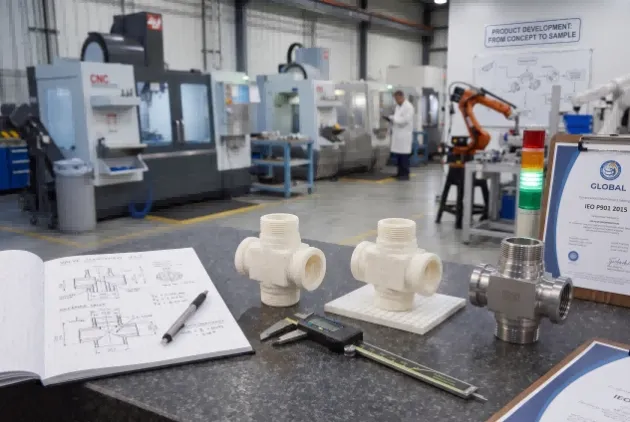
3D Printing (SLA, SLS, FDM) | 3-7 days | Low | Form and fit verification, visual mockups |
CNC Machined Prototypes | 5-10 days | Medium | Functional testing, material validation |
Soft Tooling / Silicone Molds | 10-15 days | Medium | Small batch (10-100 units) for market testing |
Rapid Injection Molding | 15-20 days | Medium-High | Production-representative samples |
We recommend CNC machining or soft tooling for functional prototypes — they use production-grade materials and reveal issues that 3D-printed parts cannot.
Phase 3: Tooling & Production Preparation
This is the most critical phase. The quality of your tooling determines the quality of every part it will ever produce.
Injection Molds
For plastic parts, the mold is everything. A well-designed mold produces defect-free parts across millions of cycles. A poorly designed mold creates rejects, delays, and hidden costs.
Steel grades matter:
- P20 / 718H: General purpose — good for most applications
- S136 / H13: High-gloss surfaces, corrosive materials, high-heat applications
- NAK80: Mirrored finishes, tight dimensional stability
Cavity count: Single cavity molds are cheaper but slower. Multi-cavity molds (2, 4, 8, 16, 32+) produce more parts per cycle but require higher precision and more expensive tooling.
Why Tooling Experience Matters
Most sourcing agents have never designed a mold. Our founder Alex ran a precision mold shop for 17 years. We evaluate mold designs, steel selection, and cooling layouts with the same
expertise used for automotive and medical-grade tooling.
Phase 4: Mass Production
Once tooling is approved and the golden sample is signed off, mass production begins.
Production Quality Control
Stage | Activity |
|---|---|
First Article Inspection | First production samples measured against spec |
In-Process QC | Random samples at defined intervals during production |
Process Monitoring | Machine parameters, material batch consistency |
Final Random Inspection | AQL 2.5 per international standard |
Packaging Verification | Label accuracy, carton quality, pallet stability |
Production Timeline (Typical)
Milestone | Timeline |
|---|---|
Design freeze & DFM | Week 1-2 |
Prototyping & approval | Week 3-5 |
Tooling manufacturing | Week 5-8 |
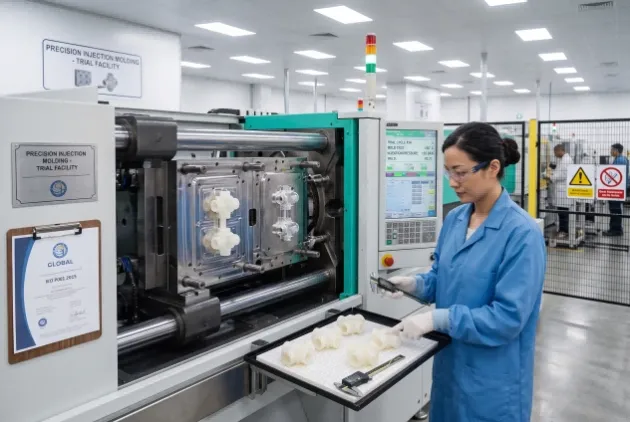
Tool trial & sample approval | Week 8-9 |
Mass production | Week 9-12 |
QC inspection | Week 12-13 |
Shipping | Week 13-14 |
Phase 5: Logistics & Delivery
- Sea freight (FCL/LCL): Cost-effective for volume. 15-35 days to US/Europe
- Air freight: Fast but expensive. 5-10 days
- Express (DHL, FedEx, UPS): Door-to-door in 3-7 days for samples or urgent orders
We handle all export documentation — commercial invoice, packing list, certificate of origin, bill of lading.
Why B&C Sourcify for OEM/ODM?
Most sourcing agents can find you a factory. Few have the engineering expertise to evaluate whether that factory can actually make your product right.
Our difference: 17+ years of precision manufacturing DNA.
- We do DFM analysis on every project — before you cut steel
- We evaluate mold designs, not just mold prices
- We catch manufacturability issues that general agents miss
- We apply the same quality standards we used for automotive and medical clients
Ready to Develop Your Product?
From a rough sketch to a finished product on store shelves — our team guides you through every step.