Oct 30, 2026Sourcing Guides
One Day, Three Factories: A Sourcing Agent's Delegation Route
Three plants, one day, one hotel lobby meeting. The route, the 30-minute transfer, the afternoon split and the decisions a sourcing agent plans before the van leaves.
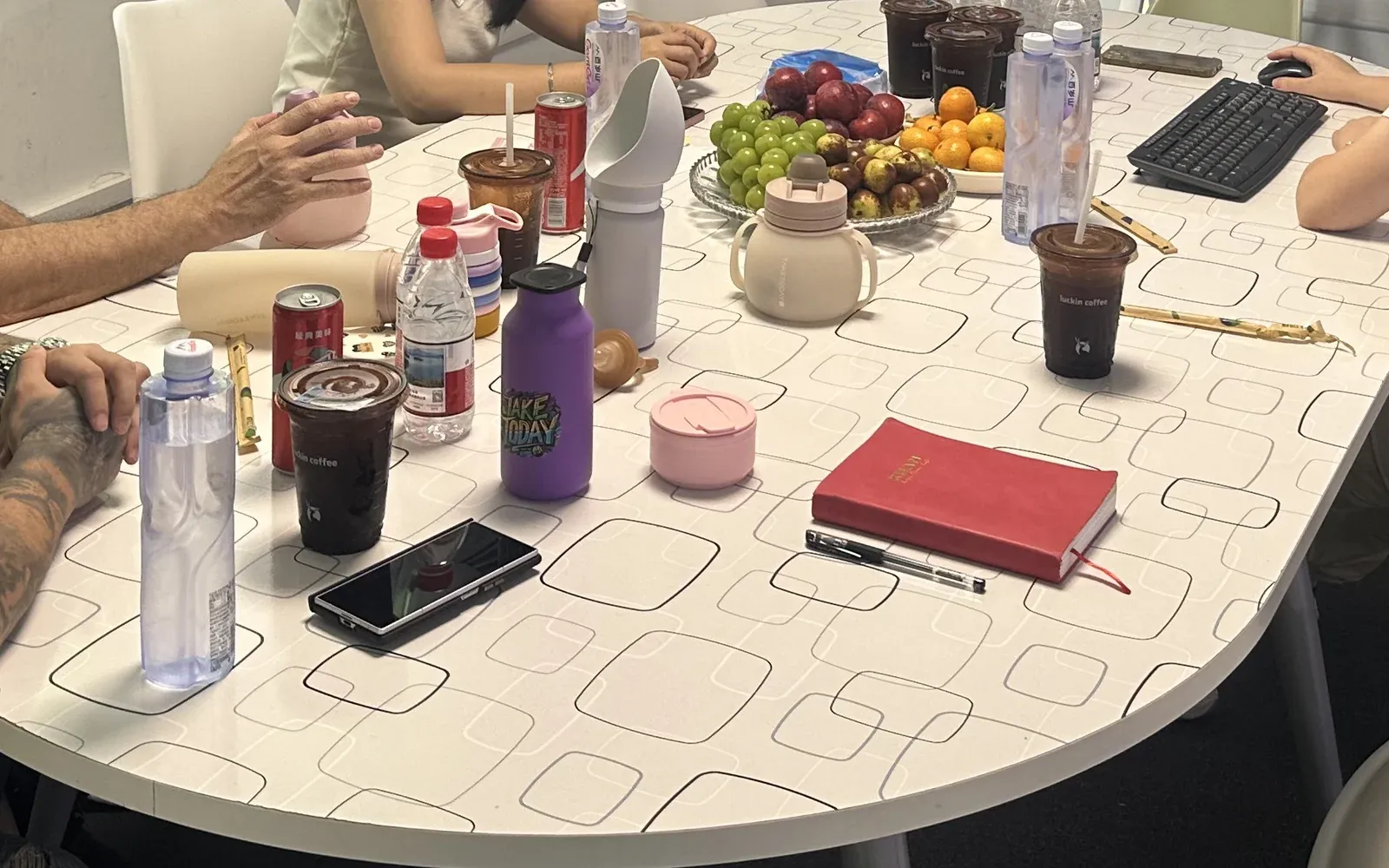
The request looked simple: three factories, one day. A European buying delegation had contacted our partner in Europe on LinkedIn and asked for a day of factory visits in Shenzhen. They had just finished phase 2 of the Canton Fair in Guangzhou. The group included a large-retail PM, an Amazon regional agent and an e-commerce summit organizer. Three plants sat on the list. What they needed was not three stops. They needed a route that would leave them with decisions.
Most factory days are planned as a list of doors. Ours start with the clock. A day has a fixed number of hours, a driver, an interpreter, a host at each stop and a hotel lobby that has to be free at the end. The route is the plan that survives those limits. The number of stops is an output, not a target.
The Day Is a Route, Not a List
A list answers a separate question than a route. A list says which factories exist. A route says which one comes first, how long the drive takes, who walks in, what gets asked and what must be decided before the van moves again. We build the second.
The planning starts with the delegation's calendar and the fair. Phase 2 ends in Guangzhou, and the team crosses to Shenzhen with a fixed departure date. That date sets the day, and the day sets the number of stops. Three plants fit. A fourth would have turned the schedule into a sequence of handshakes.
Then the constraints. Factories run shifts. Visitor registration takes time at the gate. A host needs a room, a table and a sample tray. The route has to leave a buffer for traffic and a return to the hotel at noon, because the afternoon group is smaller. We put all of it in one timetable with arrival times, hosts and owners.
A timetable is also a contract inside the team. The driver knows the next address. The interpreter knows which plant needs which vocabulary. The delegation knows when it will eat. A day without a timetable is not a tour; it is a series of waits.
A list is not a route.
Start With the Smallest Factory
The first stop is the smallest plant. That is a planning decision, not a verdict on size. A small plant is fast to read. Fewer people, fewer lines, fewer layers between the question and the answer. It gives the delegation a baseline for everything after it.
Morning is the right slot for that baseline. Attention is highest before lunch, and the questions carrying the most weight are the plain ones: what the plant makes, what it does not make, who decides, how many people are on the floor, what a first order would look like. A small plant can answer those questions early, if the visit is structured.
The stop also exposes the limit early. A specialist plant can be excellent at one product and unable to carry a program across categories. That is not a flaw; it is a boundary. The delegation needs to know where the boundary sits before it falls in love with a sample. The small plant is where the category fit gets tested, not the showroom.
We keep the question set short at this stop. Certificates, patents and product claims have their own file and their own review. Here the delegation reads the operation: the line, the people, the pace, the way the host answers a question that was not prepared. Those signals decide whether the plant earns a second meeting.
Small is a fact, not a verdict.
Cross the City Without Losing the Thread
The second plant sits 11 kilometers from the first. The drive takes about 30 minutes on a normal morning. In a factory day, those 30 minutes are not empty. They are the only slot between two visits when the delegation can compare what it just saw with what it expected.
We use the car for three things. We summarize the stop with the interpreter before the next gate: what was confirmed, what stayed open, what the host promised to send. The delegation checks its own notes against that summary. Then we read the next plant's question set aloud, so everyone walks in with the same three priorities.
The transfer is also where route risk shows up. A gate that needs a name list, a host who is late, a road with construction, a factory that moved its visitor entrance: each one costs time that the day does not have. We confirm the address and the visitor process the day before, and we keep the buffer in the plan rather than in the driver's mood.
The second stop changes the scale of the questions. The first plant asked whether a specialist could do the work. The second asks whether a larger operation can repeat it, on schedule, with the same answers from a different shift. The delegation should feel that shift before lunch. If both visits feel the same, the route is not doing its job.
The car is a meeting room.
Put the Large Factory After Lunch
The integrated plant comes after lunch, and it comes with a smaller group. In the morning, the main representatives saw two factories. At noon, we sent the delegation back to the hotel. In the afternoon, two senior executives went to the silicone plant. The rest stayed behind at the hotel.
That split is the point. A large plant is a long visit: a gate, a briefing, a walk through the workshops, a showroom, a meeting room. It rewards the people who can speak for the program and ask technical questions on the spot. It punishes a group that is tired, distracted or there to take photos. The two who went were the two expected to carry the decision home.
The afternoon also protects the morning. A delegation that runs from one plant to the next without a break remembers the last showroom and little else. The noon return gives the group time to eat, type notes and reset. The lobby is also the room for the one-hour meeting, when the two groups compare what they saw.
The silicone plant runs a different kind of scale, and the visit reads differently. The questions move from product to program: whether one supplier can carry several categories, how the sample room connects to production, and who owns the schedule when several categories share one supplier. Those are program questions, and they sit with the people who will sign the program.
Send the decider, not the crowd.
What the Delegation Should Decide at Each Stop
A factory day produces decisions, not impressions. We write the decision for each stop before the delegation arrives, so each visit has a finish line. The decision is never the final order. It is the next step that the stop has earned.
At the first plant, the decision is fit. The delegation weighs whether the specialist covers the category and whether its size can carry the volume it has in mind. The answer is keep for sampling, keep as a backup, or drop. At the second plant, the decision is evidence. The delegation tests whether the operation supports the story the catalog told. The answer is request a quote, request a sample, or move on.
At the silicone plant, the decision is scope. The delegation tests whether the category mix fits one plant, or whether it needs several. The answer is open a sample order, open a second category conversation, or leave the plant as a reference. At the hotel lobby, the decision is the shortlist. One page: keep, drop, sample, quote, owner, date.
Some decisions do not belong on the day. Price needs the quote build, with the factory price, our tax cost, freight and the commission, converted at the rate. Certification needs the file, read by the people who will rely on it. Capacity needs a written confirmation, not a sentence at the gate. The day decides direction. The documents decide terms.
Decide direction, not terms.
The Agent Work Behind the Visit
A factory day looks like a tour and works like a project. Before the delegation arrives, we collect the categories and the cities, then map the plants against drive times and the fair schedule. We confirm addresses, gate registration, visitor names and any safety gear a plant requires. We arrange the interpreter, send the question set to each host and agree who answers what.
On the day, the work is timekeeping. We hold the schedule when a host runs long and shorten a showroom stop when the delegation has seen enough. We translate, take notes and ask the question the buyer forgets: who holds the tooling file, what happens after the first order, which file will be sent and when. We also watch the group. A delegation that splits without a plan loses half its notes.
After the visit, the work becomes paper. The delegation gets a written recap: what each plant confirmed, what stayed open, who promised what and by when. The quote request goes out with the same question set, so the answers can be compared. Samples get requested against the categories that survived, and the next visit gets planned from the gaps.
This is the middle of our work, not the end. As a sourcing agent, we run supplier matching, factory audits, negotiation, ordering, inspection, consolidated shipping, warehousing, repacking, labeling and custom packaging. B2B sourcing is the main body of the business, with B2C fulfillment running in parallel. Regular products are exported under our company name. The quote the delegation receives is built from the factory price plus our tax cost, freight and related charges, plus the commission, converted at the rate of the day. The service that carries a visit through to loading has its own page (/b2b-sourcing).
The day is one visible part of that chain. The rest happens in files, calls and follow-ups that the delegation never sees. A visit that produces a good memory and no file has wasted the flight. A visit that produces a shortlist, a quote request and a date has done its job.
The visit is the middle.
Send the Categories and the Cities
A factory day starts with two lists: the categories the delegation needs to cover and the cities it can reach in the time it has. Send both, and we will tell you what fits in a day, what needs a second day and what should be dropped before the route is built.
Send the categories and the cities you need to cover (/contact-us).
The reply is a plan, not a promise. We will not claim a guaranteed number of stops, a favorable answer from every host or a price before the quote is built. We will show you the route, the time budget, the question set and the decisions each stop is meant to produce.
The floor for a working relationship is USD 10,000 in purchases per year. If the next trip is already on the calendar, send the lists early. A good route needs lead time to confirm. Dore Technology Co., Ltd. carries the contract.