Aug 24, 2026Sourcing Guides
Portable Bluetooth Speaker Sourcing for Belt and Road Markets
Source a value-focused portable Bluetooth speaker from China with a practical OEM checklist for Belt and Road importers, distributors, and wholesalers.
For importers and distributors in Latin America, a portable Bluetooth speaker program has to balance retail price, sound performance, battery life, durability, packaging, and after-sales support. Comparing supplier quotations without a shared specification often produces a false low-price winner.
This guide explains how to prepare an OEM sourcing brief, compare factories on the same basis, approve samples, and control production before shipment. It is intended for distributors, wholesalers, electronics retailers, promotional-product buyers, and regional e-commerce brands sourcing from China.
Hero product: a US$9.99 entry-level speaker for Belt and Road markets
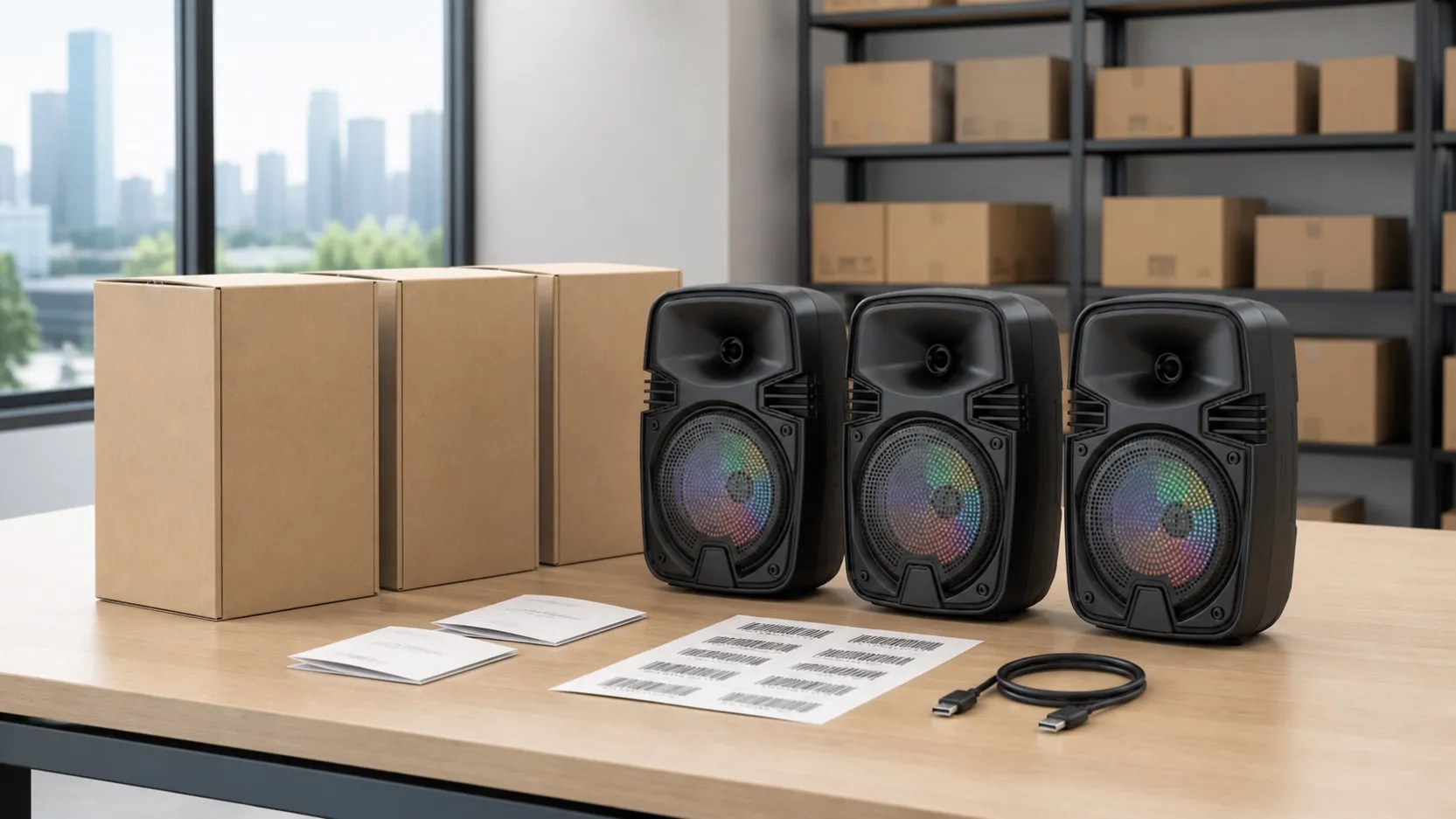
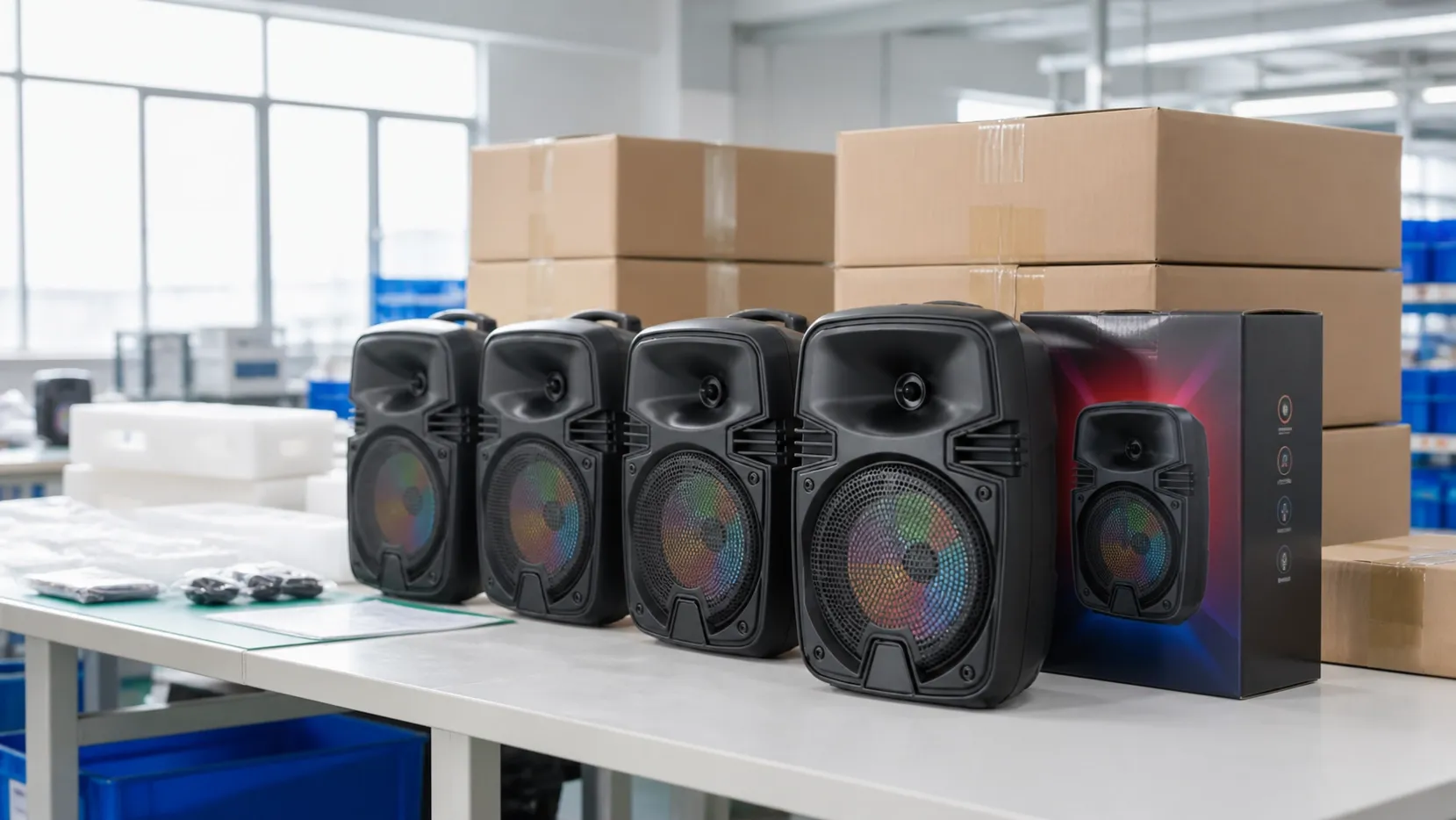
B&C currently has access to a compact black 4-inch portable speaker positioned as a high-value entry model for price-sensitive Belt and Road markets. The supplier-provided reference ex-factory price is US$9.99 per unit for the discussed configuration. The factory also reports shipping more than 500,000 sets during the first half of 2026.
These figures are commercial reference information, not a permanent public quotation or independently audited sales claim. The final price and availability depend on order quantity, packaging, branding, component supply, payment terms, and delivery schedule.
Reference configuration
Bluetooth, TF card, USB, FM radio, and RGB lighting.
Approximate product size: 120 × 150 × 220 mm.
4-inch speaker and a supplier-stated 3 W output configuration.
500 mAh lithium battery and Type-C charging cable.
Black housing suitable for a basic value-oriented program.
This combination offers the essential functions expected by many entry-level channels without forcing buyers into an over-specified model. Importers should still approve a physical sample and verify battery, runtime, sound, packaging, documents, and destination requirements before ordering.
Start with the Latin American sales channel
A speaker designed for an online marketplace is not automatically suitable for a distributor serving electronics shops, outdoor retailers, or promotional channels. Begin with the customer, expected use, and price position rather than a supplier catalogue.
Define whether the product is for home, travel, outdoor, party, worksite, or promotional use.
Identify the destination country and required language for packaging and instructions.
Set the target order quantity, retail tier, launch date, and preferred shipping terms.
Decide whether the program needs an existing model, light customization, or a new industrial design.
A clear commercial brief helps a China B2B sourcing partner shortlist suppliers that fit the actual program instead of sending an unrelated catalogue.
Build one comparable OEM specification
Bluetooth speakers that look similar can use different drivers, amplifiers, batteries, housings, charging components, and firmware. Ask every shortlisted supplier to quote against the same specification.
Audio and functional requirements
Speaker configuration, rated output, frequency response, and agreed test method.
Bluetooth version, supported profiles, connection range, and pairing behavior.
Microphone, hands-free calling, stereo pairing, lighting, radio, or other required functions.
Control layout, voice prompts, supported languages, and default volume behavior.
Battery and charging requirements
Do not compare battery capacity alone. Request the cell type, rated capacity, protection design, charging input, typical playtime under a defined volume condition, standby behavior, and charging-time test method. Battery-related transport documents and destination requirements must be checked for the exact model before shipment.
Mechanical and environmental requirements
Specify product dimensions, weight, housing material, grille construction, carry handle or strap, button feel, drop expectations, and any water-resistance target. A marketing description such as “outdoor” or “waterproof” is not a substitute for a documented requirement and test method.
Compare the total landed program, not only unit price
A low quotation may exclude tooling, logo application, color matching, packaging, accessories, testing, replacement parts, or export cartons. Ask suppliers to separate each cost and state the commercial assumptions.
Base product: model, included functions, accessories, and standard packaging.
Customization: logo process, color, voice prompts, labels, manuals, and cartons.
Development: tooling, samples, firmware changes, and engineering charges.
Quality: agreed inspections, reliability checks, and test documentation.
Logistics: packed dimensions, gross weight, carton quantity, and loading data.
B&C Sourcify focuses on high-value, cost-effective speaker options for Latin American channels. The sourcing objective is not the cheapest specification; it is a product whose performance, presentation, order quantity, and landed cost fit the buyer’s market.
Verify the supplier behind the sample
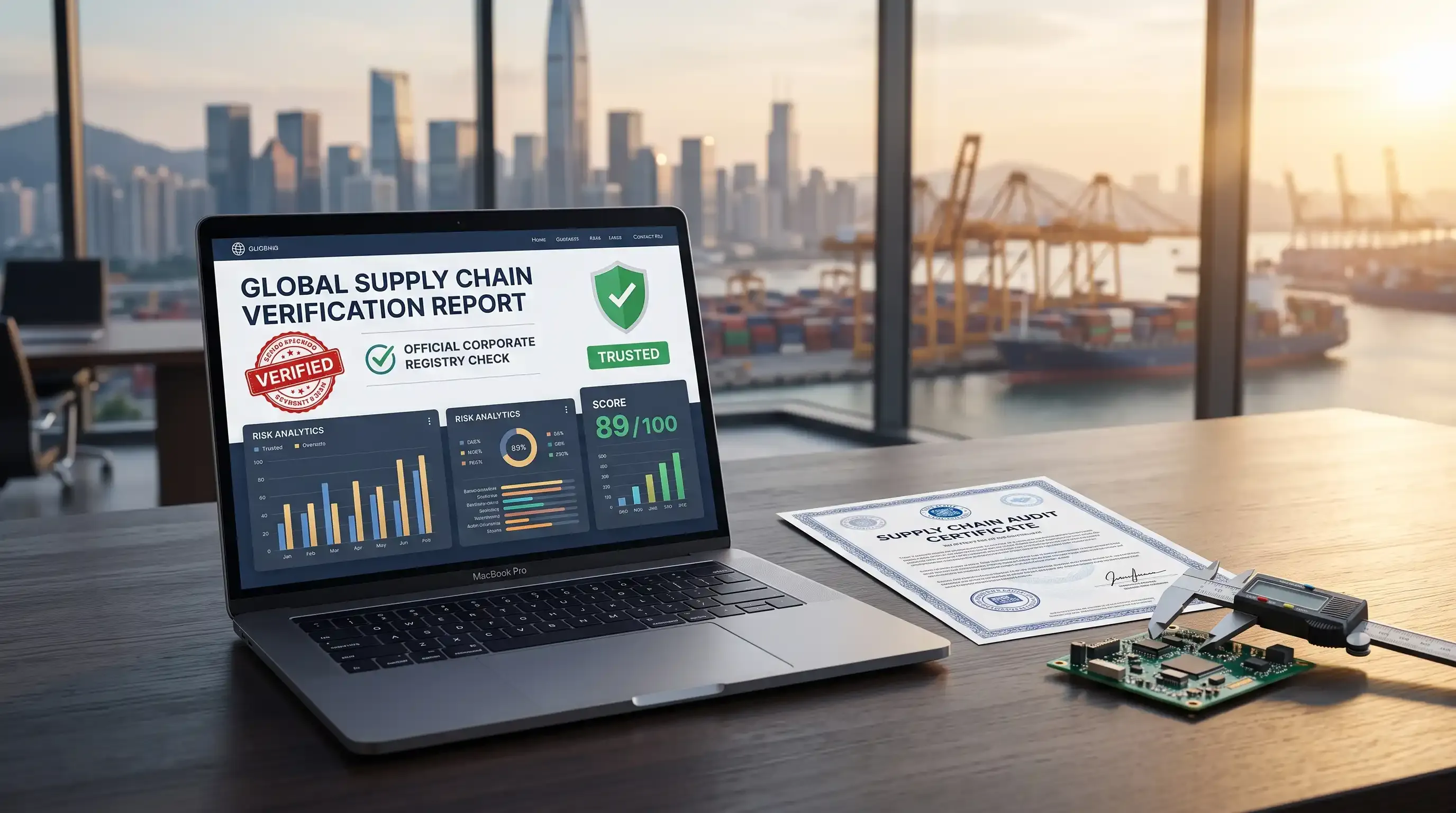
A polished sample does not prove stable production. Verify the legal entity, production location, assembly capability, incoming inspection, battery and electronic-component controls, finished-goods testing, and management of subcontracted processes.
When an on-site review is appropriate, connect photos, videos, records, and observed equipment to the exact supplier and model under evaluation. Do not treat marketplace badges or copied certificates as factory verification.
Approve a Golden Sample before mass production
The approved sample should become a practical benchmark for appearance, function, sound, controls, accessories, packaging, and labeling. Record approved deviations and keep the specification, artwork, and sample revision aligned.
A sample review can include pairing stability, button operation, charging, typical playtime, sound at several volume levels, unwanted noise, enclosure fit, grille and handle strength, cosmetic finish, and packaging protection. The exact checks should reflect the product and destination market.
Create a pre-shipment inspection checklist
Inspection criteria must be agreed before production finishes. A useful checklist may cover:
Model, color, logo, labels, manuals, accessories, and carton marks.
Bluetooth pairing, controls, microphone, charging, indicators, and required functions.
Sound comparison against the approved sample at defined settings.
Housing, grille, handle, connectors, buttons, gaps, scratches, and contamination.
Battery and charging spot checks using an agreed sampling and test method.
Retail packaging, export-carton strength, quantities, dimensions, and gross weight.
B&C can coordinate production follow-up, factory communication, inspection, packaging review, and loading according to the agreed project scope. Acceptance limits and test methods should be documented rather than decided after defects appear.
Plan Spanish or Portuguese localization early
Localization affects packaging artwork, manuals, voice prompts, safety information, barcode placement, and approval timing. Confirm the exact countries and sales channels before artwork begins. Do not assume that one language file or label format works across every Latin American market.
Ask the importer or qualified local adviser to confirm applicable electrical, radio, battery, labeling, environmental, and consumer requirements for the destination and business model. Supplier documents must match the exact product model and configuration.
Use consolidation when the product mix supports it
Speaker buyers may also source charging accessories, LED lighting, cameras, outdoor products, promotional packaging, or other electronics. When products serve the same channel, B&C can coordinate several suppliers, receive goods, check quantities and packaging, and prepare a consolidated shipment.
Consolidation can reduce fragmented handling and improve shipment planning, but it does not guarantee a fixed saving. The result depends on quantities, carton dimensions, supplier locations, product compatibility, shipping mode, and destination requirements. Review the practical workflow in our multi-supplier consolidation guide.
Information to send with your speaker sourcing request
Destination country, customer type, and intended sales channel.
Reference images or models and the functions that are essential.
Target order quantity, price position, packaging, and launch schedule.
Logo, color, language, barcode, manual, and accessory requirements.
Required test documents or compliance information for local review.
Any related products to consolidate in the same shipment.
Frequently asked questions
What is a realistic MOQ for an OEM Bluetooth speaker?
There is no universal MOQ. It depends on the existing model, color, logo process, packaging, firmware changes, component availability, and supplier policy. Share the required customization so the factory can quote the correct minimum.
Can we use an existing speaker model with our own brand?
Often yes. Logo, color, labels, manuals, and packaging may be possible without new structural tooling. Confirm available options, minimum quantities, artwork requirements, sample timing, and ownership of any custom materials.
How should importers compare battery-life claims?
Use the same test conditions: volume level, audio content, lighting status, connection mode, battery specification, and cutoff point. A headline playtime without test conditions is not directly comparable.
Can B&C inspect speakers before shipment?
B&C can coordinate inspection against an approved sample and agreed checklist. The scope may include appearance, function, accessories, labels, packaging, counts, and defined spot tests. Project-specific criteria must be confirmed before inspection.
Build a speaker program around verified requirements
A successful portable-speaker order begins with a market-specific brief, comparable quotations, supplier verification, an approved sample, and documented quality controls. These steps protect the importer from selecting a product that looks attractive but does not match the channel, performance target, or landed-cost plan.
Request a portable speaker sourcing review from B&C Sourcify. Send your destination market, sales channel, target quantity, required functions, branding needs, and launch date. We will identify the information that can be confirmed, the gaps requiring supplier input, and the next sourcing step.