Oct 28, 2026Sourcing Guides
Shopify Fulfillment Cost in China: The Real Cost per Order
A pick fee is not the cost per order. Six lines, one order profile, and the arithmetic that turns a price list into a fully loaded number for your store.
A pick fee is easy to compare. It sits on one line, it looks like the cost of an order, and it is the first number a store checks when two fulfillment quotes arrive. It is also the number that explains the least.
The real cost per order is six lines, and only one of them is the pick fee. Inbound freight and receiving, storage, pick and pack, packaging, outbound freight with duties, and returns all belong on the same cost sheet.
We run this work from China for stores doing at least five orders a day. This is the cost model we would build before a store commits to a provider, and the questions that make the lines visible.
The Pick Fee Is Not the Cost per Order
A pick fee pays for a bench action. Someone walks to a shelf, takes the unit, scans it and puts it in a box. That action has a price. It does not have the whole cost.
The rest sits in lines the quote may carry or may not. Receiving labor, storage, packaging supplies, outbound freight, duties and returns processing all move with your order profile. Two stores can pay the same pick fee and carry very different cost per order, because one ships single units to three countries and the other ships bundles of four to one.
Cost per order is a division, not a rate. Add every fulfillment cost in a month, then divide by the orders shipped in that month. The result is the number that shapes margin.
The division also shows which lines are fixed and which move with volume. Storage arrives on a calendar. Inbound freight and receiving arrive with each delivery. Pick, pack, packaging and outbound arrive with each order. Returns arrive with each return.
That is why the cheap quote can lose. It usually wins on the line everyone compares and carries the rest in a second document.
A store with a narrow SKU set and a steady daily rhythm will look cheap on almost any model. A store with long-tail SKUs, multi-item orders and a wide destination mix needs the full six lines before it can trust a cost per order.
Inbound Freight and Receiving
Stock has to arrive before orders can leave. The first cost line starts at the factory door, not at the shelf, and it covers the move from the supplier to the warehouse where stock will sit.
Ask who books the inbound move. A factory can quote a delivered price to the warehouse, or the store can arrange the pickup. Both place the risk in different hands. The cost itself grows with distance, mode and volume, so the model should name the point where the move starts.
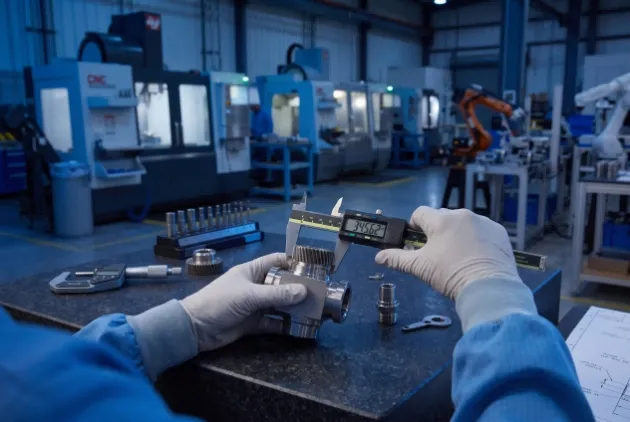
Receiving is the second half of the line. Cartons are unloaded, counted, checked for damage and opened. Our operation inspects 100% of inbound units, not a sample, so a wrong color or a missing part is found before it becomes a pick.
The inspection and the six-point photo check are part of the inbound work, not separate lines. What moves with SKU count and carton count is the receiving labor around them: unloading, counting, opening and reconciling. A delivery with a long list of SKUs and a few cartons is not the same receiving job as one with the reverse.
Inbound is not one charge. A China 3PL pricing sheet can bundle the move, the unloading and the count, or split them into separate lines.
Ask for the receiving report. It should state what was expected, what arrived, how many units were counted, what went wrong and who signed it. A report that shows up once the cartons are on the shelf has missed its moment.
Storage and the Free-Period Cliff
Storage looks simple until the free period ends. A warehouse holds your stock, and the space has a price. The price grows with the space a SKU occupies and the time it sits, so a long tail of slow sellers is expensive even when the unit count is low.
We hold inbound stock for seven days free. After that, the charge follows the space the stock occupies and the time it stays. The model should carry both.
The cliff is the day after the free window. Stock that waits for a slow SKU keeps paying for its space every month. The storage cost per unit sold can be larger than the pick fee, because the pick happens once and the storage happens every month.
Time is the part buyers miss. A slow SKU can sit for months before it sells, and every month adds to the cost of the units that did sell.
The SKU count can drive this line more than the order count. A store with a long tail of slow SKUs and a short list of fast ones pays for every position, even when most orders come from the fast few. Storage is where a long tail becomes a monthly bill.
Read storage per SKU, not as one total. The total hides which position earns its space and which one is simply waiting.
Pick, Pack, Packaging and Included Services
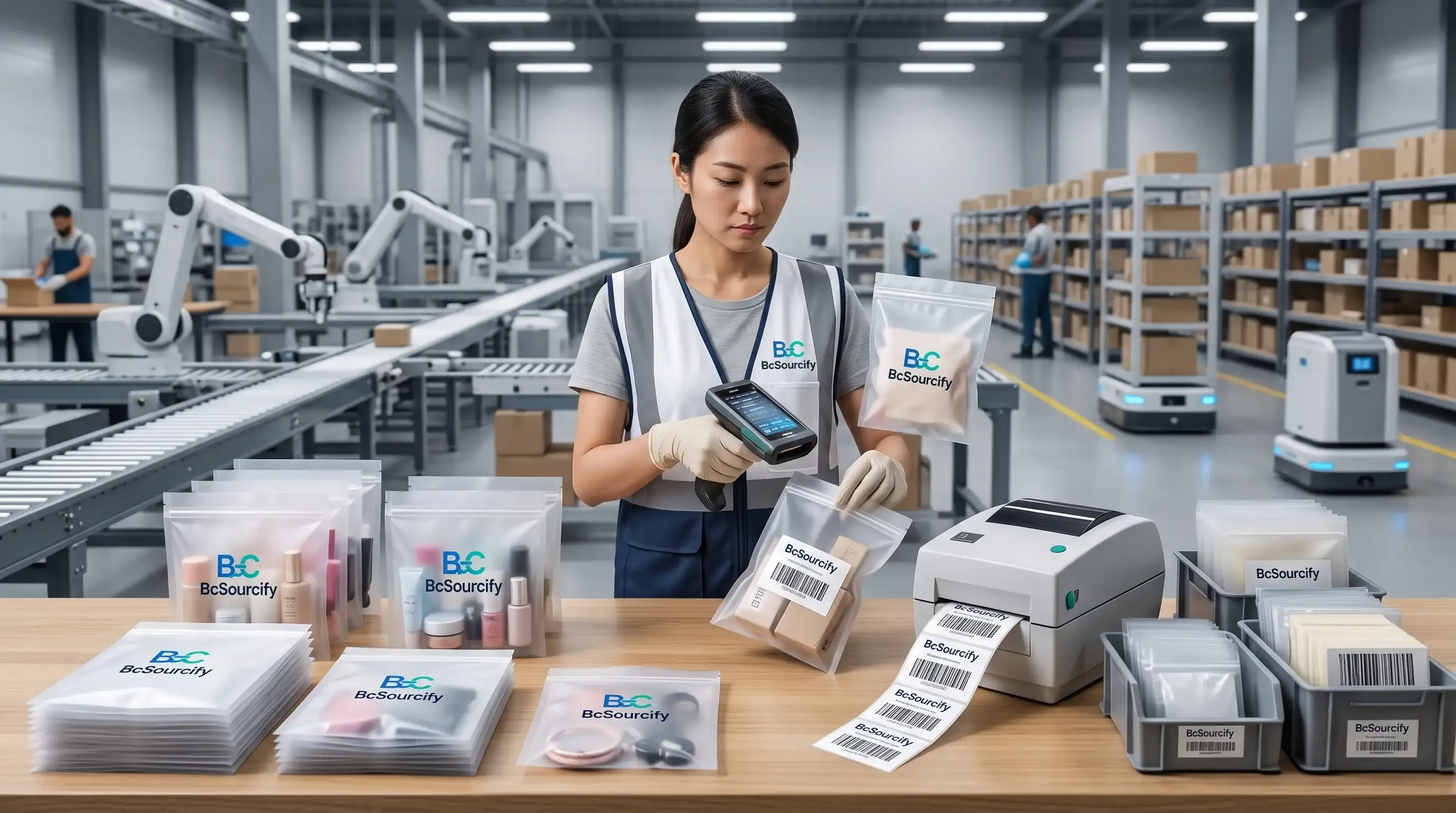
Pick and pack is the line every quote shows. It is also the line with the most variation. A single-unit order, an order with several items and a kit take different amounts of bench time, and the cost should follow the work.
Pick cost grows with the number of items in an order. Pack cost grows with the packaging spec: a standard parcel, a label and a packing slip are one level; a second box, fragile wrapping, a gift note or a custom insert are another. Those are packaging lines, and they belong in the model.
Packaging is a cost line, not a detail. The box, the bag, the insert, the tape and the printed card all have a price. A store that supplies its own materials may pay less per parcel, and it carries the storage and the stockout risk.
Two services sit beside pick and pack. Consolidation brings cartons from multiple factories together before they enter the warehouse; it is included in the fulfillment offer, not priced as a pick. FBA prep adds labels, bags and carton marks for stock moving to a marketplace warehouse. Standard labels and carton marks are included; the labor and any extra bags or materials should be confirmed as a line. Both belong in the cost model, but only the billed part belongs on the invoice.
A change from a mailer to a carton, a new insert or a different label adds material and a handling step. The cost model should carry the spec you actually ship.
Outbound Freight, Duties and Returns
Outbound often has the widest range and the least control. The destination, the service level and the packed size decide the price. Two orders with the same product can cost different amounts to ship because one parcel is light and bulky and the other is small and dense.
Space and weight both matter. A light product in a big carton pays for the box, not the product. Packing down the carton is a cost decision before the shipping decision.
Duties and customs are a cost line too. They are not a fulfillment fee, and they are not decided by the warehouse. Confirm with your customs broker who pays them, how they are assessed, how they are collected and which value they are based on. The answer belongs in the model before the first order ships, not after the first invoice arrives.
Returns are the sixth line, and they arrive after the sale. A return carries inbound freight, a processing cost, a grading step and a decision on what happens to the unit. A returned unit that goes back on sale still consumed the outbound trip, the return trip and the bench time.
Each returned unit gets a grade of A, B or C. The grade sets whether the unit is repacked and relisted, or flagged with photos for your decision. That decision is a cost line, and a store that ignores it can pay for the same unit twice.
Ask for the return profile, not just the return rate. A high rate on a low-value SKU is a different problem from a low rate on a heavy one. The cost per return depends on the product, the packaging and the reason it came back.
We read those three lines together. Outbound, duties and returns describe the part of the journey the warehouse does not fully control, and they are the lines most likely to be left out of a comparison.
Build a Fully Loaded Cost per Order
Six lines, one page. The page starts with an order profile: the SKU count you carry, the average daily orders you ship and the countries you send to. Add units per order, the inbound rhythm and the return profile.
Lay the six lines under the profile: inbound freight and receiving, storage, pick and pack, packaging, outbound freight with duties, and returns. Mark each line by what triggers it: an order, a delivery, a month or a return. The mark tells you what happens when volume falls.
Storage and inbound do not move with the order count: storage arrives on a calendar, and inbound freight and receiving arrive with each delivery. The order-triggered group is pick, pack, packaging and outbound. Returns arrive with each return. A cost per order built only on the order-triggered group can understate a slow month.
We run the model twice: once on your present volume and once on a slower month. The second run exposes the storage and receiving load that a strong month covers up.
Every cost has to land somewhere. A line left out of the first calculation does not vanish; it lands in another month or another budget. The model should show where each line lands.
The arithmetic is simple. Total the six lines for a month, add the one-time charges that belong to that month, and divide by the orders shipped. That is the fully loaded cost per order. Do it once with your numbers and once with the provider's assumptions, and compare the gap.
The bench, storage and dispatch work behind these lines is described in the fulfillment service overview (/b2c-fulfillment). Read it beside the model, because a price list without the operating method tells only part of the cost story.
Send Three Numbers and Three Months of Billed Lines
Send the order profile and the billed lines from your last three months (/contact-us). Add your SKU count, average daily orders and destination countries.
We build the six-line breakdown for your profile and set it against the billed lines you sent. The reply names the lines that are missing, the triggers behind them and the points to confirm with the provider. It does not promise a lower bill.
The work suits stores doing at least five orders a day, with a live catalogue and a warehouse already running. A pre-launch store has a different problem, and this model will not solve it.
A pick fee is a number. The order profile is the cost.