
Oct 30, 2026Sourcing Guides
Shopify Fulfillment at 5-15 Orders a Day: The Threshold
Five to fifteen orders a day is too many to ignore and too few to command a warehouse. The switch is decided by four fixed costs, not by a trend line.
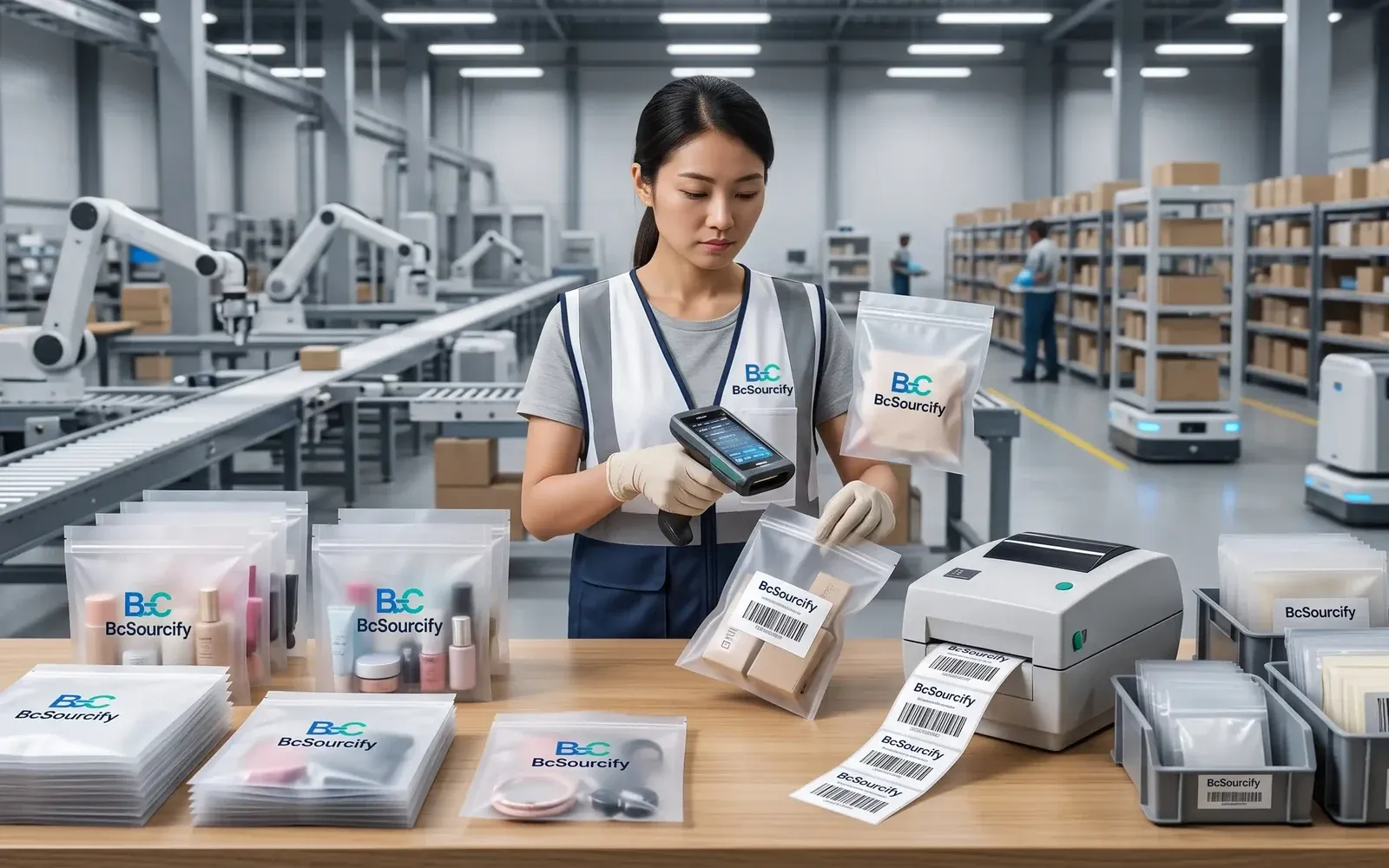
Five to fifteen orders a day is an awkward size for a Shopify store. It is too many to pack in ten minutes and too few to command a warehouse's attention. The owner is still the picker, the packer, the customer service desk and the person who answers the carrier. We look at the decision differently: not at the order count, but at the fixed costs the order count is hiding.
We run DTC fulfillment in China, and we also talk to sellers who should not switch yet. The honest answer at this volume is often to stay. The question worth asking is what would have to change for staying to become the expensive choice. That question has four parts, and each one can be answered with a number the seller already has.
Five Orders a Day Is a Strange Size
With five orders a day, the work is small enough to feel manageable and large enough to consume the day. The seller packs in the morning, answers messages at noon, drops parcels in the afternoon and reconciles the day at night. Nothing looks broken. The store is shipping, the customers are receiving and the cost per parcel seems low because the labor is the owner's.
At fifteen orders a day, the same routine takes most of a working day. A single sick day or a supplier delay turns into a backlog. The seller starts to notice that the packing table is always full and that the living room has become a stockroom. The store is still shipping, but the margin is being paid in hours.
The awkwardness is structural. A small store has the fixed costs of a warehouse and the volume of a kitchen table. A large store can spread those costs across enough parcels to make them small per unit. The store in the middle pays for space, software and packing materials without enough volume to dilute them.
That is why a single threshold number is misleading. The same five orders a day can be comfortable for one seller and unsustainable for another, because the fixed costs are different. The decision starts with those costs.
The Fixed Costs You Already Pay
The first fixed cost is space. A seller at this volume may keep stock at home, in a small unit or in a corner of an office. The rent may be zero because the space was already there, or it may be a real monthly payment. Either way, the space has a limit, and the limit arrives before the order count does.
The second is the packing station. A table, a scale, a printer, a tape gun, a shelf of boxes and a stack of mailers are enough to start. The cost is small in money and large in time, because every order passes through the same pair of hands. The station does not scale by adding a second table. It scales by adding a second person or a second shift.
The third is software. A Shopify plan, a shipping label tool, an inventory app and a returns tool each charge a monthly fee. The fees are modest at that volume and become a smaller share of revenue as volume grows. They are not the reason to switch, but they are part of that arithmetic.
The fourth is the stock itself. A seller carrying enough inventory to ship in two days is financing that stock. A seller carrying less stock ships slower or loses sales. The fulfillment decision is tied to the inventory decision, because a warehouse that holds stock for a seller changes the seller's cash cycle.
We ask a seller to write these four costs down before looking at a fulfillment quote. The quote is a new set of costs. The comparison only works when both sides are on the same page.
What a Minimum Buys
A fulfillment partner prices two things: the work per order and the access to the warehouse. The work per order is visible in a rate card. The access is the minimum, and it is the part sellers underestimate. A partner may set a monthly minimum, a per-order floor or a combination, and the minimum applies whether the seller ships five orders or fifty.
The minimum buys capacity; any discount is a separate conversation. The warehouse reserves shelving, a packing station, a slice of labor and a place in its software for the seller. Those resources have a cost even when the seller does not use them. A small seller who signs a contract with a high minimum is paying for capacity that a larger account would use.
The minimum also buys a relationship. A partner with a minimum has an incentive to keep the account, and the seller has a reason to consolidate. That can be useful. It can also lock a small seller into a cost structure that only works at a volume the seller has not reached.
The issue is not fairness of the minimum. It is whether the seller's volume covers it without forcing the seller to raise prices or cut margin. A minimum that consumes the contribution from the first orders is a subsidy from the seller to the warehouse.
We read the minimum against the seller's slowest month, not the best one. A store that ships fifteen orders a day in November and five in February needs a contract that survives February. The annual average is a comfortable number. The slow month is the one that decides.
The Hour You Do Not Bill
The owner's packing hour does not appear on the profit and loss statement, which is why it is easy to leave out of the comparison. It is still a cost. The hour could be spent on product development, advertising, customer retention or rest. When the store is small, the hour is capacity the store already has. When the store grows, the hour becomes the constraint.
We ask sellers to price the hour, not because the number has to be exact, but because it changes the decision. An owner who values the hour at a modest rate may find that self-fulfillment is cheaper in cash. An owner who is turning away wholesale inquiries or skipping ad tests because there is no time to pack may find that the hour is the most expensive line in the business.
The hour also has a quality cost. A tired packer makes mistakes: the wrong variant, a missing insert, a label on the wrong side. Each mistake produces a replacement, a refund or a support conversation. Those costs are small individually and large in aggregate. A fulfillment partner is not immune to errors, but the partner has a process and a person whose job is to catch them.
The hour is not an argument for switching with five orders on the board. It is an argument for measuring the hour before deciding. A seller who has never counted the time is comparing a cash cost with a hidden one.
When the Threshold Moves
The threshold moves when one of the fixed costs changes. A rent increase, a move to a smaller home, a second product line or a wholesale account can change the space calculation. A key hire or a parental leave can change the labor calculation. A peak season can change the error and overtime calculation.
Growth moves it in the other direction. A store adding a second sales channel, a subscription box or a bundle program needs more storage and more packing steps. The same five orders a day can become five orders plus a subscription run plus a wholesale pallet, and the packing station that handled the first becomes the bottleneck for all three.
Geography moves it too. A seller shipping from one location to a national market may find that transit times limit conversion. A partner with a second site can shorten the lane, but the partner's minimum and the seller's volume have to support the extra location. The warehouse is a network decision, not only a labor decision.
The threshold is not a line the seller crosses once. It moves with the business. A seller who switches too early pays for capacity that is not used. A seller who switches too late pays in missed sales, errors and burnout. The right time is when the fixed costs are visibly changing, not when a blog post names a number.
The Hybrid Setup
The hybrid setup is easy to overlook. The seller keeps the high-touch work in-house and sends the standard work to a partner. A personalized product, a pre-order kit or a wholesale pallet may stay at the seller's table. A standard SKU with a stable label may ship from the partner's warehouse.
The hybrid has a cost of its own. Two inventories, two stock counts and two sets of cut-off times create reconciliation work. An order that contains both a standard and a personalized item has to be split or held. The seller who chooses the hybrid needs a clean rule for which SKU goes where, and a process for the orders that cross the line.
The hybrid also changes the minimum. A partner may accept a smaller volume if the seller commits to a stable SKU set and a predictable inbound schedule. The seller gives up some flexibility and gets a lower entry point. That trade is worth examining before signing a full contract.
We use the hybrid when a seller has one product that dominates volume and a long tail that does not justify warehouse space. The standard product carries the partner's minimum. The long tail stays at the seller's table. The split is not elegant, but it buys time while the store grows.
The hybrid is not a permanent answer. That setup lets a seller test a partner without moving the whole catalog. A seller who runs it for a quarter learns how receiving, cut-off and exceptions are handled before committing the rest.
Run the Numbers Before You Sign
The numbers to collect are simple. The seller needs the space cost, the packing station and the hours it consumes, the software subscriptions, and the cost of carrying stock. Those are the four fixed costs. The partner's minimum and per-order charge form the fifth line. Add the seller's error and return cost to the first total, and the partner's error and return cost to the second, then compare both at the slowest month and at the current month.
The comparison should include the cost of a missed order. A seller who cannot ship during a peak week loses sales that do not appear in the fulfillment budget. A seller who can ship but makes mistakes pays for replacements and support. Those costs are part of the decision, and they can exceed the gap between two rate cards.
The comparison should also include the cost of switching. Onboarding takes time, stock has to move and the first orders may ship late. A partner who is cheaper per order but takes a month to onboard may cost more in the first quarter than a partner who is slightly more expensive and ready sooner.
Send the daily order count, the SKU count and the destination mix for a fulfillment cost review (/contact-us). We will put the fixed costs and the partner's minimum on one page and show where the threshold sits for your store. Our DTC programs start at five orders daily. Dore Technology Co., Ltd. takes the order. Its warehouse page (/b2c-fulfillment) describes the work behind those numbers. Five orders a day is not too small to plan. It is small enough that the wrong contract hurts.