Oct 21, 2026Sourcing Guides
Pet Products Supplier Guide: Materials, Failure Points in China
Beds, carriers, bowls, toys, grooming tools. Each one fails in a different place. The materials that matter, the sample points to approve, and the supplier questions worth sending.
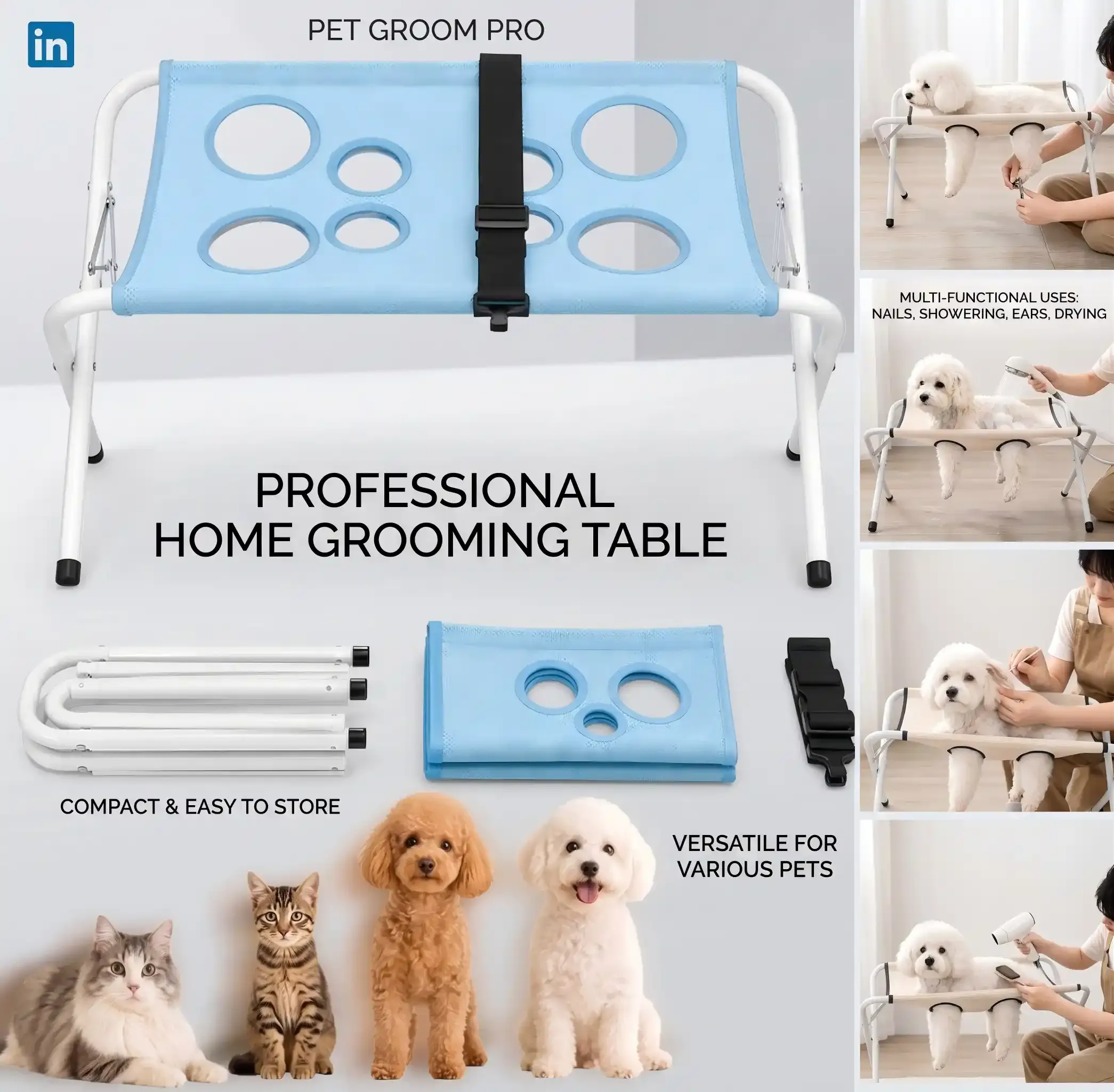
You already sell pet products, and the next order adds a category, a custom build or a new supplier. A photo hides how a seam is sewn, whether a buckle will corrode, or where fill will bunch. We work from Shenzhen, China, as a sourcing and QC team, with a family-run metal fabrication shop, three decades of mold work and ten years of trade behind us. This guide covers five non-electric categories: beds and mats, carriers, bowls and water, toys, grooming tools. Electronic products stay out. The business case for non-electric pet gear sits elsewhere.
Beds and Mats: Fabric, Fill, and the Seam That Takes the Strain
Start with the seam, because the seam is where a bed meets its daily load. The main seam joins panels under tension, the binding wraps the edge that paws and teeth find, the zipper opens the cover for washing or filling, and the base panel carries the shape across the floor. The base is also where a non-slip layer can let go, and the stated dimensions are where a compressed fill can come up short. A bed can look full in a photo and still open at the binding.
Then the fabric. A hard-wearing outer face and a soft contact layer do different jobs, and a removable cover changes the sewing route and the tolerance at the zipper. One cloth seldom does both jobs well. Fill comes last and decides where the shape fails. Loose fiber migrates into corners and packs flat where the body rests; a cut foam block keeps its shape until the edges soften or the core cracks. Neither choice is wrong. They fail in different places.
We run three checks on the sample. Pull the seam allowance at the binding and watch whether the stitch line holds or the cloth travels. Press the fill at the center and at the corners, then let go, to see whether it moves and returns. Run the zipper the full length with the cover fitted. The signed sample is the reference for the order, and how a sealed reference sample is kept is covered in a separate guide (/knowledge-hub/golden-sample-benchmark-prevent-quality-defects). A narrower mat program with its own construction brief is covered elsewhere. Before you order, ask whether the factory issues a change notice when the fill or the fabric changes, and ask what that notice contains.
Carriers and Backpacks: Follow the Load Path
Follow the handle first. On a carrier or a backpack, the load path starts at the handle or the shoulder strap, runs through the attachment, into the frame or the base board, and out through the bottom panel. When the handle is sewn to the fabric alone, the cloth takes the whole load and the stitch line becomes the weakest point. When the attachment is sewn into a load-bearing board or a frame, the same pull lands on a part built to carry it. The difference is invisible in a photo and obvious when the bag is full.
Then the panels. Woven fabric resists abrasion; mesh lets air through and tears at the edge when the weave is loose or the binding is thin. A zipper on a carrier is a structural part, not a closing detail. The teeth and slider take load when the bag is packed, and a metal slider can corrode where the plating wears. Look at the D-rings and buckles the same way, at the surface and at the seam that holds them. The base board is the last stop. A board that bends under a full load keeps bending, and a board that cracks will press through the lining.
We load the sample bag and lift it by the handle, then by one strap. Watch the attachment seams, not the bag body. Run each zipper end to end with the bag loaded. Turn the hardware over and look at the edges of the plating. Pull the mesh at its binding. Ask whether the factory keeps a written stitch and reinforcement standard for the load points, and ask to see a copy.
Bowls and Water: The Surface, the Base, and the Joint
Start at the surface the pet eats from. PP is light, takes color evenly and scratches; stainless steel resists scratches, dents at the rim and pulls heat from the contents. Both are ordinary choices, and each tells you what the bowl will look like after daily use. The base decides whether the bowl stays where it is put. A silicone or TPR ring, a suction cup or plain feet all depend on how they are attached. A glued ring that lets go turns a weighted bowl into a sliding bowl, and a suction cup on a textured floor has little to grip.
The joint is the third part. A bowl that clips into a stand, a double bowl joined by a bridge, or a bowl fixed with screws all create a place where water, food and cleaning residue collect. A clip that loosens and a screw that backs out are the same failure with different hardware. Our sample check starts at the rim. Run a finger around the rim for burrs, lift the base ring at its edge, fill the bowl to the stated capacity, and read the cleaning instruction as a buyer would. Vague wording about washing becomes a support question later. The question for the supplier is how the base ring is bonded and whether replacement rings are available.
Toys: TPR, Nylon, Rope, and the Joint Between Materials
A toy fails at the joint before it fails at the material. TPR bonded to nylon, a rope knot pulled through a fabric body, a squeaker seated in a plush shell: each is a connection between two materials that move differently. The joint is where a gap opens, where a knot slips, where a squeaker works toward the surface, where fill escapes. Look there first.
The materials set the behavior. TPR is soft and returns after a squeeze; nylon is hard and abrades what it rubs against; rope takes in saliva and loosens as the fibers slide; plush covers a fill that can migrate. None of that is a defect by itself. The defect appears when a design asks one material to do another's job, such as a soft shell holding a hard joint with no mechanical anchor. Size and small parts close the list. A toy that measures smaller than its stated size is not the product in the photo, and any part that can be separated is a part to flag.
We pull each joint apart with steady force and watch the material around it, not just the join. Push the squeaker from both sides to see whether it can be displaced. Roll the rope between your fingers and look for loose strands. Check molded parts for flash and sharp edges. Measure the whole toy against its stated dimensions. The supplier question is how the joint is made and how the factory keeps it consistent from one batch to the next.
Grooming Tools: The Edge, the Coating, and the Hinge
Begin at the working edge. On a comb or brush, the tooth tips are where burrs, bent teeth and uneven spacing show. On a grooming shear, the blade gap and the alignment of the cutting edges decide how the tool behaves in the hand. A tooth that is sharp in the wrong place scratches, and a blade that sits a fraction off does not cut cleanly. Neither shows in a product photo.
The handle is the second read. TPR overmolded onto an ABS shell creates a bond line, and that line is where separation starts. A gap at the overmold traps hair and water, and a soft grip that lifts at the edge is on its way to coming off. Then the hinge and spring. A hinge that loosens, a spring that sits off center, a blade assembly with visible daylight between parts: these are assembly failures rather than material failures. They show up as wobble, noise or a tool that will not close the same way twice.
We run a finger along the tooth tips in both directions. Open and close the tool through its full range, several times, and listen. Look at the overmold seam under light, then at the gap in the blade assembly. Check the coating at the edges, where peeling starts. Ask how incoming teeth or blades are checked and how assembly tolerances are recorded for each batch.
The Questions and Checks That Apply to All Five
Four kinds of answer matter across all five categories, and each has a version that helps and one that decorates. A usable material declaration names the material family, the part it goes into and who issued it, with notice of any later change. The brochure answer is a catalog line about quality materials. A usable third-party test report ties the material and the part to a laboratory and a date; the brochure answer is a scanned cover page with no part number on it. Traceability asks which material batch went into which run, on which line, and what changed between your sample and your order. Packing and spares ask which replacement parts ship, which carton the goods go into, and how a mixed load is marked. The brochure answer to both is a line about strict control and careful packing. Put those in the order itself, before anything loads.
Then the sample. Two documents anchor the check: your signed sample and the specification on the purchase order. The check reads appearance, dimensions, function and packaging against both. A sample that passes on looks and fails on packaging was approved against half a reference. How a sealed reference sample is kept and compared was covered earlier. The supplier checks, in-process patrols, pre-shipment checks and container-loading oversight behind these answers are described on the sourcing services page (/b2b-sourcing).
Packaging changes the answer. Compression saves space and puts fill under load, so the sample has to show that the fill comes back after the carton is opened. Flat packing protects shape and costs volume. A hang card needs its hole in the right place and card stock that holds the product; a printed color box adds a print check and a carton mark that has to match it. None of these is free, and none is a reason to skip the sample.
Consolidation has its own arithmetic. Our standard program counts product categories and covers up to five; anything beyond that is priced on its own line, a billing rule rather than the list of categories here. In a mixed load, goods stay in per-category cartons with marks that match the packing list, and inspection records stay with the category they describe.
One boundary covers all of it. We request material declarations and third-party test reports from suppliers, and the buyer confirms what the target market requires; we do not issue suitability conclusions for animals or turn a test report into a verdict on the product. What follows a failed report is a separate line of work.
The Line You Sell Today Is the Brief
Start with the line already in production. Name the two or three defects that keep coming back. Tell us both in the inquiry form (/contact-us), and we map the failure points worth checking, the sample points to approve and the questions to put to the supplier, then quote the categories you want consolidated. Our B2B work starts at USD 10,000 a year in purchases, and Dore Technology Co., Ltd. is the entity that signs.