Oct 30, 2026Sourcing Guides
Vertical Silicone Integration: Four Product Worlds in One Park
One park, one material, four product worlds. What a vertically integrated silicone plant changes for buyers, from mold design to the problems integration leaves unsolved.
The silicone plant is the afternoon stop of the factory day, and the visit does not open with a presentation. The two senior representatives walk into a showroom where samples sit in baskets by category, pick up parts, and start asking how wall thickness is controlled. That shift, from what can you make to how do you control it, is the useful part of the visit. The plant sits inside a single industrial park. Concept, mold design, production and sales belong to one company, and four product worlds share the same material and the same buildings. Integration is why the stop is worth the drive.
Integration Is a Different Kind of Supplier
Most suppliers a buyer meets in China are one operation. A molder molds, a printer prints, an assembler joins parts, and a trading company coordinates them from an office that never sees the floor. This plant runs the chain inside one park: concept and mold design, tooling, injection, the UV step, secondary vulcanization, packing, and the sales team that quotes the work. One company owns the steps from mold design through packing.
When a buyer asks whether a wall can be thinner, the answer comes from the people who will cut the steel, not from an office relaying it to a subcontractor. Ask whether material records, color batches and test reports sit in one system, and how fast a schedule change reaches the press room.
The plant is large for an integrated silicone plant. It employs more than 250 workers, more than 20 in R&D and more than 20 in QC, with capacity above 100,000 pieces a day. Those numbers describe capacity. Capability is another question, covered below.
What integration does not change is the basic fact of supplier life. This is still one company with its own customers, its own peak season and its own queue. A buyer who reads integration as alignment will be surprised by the first delay. The model is different. The incentives are still a supplier's.
Our sourcing work has a separate overview (/b2b-sourcing).
From Concept to Mold Under One Roof
A silicone part begins as a drawing and a decision about steel. The mold sets the wall thickness, the parting line, the gate position and how material fills the cavity. Silicone shrinks as it cures, so shrinkage has to be built into the tool. Hardness changes the flow, and a simple undercut can need a slider that changes the tool cost. None of this can be seen in a catalog photo.
When the designer and the tool room share a building, the loop closes fast. A first shot comes out with flash on one edge, the designer walks over, the gate shifts, and the next shot is clean. That loop, repeated across a week, is what a tooling quote really buys. Three separate companies run the same loop through email, at a calendar cost.
Injection is followed by a UV step for surface work, then secondary vulcanization, then packing. Secondary vulcanization is the step buyers ask about least and should ask about most. It is a post-cure that drives volatiles out of the rubber and stabilizes the part, which affects smell, compression set and behavior after months in storage. We ask whether the process includes it, how long it runs, and whether it runs per batch.
Packing is the last place quality is visible. The people who fold the carton and count the units are the final point to catch a torn edge, and the first carton they sign is a record you can check.
Ask for the tooling cost as a separate line, away from the unit price. Ask what happens when the first shots miss tolerance, and who covers the correction. Ask to see the design-for-manufacturing response to your drawing. A plant that answers in specifics is telling you how the next six months will run.
The mold is the product.
Four Product Worlds, One Material
Four product worlds share the same park: baby and maternal, children's toys, outdoor, and household paired with pet. The material belongs to one family. The risk map changes from one world to the next.
Baby and maternal products are judged on what goes near a mouth and what survives repeated cleaning. Children's toys are judged on small parts, tension and rough use. Outdoor gear meets sun, salt and temperature swings, and its metal hardware has to survive conditions the silicone never notices. The household and pet categories end up in the same home, but the stress differs: heat and food for one, teeth and claws for the other.
The paper behind that breadth is real: more than 500 patents sit in the company's file, and the lab runs salt spray, choking hazard, durability, pressure, impact and tension tests. Each product world leans on a different subset. Salt spray belongs to the hardware on outdoor goods. Choking hazard belongs to anything a small child can reach. A plant that runs all four worlds tests for all four failure modes, and that experience transfers in ways a single-category workshop cannot match.
Compliance is a separate layer. FDA and CPC documents answer US questions, while LFGB answers German food-contact rules, EN71 covers toy safety and REACH covers EU chemicals, with BPA-free declarations alongside. These are documents for a destination market, not a substitute for knowing it. The buyer still has to know which one the channel will request.
Breadth has a trap. A plant that runs four worlds can be deep in one and thin in another. We ask which category has the oldest test file and the most repeat programs. Ask who in R&D owns your category. The answer tells you whether you are buying experience or a catalog.
Same press, different risks.
What Retailer Audits Actually Test
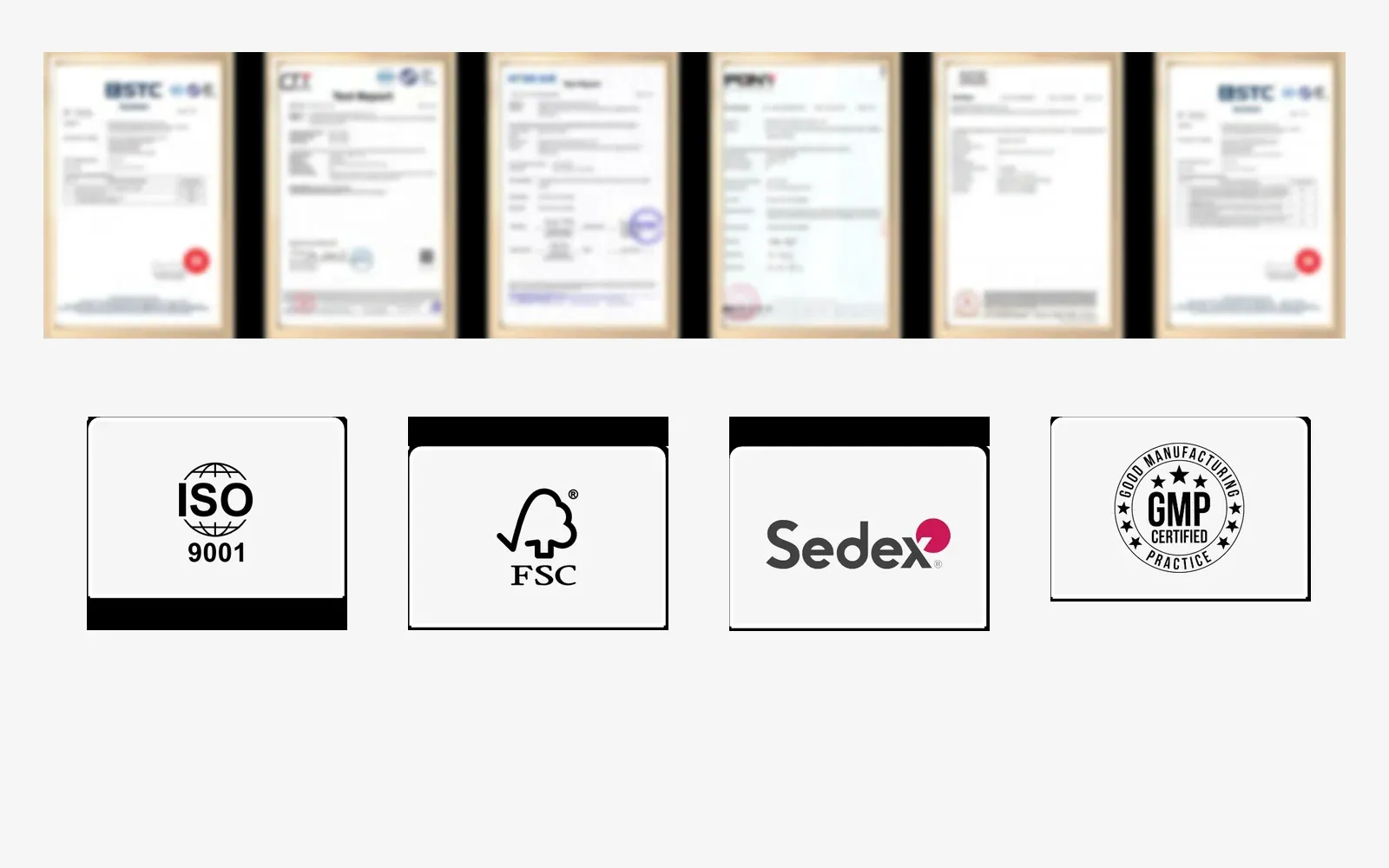
The audit files we read arrive as a stack of certificates, and the stack hides a distinction. The plant's file covers social audits such as BSCI and SEDEX, ISO management systems for quality and environment, GMP for a clean, controlled production environment, and major-retailer programs. Those documents answer separate questions. The retailer controls the scope and follow-up of its own program.
What the auditor does is compare the plant's documents with the plant's floor. The auditor reads wage and hour records, interviews workers away from a manager, and traces one lot of material to a finished carton. Then the auditor checks the corrective actions from the previous visit, and whether they held. Does this plant do what it says it does on a day it did not choose?
That is a system test, not a product test. An audit can pass while a color match drifts, and it can pass while your order waits behind a bigger program. A passing result tells you the plant can hold a system. It does not establish that it will hold your line.
The full report usually belongs to the program that commissioned it, so a new buyer sees the scope and the date, not every finding. Ask which audit applies to your category, because a toy program and a household program ask different questions.
The lab supplies the second evidence layer. A test result only matters when the sample tested is the sample you will buy. Check that the report names the material, the color and the model, and that its date describes the current process.
An audit is a floor.
The Sample Room Is a Shortcut
The showroom is organized for handling, not for looking. Samples sit in baskets by category, and a buyer can pull a tray of parts in an hour, compare wall thickness, feel a molded seam, and press a suction base to see whether it holds. A catalog cannot answer those questions. A basket can.
The shortcut works when the buyer arrives with four things: the price band, the channel, the packaging constraint, and the standard its market tests against. With those in hand, the visit becomes a filter. A few parts deserve a second look, and one or two deserve a question about tooling.
The questions worth asking are specific. Which of these shapes already has a mold, so no new tooling is needed? Which changes fit an existing tool, such as color or a logo, and which ones need a new cavity? What drives the unit price at volume, and what changes at a different quantity? A salesperson who answers these without leaving the room is working from the plant's real records.
The trap is treating a basket sample as a promise. The showroom holds the plant's showpieces, finished under ideal conditions, often as a demonstration rather than a production run. The part in your hand is evidence of what the plant can do. It says nothing about what your batch will be.
Before the run starts, the approved sample gets sealed. Two samples are sealed, one for our office and one for the plant, and the shipped goods are compared against them. A basket starts the conversation. A sealed sample ends the argument.
Handle, then ask.
What Integration Does Not Solve
Integration solves handoffs. It does not solve four problems that decide whether a program works.
The first is priority. One plant serves many customers, and a major retail program can absorb capacity for months. Your purchase order joins a queue you cannot see. Ask for the production plan in writing: the line and week your order is booked, and what happens when a bigger customer moves. A plant that cannot describe its queue may never have been asked.
The second is mold ownership. A tool built for your product can live in the plant for years, and ownership often goes unasked until the relationship ends. We put the ownership, the maintenance responsibility and the right to move the tool into the tooling agreement. Integration sharpens the question, because the mold and the press sit in one place. If you do not own the tool, you do not own the product's future.
The third is QC independence. The QC team is on the plant's payroll, and a team of more than 20 is a resource, not a neutral referee. Its job is to protect the plant's standard, which is close to yours, not identical. That is why third-party inspection and a sealed sample belong in the plan from the start. Someone outside the building has to compare the goods with the approved part.
The fourth is brand and marketing. The plant does not build demand, position a product, write claims or manage a channel. Compliance documents support a claim. They do not create one. A buyer who expects a factory to shape the brand has misunderstood what a factory is for.
Fewer handoffs remove some cost and add others. Tooling, color changes and secondary operations carry their own price. Integration does not automatically lower the total, and a buyer who assumes it does will negotiate from the wrong number.
Integration is not control.
Send the Category and the Retail Channel
Send the category and the retail channel you are building for (/contact-us). Two facts are enough to start: what the product is and where it will be sold.
From there we read the audit and test documents against the channel's requirements, plan the sample review around parts that already have molds, and list the questions for the tool room before the tooling budget is committed. The reply is a reading of the file, not a promise about the outcome. We take on buyers whose yearly purchases reach USD 10,000.
The plant visit ends with a basket of samples and a list of questions. The list is the part worth carrying home.
Dore Technology Co., Ltd. serves as the seller.