Oct 14, 2026Sourcing Guides
GSXT Explained: How to Read a Chinese Company's Records
The official file exists for every Chinese company. Few buyers know how to read it. A Shenzhen sourcing team walks the record field by field: scope, risk entries, and the path when it is in Chinese.
Almost every Chinese company carries a public official record, and most overseas buyers meet theirs as a screenshot, forwarded without explanation. The file is written in Chinese. The lines that decide deals are short and easy to miss. Screenshots travel well. Certainty does not. This guide walks the record the way we read it at our desk: the fields that carry weight, the entries worth recognizing on sight, and the route to take when you cannot read the language yourself.
What GSXT Is, and What Its Files Contain
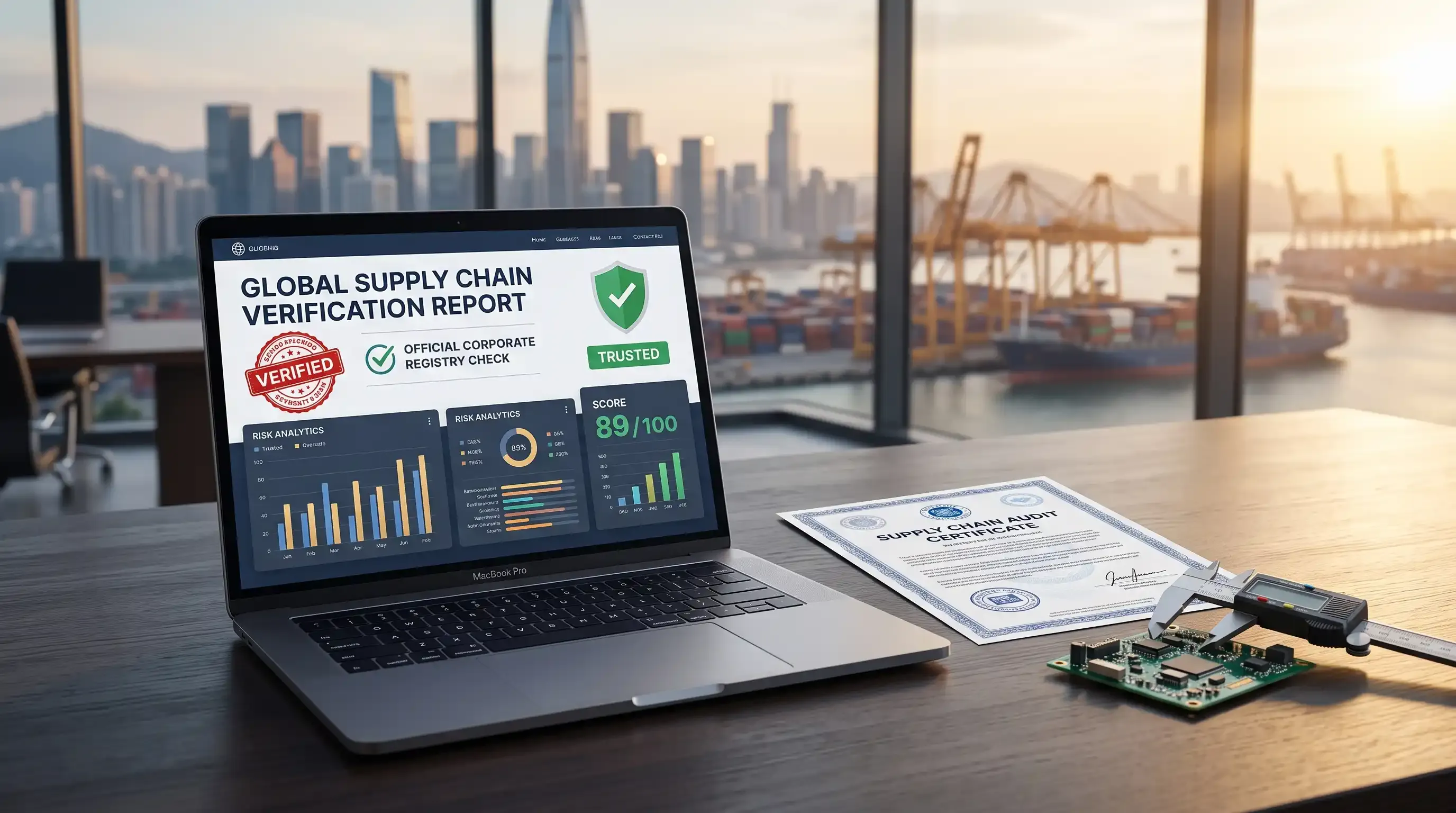
GSXT, short for the National Enterprise Credit Information Publicity System, is the register where a Chinese company's official filings and credit entries become public. It lives at gsxt.gov.cn. Ask how to check a Chinese company's registration, and every reliable answer starts there. Four areas carry the weight for a buyer: the business scope, dishonest-debtor listings, frozen equity, and litigation. Everything else in the file matters less than buyers assume. Our written reports walk those same four, scope line first. If your decision is already at the payment window, start with our guide to verifying a supplier before paying a deposit (/knowledge-hub/verify-chinese-supplier-before-deposit).
Reading the File, Field by Field
A company record covers more ground than one screenshot shows. Four positions decide it: the scope line and the three risk entries. Read those well, and the rest becomes background. Skip them, and the file stays a wall of Chinese.
Business Scope: The Two Word Families
Start with 经营范围 (business scope). The wording on that line answers the trader-or-maker question faster than any claim in a chat, and it reads in two word families. 批发 (wholesale), 零售 (retail), and 进出口贸易 (import-export trade) describe businesses that sell and move goods. 生产 (production), 加工 (processing), and 制造 (manufacturing) describe businesses that make them. A scope leaning on the first family points to a trading company; the second points to a factory with production of its own. One further reading matters: if the line does not extend to the product you plan to buy, that gap means something. A scope can be completely real and still not cover your order.
The Three Risk Records, by Name
The record can also carry three entries that reprice a deal, and they are worth learning in Chinese, because that is how you will meet them. 失信被执行人 (dishonest-debtor listing) means a court has put the company on a list for failing to honor a judgment. 股权冻结 (frozen equity) means a hold sits on the owners' shares in the company. 涉诉 (litigation) marks lawsuits in which the company is named. When any of the three appears, it gets flagged in the written report we prepare. One flag is a question. A flag sitting beside a scope that misses your product is where our advice turns to stopping. A file that reached our desk carried exactly that stack, and the next section opens it.
A File Read Cold: What a Bad Record Looks Like
What does the bad version actually look like, filled in? Here is one, stripped to the record. A client sent us a company name to check. The file carried two risk entries, 失信被执行人 (dishonest-debtor) and 股权冻结 (frozen equity), plus five 涉诉 (litigation) records, and the registered scope did not reach the product the client planned to buy. We put a written warning in front of the client and advised against the deal; they dropped the supplier. The lesson is in the stack, not in any single line. Each of the three risk entries, alone, gets flagged in the report we prepare. The same entry sitting beside a scope that misses your product is the pairing we act on: records say what the company has done, and the scope says whether it is even in the business you think you are buying from.
What to Do When You Can't Read the File Yourself
Two walls stand between you and a clean reading, and neither has to be yours to climb. The first is language. The entries that matter, from the scope line to 失信被执行人, 股权冻结, and 涉诉, are written in Chinese. People search for GSXT in English; the records themselves stay Chinese. The second wall is access. Opening the system from an overseas connection can be blocked, so the self-serve route is not always open. The path around both walls is short: the company name, or the file as you received it, goes to a team already on the ground, and a written assessment comes back within 24 hours. That is the whole route: one handoff, one day, one written answer in English. Files do not get simpler in a second language. That reading is work we do daily from Shenzhen. You do not have to read Chinese to know what the file says.
What the File Can't Tell You
A clean file is a starting line, not clearance. It proves identity and lays out the risk surface around a company. What it cannot prove is what the company actually makes: whether the product you are buying is really produced there, whether the capacity exists to run your order on schedule, and whether the orders its sales team promises are backed by production. The record is about the company. The order is about the factory. Those answers live on a production floor, and no registry carries them. Whether you are actually dealing with a factory is a different question, covered by five desk checks in our companion guide (/knowledge-hub/trading-company-or-real-factory).
Send Us the Company Name, and We'll Read the File
Send us the company name, or the file itself, through our contact page (/contact-us). If what you have is a product spec or the supplier's link, that works too; the reading runs the same way. Within 24 hours, a written read comes back: business scope, dishonest-debtor listings, frozen equity, and litigation entries. That is our Free Supplier Background Audit, and it costs nothing. You keep every decision; we hand you the reading. We work out of Shenzhen as a sourcing agency with a ground risk-control team, and contracts and company payments are handled by Dore Technology Co., Ltd.