Sourcing Guides
Amazon Ships in Product Packaging (SIPP): When Redesigning Your Box Pays for Itself
Amazon's Ships in Product Packaging program lets your retail box do the shipping. This guide covers when redesigning your box pays for itself — and when it doesn't.
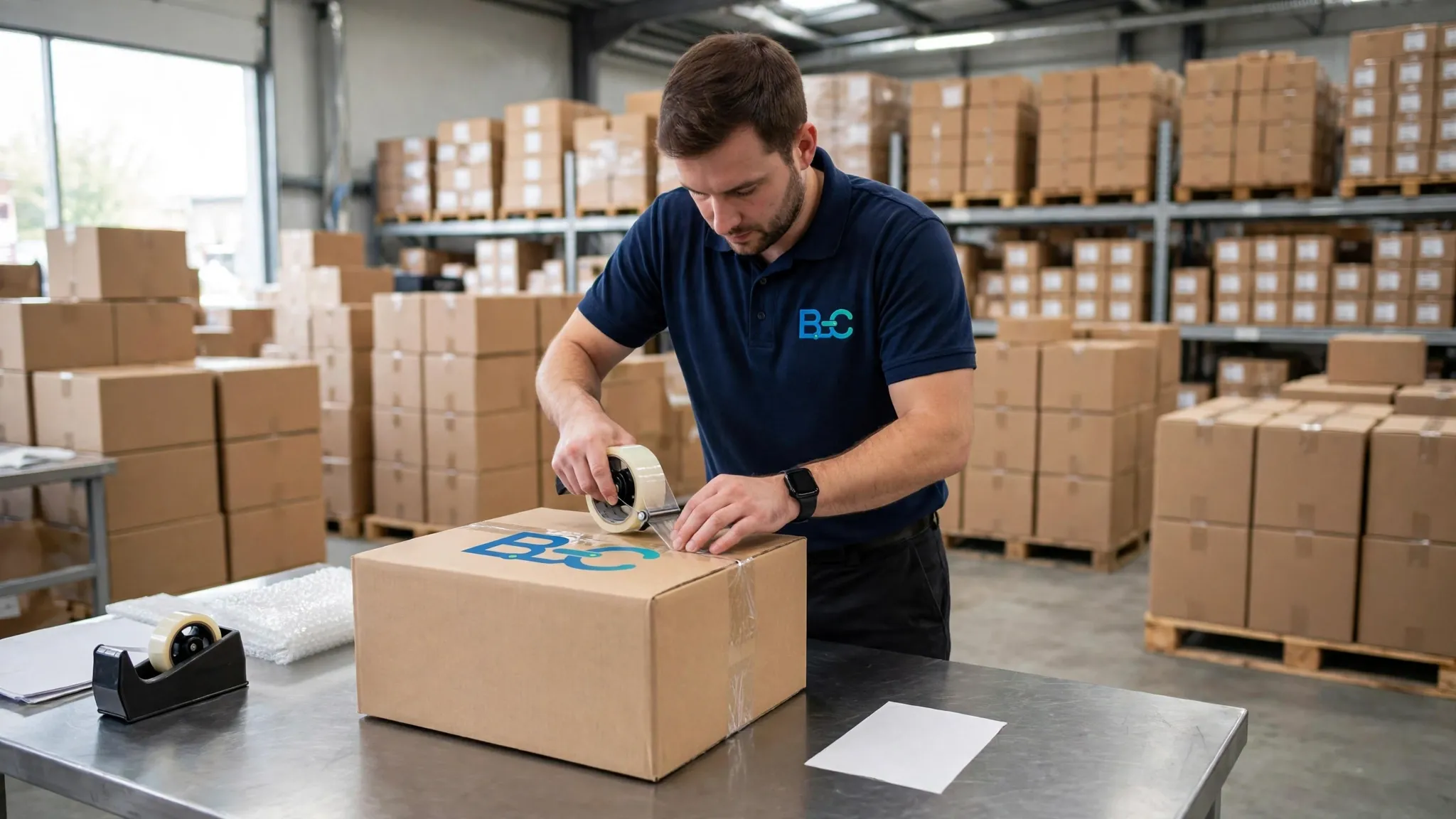
Every Amazon seller knows the feeling: you design a retail box, the factory makes it, and then Amazon puts it inside another box. Your packaging does the selling; Amazon's packaging does the shipping; you pay for both.
Ships in Product Packaging — SIPP — is Amazon's answer to that. Under SIPP, your product's own retail packaging is certified to travel on its own: no Amazon overbox, no extra prep, the box the customer opens is the box that crossed the country. It sounds like a small change. For the right product it is a real margin gain; for the wrong one it is an expensive redesign that solves a problem you did not have. The difference is in the numbers, and they are worth running before you change anything.
What SIPP actually requires
SIPP sits inside Amazon's Frustration-Free Packaging programme, which certifies packaging in tiers. The two that matter here:
- Tier 1 — Frustration-Free Packaging (FFP). Packaging that is easy to open, recyclable, and protective without excess material. This is the design standard Amazon wants the catalogue to move toward.
- Tier 2 — Ships in Own Container (SIOC). Packaging certified to survive the shipping journey without an overbox. This is the tier SIPP is built on: the product ships in its own container, and Amazon applies no additional prep.
Certification is earned by testing, not by declaration. The packaging is tested to the ISTA 6-Amazon.com standard for the SIOC tier: drop tests, vibration tests and compression tests that simulate the journey through Amazon's network. A box that passes is a box that has been dropped, shaken and stacked the way a real parcel is dropped, shaken and stacked — and came out with the product intact.
There are also labelling rules that catch sellers out. The shipping label and the product barcode both have to sit on the retail box, scannable and uncovered. A beautiful box with the barcode printed across a fold, or a label area too small for the carrier label, fails for reasons that have nothing to do with strength. And because there is no overbox, the box itself is the first thing the customer sees — any damage to it is damage to the product's presentation, not just to a shipping carton.
Where the money is saved — and where it is spent
The savings from SIPP come from three places:
- No overbox and no Amazon prep. Amazon does not add a box, a bag or a bubble wrap layer, so the prep work and the extra material disappear from the cost of each order.
- Less dimensional weight. One box instead of two usually means a smaller parcel. On products where the overbox added meaningful size, that can move the shipment into a cheaper size tier — and size tier drives a large part of what fulfilment costs.
- Less damage, fewer returns. A box designed to survive shipping protects the product better than a retail box that was never meant to travel. Damage in transit is one of the most expensive kinds of return: the product comes back unsellable, and the customer leaves unhappy.
The costs are on the other side of the same ledger:
- A stronger box costs more per unit. Corrugated board thickens, inserts get engineered, seals get stronger. On a high-volume SKU the per-unit increase is small; on a low-volume SKU it can be the whole margin.
- Testing and certification take time and money. ISTA testing is done by an accredited lab, and a failed test means a redesign and a retest. Budget for at least one round of iteration — most first attempts do not pass cleanly.
- The redesign itself. A box designed for a shelf and a box designed for a conveyor are different products. The redesign work — structure, artwork, dieline, samples — is a real project, not a packaging tweak.
The question is never whether SIPP saves money in the abstract. It is whether the savings on your SKU, at your volume, cover the redesign and testing cost — and keep covering it.
When the redesign pays for itself
SIPP is usually a good investment when most of these are true:
- High volume, steady seller. The redesign cost is fixed; the per-order saving is recurring. A SKU that ships hundreds of units a month repays the redesign quickly. A SKU that ships twenty does not.
- A sturdy product in a sturdy box. Hard goods, electronics accessories, home goods — products whose retail box is already close to shipping-grade. If the current box is nearly there, the redesign is a reinforcement, not a rebuild.
- A long product life. If the same packaging will run for a year or more, the saving compounds. If the packaging changes every season, the certification work never pays off.
- Damage is already a problem. If transit damage or crushed boxes are already costing you returns, SIPP is not just a cost saving — it is a fix for a problem you are already paying for.
When it does not
And SIPP is usually the wrong move when:
- The product is fragile. Glass, ceramics, anything that breaks if the box is dropped — these need protective packaging that a single retail box rarely provides. A certified SIOC box for a fragile product is possible but expensive, and the failure cost is a broken product in the customer's hands.
- The unboxing is the product. Premium brands, gift products, anything where the customer films the opening — a shipping-grade box with a carrier label stuck on it is not the same experience as a pristine retail box inside an overbox. Some brands are right to pay for the overbox.
- Volume is low or the design changes often. A redesign that serves a hundred units, or a packaging line that changes every quarter, will not repay the testing cost.
- The product ships in many channels. If the same SKU also goes to retail stores, to wholesale buyers or to your own website, a box optimised for Amazon's conveyor may be wrong for the other channels. One box cannot serve every journey.
The redesign checklist
If the numbers say yes, the practical sequence is:
- Start from the current box. Measure it, weigh it, and note where it fails — weak corners, a lid that opens, a barcode that sits on a seam.
- Design for the test, not for the shelf. The ISTA drops and compression tests are the specification. A structural designer who knows the standard is worth more than a graphic designer who does not.
- Keep the barcode and label area clean. A flat, unobstructed panel large enough for the carrier label, with the product barcode scannable and not folded over an edge.
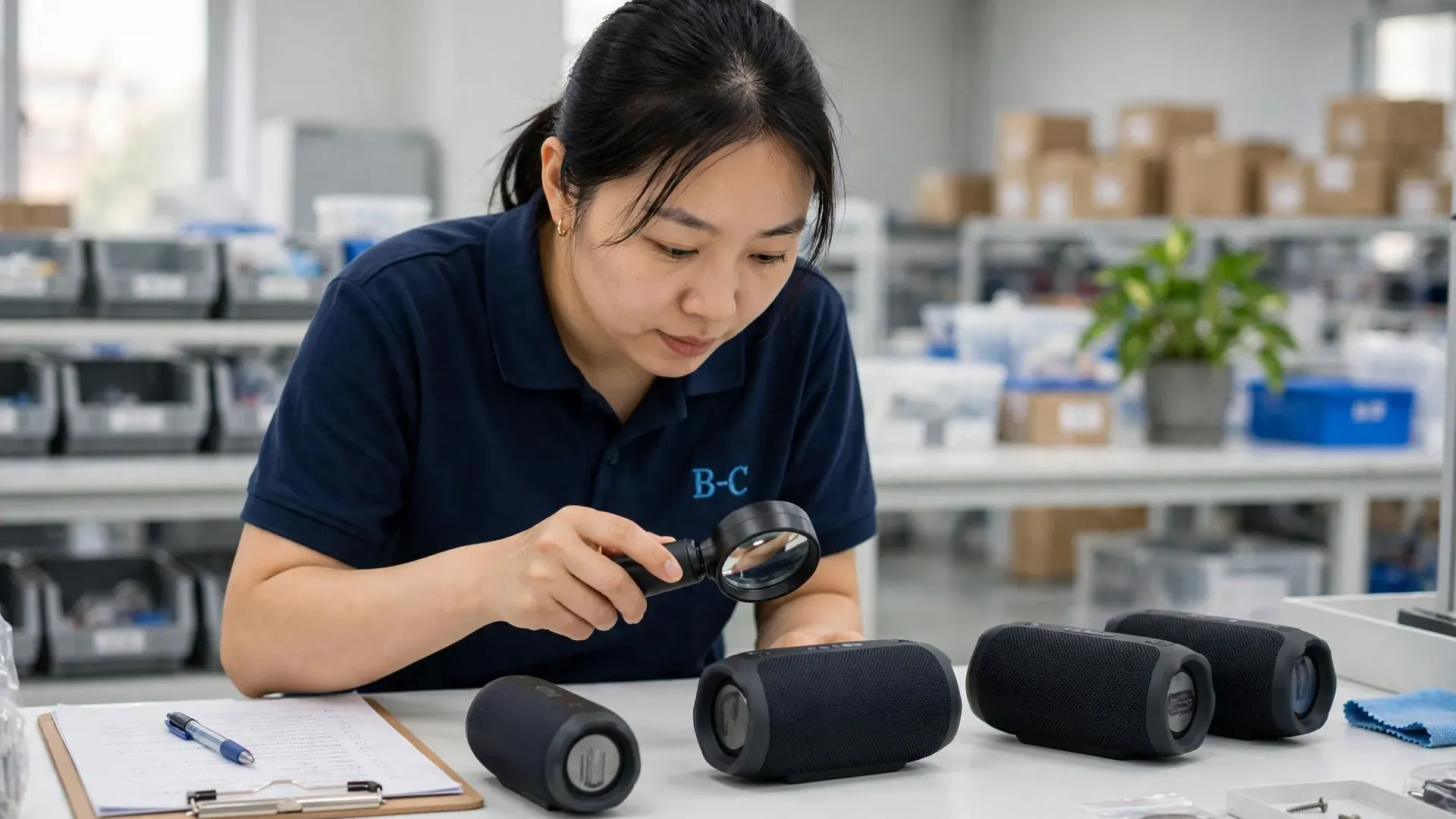
- Sample, then test. Order physical samples of the new box, pack the real product in it, and send it for ISTA testing. Do not certify from artwork.
- Check the size tier. Measure the finished parcel and confirm which Amazon size tier it lands in — the saving is only real if the tier actually moves.
- Confirm the terms in Seller Central. Amazon's programme rules, fees for uncertified packaging and certification requirements change over time. Check the current terms before you cost the project.
What we do differently
Packaging is one of the places where a China-based team earns its keep: the box is made here, the testing is coordinated here, and the iteration is fast because the factory is a phone call away, not an ocean away.
We work with packaging factories on the redesign — structure, materials, samples — and we coordinate the ISTA testing so the box is certified before the first production run, not after it. At our Shenzhen warehouse we pack to the FBA requirements for the certified box: correct labelling, correct carton configuration, and the checks that the barcode scans and the label area is clear. Because the same team handles the fulfilment, the box that leaves the warehouse is the box Amazon expects to receive.
What we can and cannot do
We can redesign and source SIOC-ready packaging, coordinate ISTA testing with an accredited lab, run samples through the real pack-and-ship process, and handle FBA preparation and dispatch from our warehouse to Amazon's requirements.
What we cannot do is guarantee a first-time test pass — packaging that fails a drop test needs a redesign, and we will tell you that rather than ship a box that will not survive the journey. We cannot certify packaging ourselves; certification comes from the test laboratory. And we cannot make SIPP the right choice for a product it does not suit — if your SKU is fragile, low-volume or built on its unboxing, we will say so, and help you with the packaging that does fit instead.
The bottom line
SIPP is not a packaging trend. It is a cost decision with a test attached: one box instead of two, a stronger box, a certified box, and a per-order saving that either covers the redesign or does not. Run the numbers on your SKU — volume, current damage rate, size tier, redesign cost — before you change anything. The sellers who gain from SIPP are the ones who treated it as arithmetic, not as a badge.
If you have a product on Amazon and want to know whether its box should ship on its own, send us the product details and current packaging and we will work through the redesign and testing with you — including an honest answer when the numbers say no.
Related: Custom Packaging & Branding Solutions — our packaging service, covering structural design, branded boxes, FBA-ready labelling and carton configuration.