How Long Does Sourcing from China Actually Take? A Realistic Timeline from RFQ to Vessel
From first RFQ to the vessel leaving port, a standard order from China typically takes 6–10 weeks by sea. Here is what happens at each stage — and what makes it longer.
"How long will it take?" is the first question almost every new importer asks, and it is the one most often answered with a number that turns out to be wrong. A factory that quotes "15 days production" is usually talking about production alone — not the samples before it, the inspection after it, or the three weeks the goods spend on the water. The honest answer is a timeline with stages, and this article lays it out stage by stage, from the first RFQ to the vessel leaving port.
The short answer
For a standard product, ordered from an existing design with no new tooling, expect 6–10 weeks from first enquiry to the goods leaving China by sea, and 4–6 weeks if you ship by air. For a custom product that needs new tooling, a new mould or certification testing, expect 10–16 weeks. Those are realistic ranges for a first order with a new supplier, including samples and inspection. Repeat orders with the same supplier are faster — often 3–5 weeks by sea — because the samples, the tooling and the trust are already in place.
Here is where the time goes.
Stage 1: RFQ and factory shortlist — 2 to 5 working days
Your enquiry goes out, factories reply, and the quotes come back. Two to five working days is normal for a clear RFQ with specifications, quantities and a target market. The stage stretches when the RFQ is vague: a factory that has to guess your material, your size or your quality standard will either ask three rounds of questions or quote a price that changes later. A complete RFQ — product specification, quantity, packaging, destination and any certification you need — is the single cheapest way to save a week.
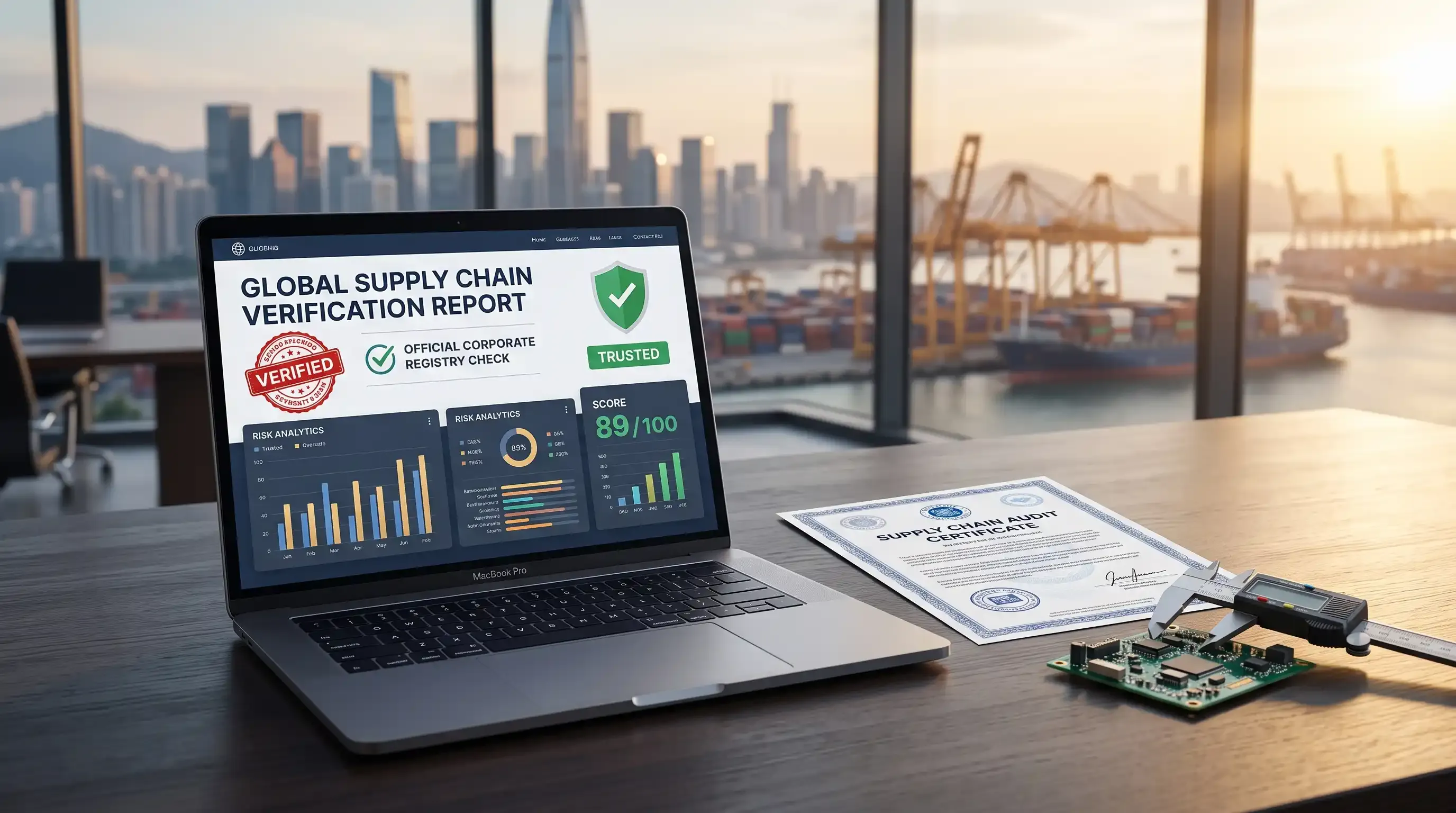
This is also the stage where verification happens. Checking that a factory is real, that it holds the certifications it claims, and that it has actually made your product before takes a day or two — and it is the step that prevents the far longer delays of discovering a problem after you have paid a deposit.
Stage 2: Samples — 7 to 15 days
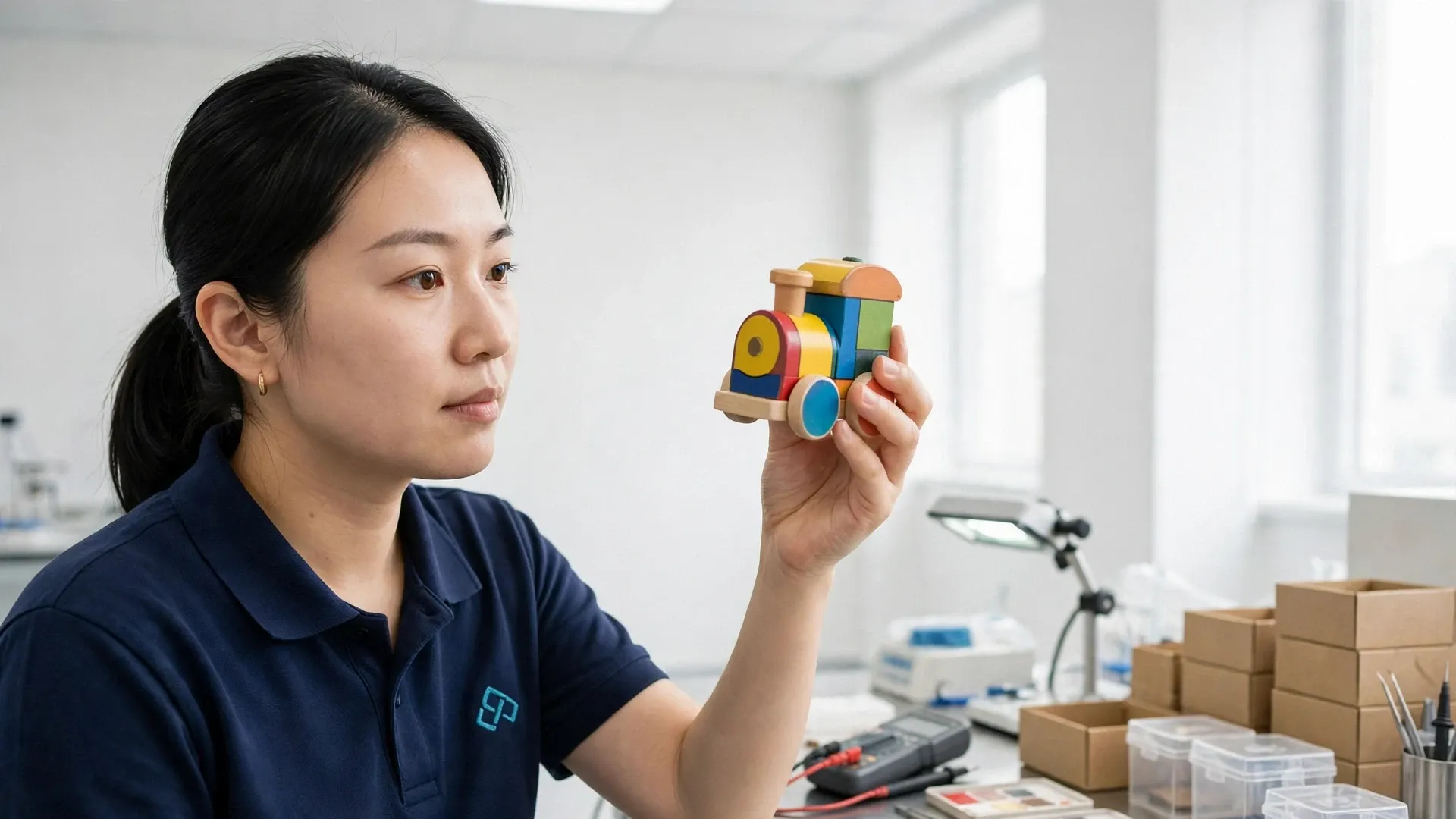
Samples are the stage buyers most often try to skip, and the one that saves the most time later. A factory usually needs 3 to 7 days to make a sample of an existing product, and 7 to 15 days if the sample needs new tooling, a new colour or a custom print. Express shipping from China to the US or Europe then takes 4 to 7 working days.
Budget two weeks for samples on a standard product and three weeks for anything custom. If the sample needs a revision — a different material, a corrected logo, a stronger seam — add another round of the same length. Approving a sample you have not actually held and tested is how buyers end up with a container of the wrong product, which costs far more than the two weeks the sample took.
Stage 3: Negotiation, proforma invoice and deposit — 2 to 5 working days
Once the sample is approved, the order terms get settled: price, quantity, packaging, payment terms and delivery date, written into a proforma invoice. Two to five working days is normal, including the bank transfer time for the deposit. The stage stretches when the terms are still open — a buyer who renegotiates the price after the PI is issued, or a supplier who discovers the packaging specification late, can add a week of back-and-forth.
Pay attention to what the delivery date on the PI actually counts from. Most factories count production days from receipt of the deposit and the approved sample, not from the date you first enquired. A "30-day delivery" that starts the day your deposit clears is a different promise from one that starts the day you sent the RFQ.
Stage 4: Production — 15 to 35 days
Production is the longest stage, and the one with the widest range. A simple product from an existing design — a bag, a basic electronic accessory, a standard textile item — typically takes 10 to 20 days. A product with custom tooling, multiple materials or assembly steps takes 25 to 35 days. A product that needs a new mould adds 20 to 45 days before production even starts, because the mould has to be made, tested and corrected first.
Production time also depends on the factory's order book. A factory that is quiet in February may start your order the day the deposit arrives; the same factory in October, ahead of the Christmas rush, may have a queue of two weeks before your order reaches the line. Ask where your order sits in the queue, not just how many days production takes.
Stage 5: Inspection and corrections — 2 to 5 days
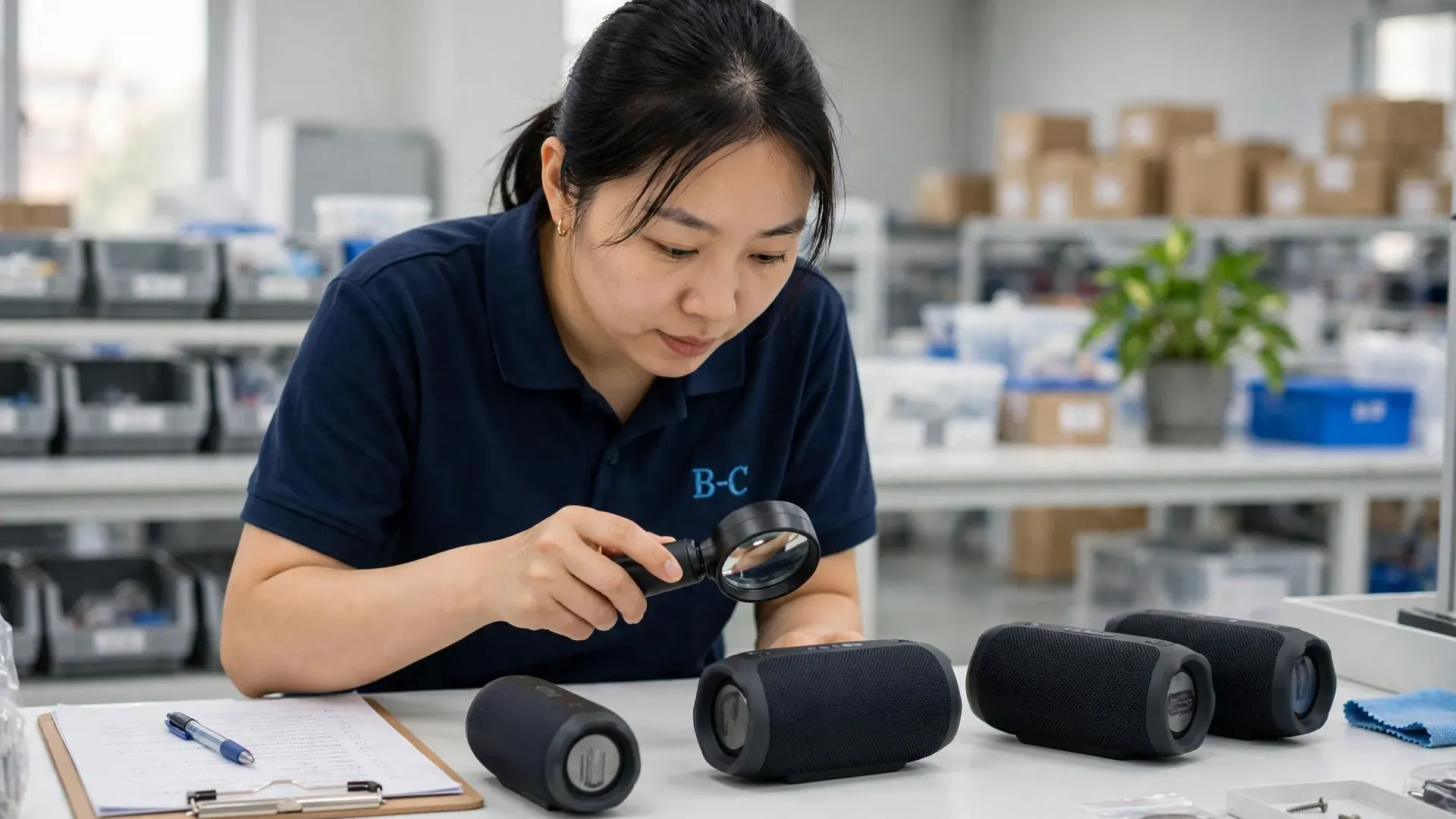
Pre-shipment inspection takes one day on site, and the report usually follows within a day. Budget two to five days for the stage as a whole, because an inspection that finds problems needs time for the factory to fix them and for a re-inspection to confirm the fix. Minor problems — a wrong label, a loose thread — can be corrected in a day. A failed inspection on a structural or functional issue can add a week or more, and that is exactly what the inspection is for: finding the problem while the goods are still in China, where fixing them is cheap.
Skipping inspection to save two days is a false economy. The two days you save are nothing against the weeks it takes to return, replace or refund a shipment that arrived wrong.
Stage 6: Booking, loading and the vessel — 3 to 7 days before sailing, then 25 to 40 days at sea
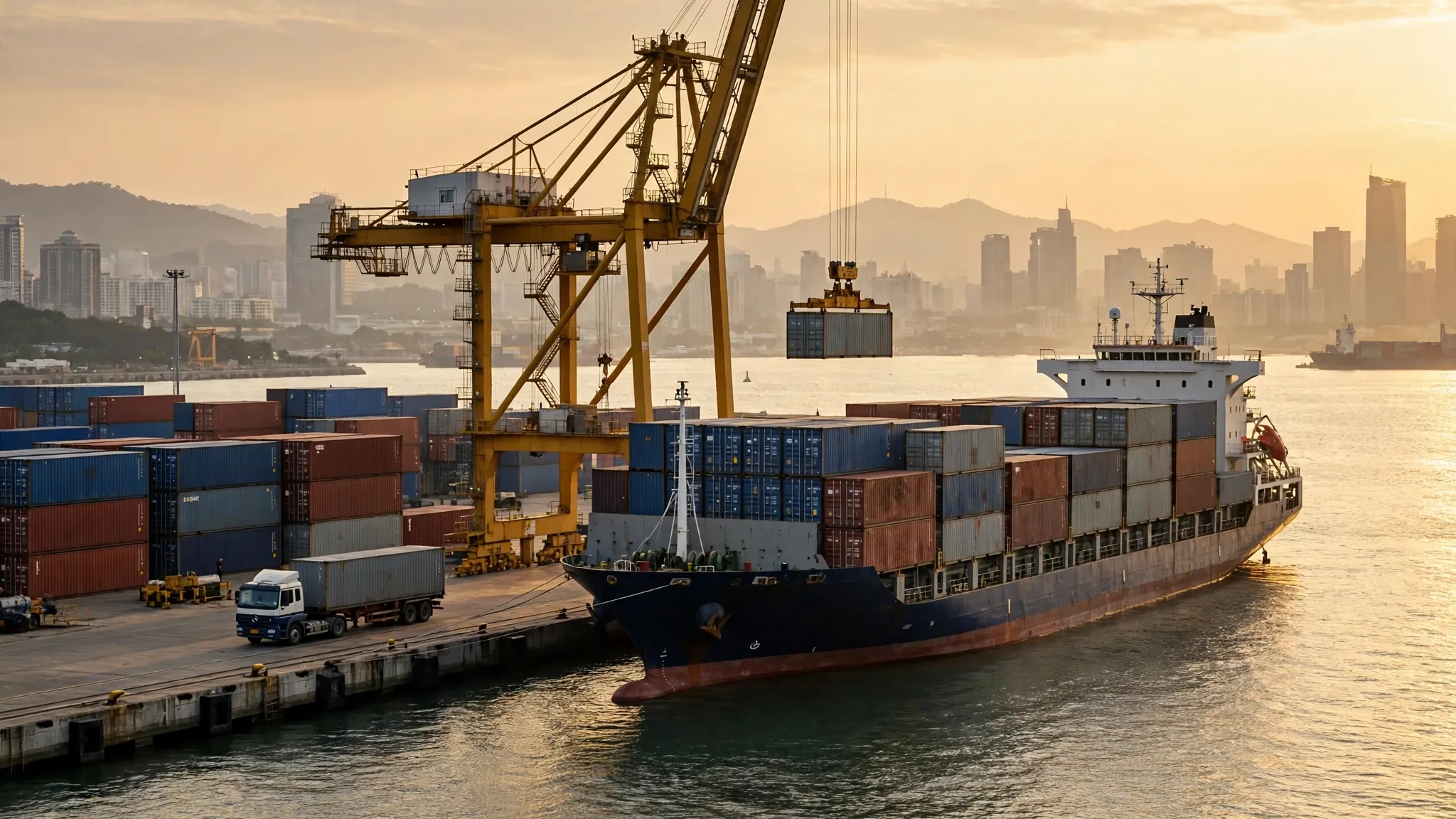
Once the goods pass inspection, the forwarder books space, the container is loaded — with loading supervision if you asked for it — and the vessel sails. Allow 3 to 7 days from the end of production to the vessel's departure, longer at peak season when sailings are full.
Sea transit is the part of the timeline that surprises first-time importers most. From a South China port, typical transit is around 30 to 35 days to the US East Coast, 14 to 18 days to the US West Coast, and 28 to 35 days to Northern Europe. Air freight is 7 to 15 days door to door including customs, but it costs several times more per kilo and it is not an option for large or heavy goods, batteries or restricted items.
If you need the goods faster than sea freight allows, the realistic options are air freight, or a rail service to Europe where available — not asking the factory to cut production time in half. Production time is set by the process; transit time is set by the route. Confusing the two is how delivery dates get missed.
Two worked examples
Example 1: a standard product, existing design, by sea. RFQ and shortlist 3 days, samples 10 days, PI and deposit 3 days, production 18 days, inspection and corrections 3 days, booking and loading 5 days, sea transit to the US East Coast 32 days. Total: about 74 days, or just under 11 weeks from first enquiry to arrival at the port. The same order by air would arrive in about 6 weeks, with the transit stage cut to 10 days.
Example 2: a custom product with new tooling, by sea. RFQ 4 days, samples with new tooling 20 days, PI and deposit 3 days, mould making 30 days, production 25 days, inspection 4 days, booking and loading 5 days, sea transit 30 days. Total: about 121 days, or 17 weeks. Tooling is the single biggest variable in a custom order — a mould that needs two corrections can add a month on its own.
Neither example includes customs clearance at destination, which adds a few days, or the time it takes you to decide. The most common delay in a first order is not the factory or the freight. It is the buyer taking a week to approve a sample, or two weeks to confirm a packaging change. Your own decision time is part of the timeline, and it is the part you control most directly.
What stretches the timeline
Five things regularly add weeks to a sourcing timeline, and four of them are predictable.
Chinese New Year. Factories close for two to four weeks around the holiday, and the weeks before it are the busiest of the year as everyone rushes to ship. An order placed in January may not start production until March. Plan around it: place orders before the rush, or wait until the factories are properly back.
Tooling and certification. A new mould, a new certification test, or a product that needs a compliance report you did not know about will add weeks. Certification testing alone can take 2 to 4 weeks, and it cannot start until the final sample exists.
Changes mid-production. A specification change after production starts means stopping the line, reordering material and starting again. The cost is not just the extra days — it is the material already cut or moulded, and the factory's willingness to prioritise your order the second time.
Peak season. September to November is the busiest period for factories and freight. Production queues lengthen, container space tightens, and vessels sail full. The same order that took 8 weeks in March can take 11 weeks in October.
Payment and paperwork delays. A deposit sent to the wrong account, a PI with the wrong company name, a customs document missing a certificate — each one costs days, and each one is avoidable by checking the paperwork before it is sent.
What we can and cannot do
We can give you a realistic timeline for your specific product before you order — including sample time, tooling time and transit time to your market — and then manage each stage against it: shortlisting and verifying factories, arranging and checking samples, monitoring production so you know where your order stands, inspecting before shipment, and booking the freight. We can also tell you honestly when a deadline cannot be met, and what the faster alternative costs.
What we cannot do is make a factory produce in 10 days what takes 25, or make a vessel cross the Pacific in a week. We cannot skip the sample stage safely, and we will not tell you a delivery date we do not believe in. And we cannot control Chinese New Year, peak-season congestion or a customs hold at destination — but we can plan around the first two and warn you about the third.
The bottom line
Sourcing from China takes 6 to 10 weeks for a standard order by sea, and 10 to 16 weeks for a custom one — measured from the first RFQ, not from the day you pay. The stages are predictable: a few days for quotes, one to two weeks for samples, two to five weeks for production, a few days for inspection, and three to six weeks on the water. The buyers who hit their dates are the ones who plan for all of it, approve samples promptly, and do not change the specification mid-production. The buyers who miss them are usually the ones who were only ever counting the production days.
If you want a factory quote with a realistic timeline for your product — sample time, production time and transit time included — get a factory quote in 24 hours. Send us the product, the quantity and the date you need it, and we will tell you what is actually achievable, and what it takes to get there.
Related: Ordering Samples from Chinese Suppliers: Costs, Timelines and How to Approve Them — the full sample process, from sample fees to approval standards; Production Monitoring in China: Tracking Your Order Inside the Factory Without Flying In — how to know where your order stands while it is being made; Sourcing from China: B2B Sourcing Services — factory sourcing, verification and quality control from our Shenzhen team.