CPSIA and Prop 65 for Importers: Which Products from China Need Testing Before They Ship
CPSIA and Prop 65 catch many importers by surprise. This guide explains which products from China need testing before they ship, what the tests cover, and how to plan for them.
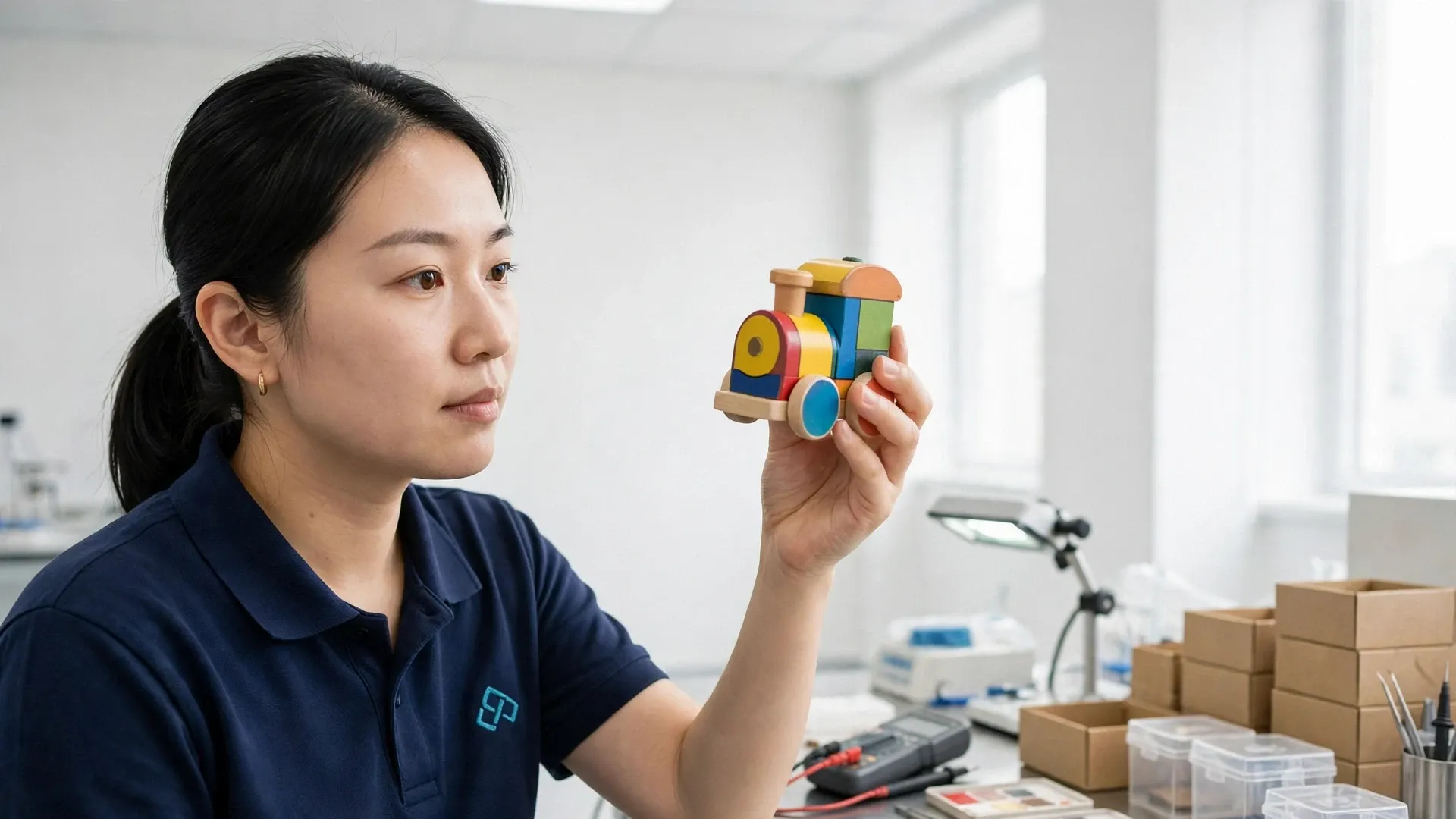
Many importers first hear about CPSIA or California Prop 65 at the worst possible moment: the goods are already made, the container is booked, and then Amazon asks for a Children's Product Certificate, or a customer in California asks for a Prop 65 warning, or a shipment is held because the paperwork is missing. At that point the options are all expensive — rush testing, relabelling, or sending the goods back.
Both rules are avoidable problems. They are not new, they are not vague, and they can be planned into an order from the start. This guide explains what each rule covers, which products from China need testing before they ship, and how to build testing into your timeline so it never becomes an emergency.
CPSIA: the rule for children's products
The Consumer Product Safety Improvement Act (CPSIA) is a US federal law passed in 2008. It applies to children's products — products designed or intended primarily for children aged 12 and under. That definition is broader than many importers expect. It covers toys, of course, but also children's clothing, childcare articles such as bibs and feeding products, children's furniture, and many products that an adult might buy but a child uses.
If your product is a children's product, three requirements matter most.
First, lead limits. The total lead content in any accessible part of a children's product must not exceed 100 parts per million (ppm), and lead in paint and similar surface coatings must not exceed 90 ppm. These are hard limits, tested in a laboratory, and they apply to the product as it ships — not to the raw material as the supplier bought it.
Second, phthalates. Eight phthalates are restricted in children's toys and childcare articles, each to no more than 0.1% (1,000 ppm). Phthalates are plasticisers used to soften PVC and other plastics, and they show up in exactly the kinds of soft, colourful products that are popular with children — bath toys, rain boots, soft dolls, inflatable items.
Third, certification. A children's product sold in the United States must have a Children's Product Certificate (CPC), a written certificate stating that the product complies with all applicable children's product safety rules. The CPC must be based on testing by a laboratory accepted by the US Consumer Product Safety Commission (CPSC) — a third-party lab such as SGS, Intertek, Bureau Veritas or TÜV SÜD. A factory's own test report, or a test done by a lab that is not CPSC-accepted, does not support a CPC.
Other CPSIA rules apply to specific products: flammability standards for children's sleepwear, small-parts rules for toys intended for children under three, tracking labels that identify the manufacturer, production location and date, and limits on other substances for particular product types. The point is not to memorise the full list. The point is to know, before you order, whether your product is a children's product — because if it is, testing is not optional, and it has to be done by the right lab, on the right samples, before the goods ship.
Prop 65: the rule for anything sold in California
California's Proposition 65 is a different kind of rule. It is a state law from 1986, and it applies to almost any consumer product sold in California — not just children's products. It requires businesses to warn Californians about significant exposures to chemicals that the state has listed as causing cancer, birth defects or other reproductive harm. The list contains roughly 900 chemicals.
The best-known trigger is lead. Under Prop 65, the safe-harbor level for lead — the maximum allowable dose level — is 0.5 micrograms per day. That is a very low number, and it is why lead shows up in so many Prop 65 warnings: brass fittings, ceramic glazes, jewellery, electrical cords, vinyl and many other ordinary materials can expose a user to more than 0.5 micrograms a day. Other common triggers for imported goods include cadmium in jewellery and pigments, phthalates in soft plastics, and formaldehyde in pressed-wood products.
A Prop 65 warning does not mean the product is banned. It means the seller must give a clear and reasonable warning before the purchase — usually a label on the product or its packaging, and for online sales a warning on the product page. The standard warning names the chemical and the type of harm, and points to the state's information site. A short-form warning is allowed for many products, for example: "WARNING: Cancer and Reproductive Harm — www.P65Warnings.ca.gov". The exact wording matters and should be confirmed with your lab or legal adviser; a warning that names the wrong chemical, or no chemical at all, may not protect you.
What makes Prop 65 difficult for importers is enforcement. The state can enforce it, but so can private parties, who must first give a 60-day notice. Many of these private enforcers are law firms that systematically test products and send notices. Penalties can reach $2,500 per violation per day, and settlements routinely include both a fine and a commitment to reformulate or warn. The risk is real even for small sellers, and it is one of the most common reasons a product gets pulled from an Amazon listing or a retail shelf.
Note the important difference between the two rules: CPSIA sets hard limits and requires a certificate for children's products. Prop 65 does not ban the chemicals it lists — it requires a warning when exposure exceeds a threshold, and the threshold is low enough that many everyday products cross it. A product can pass CPSIA testing and still need a Prop 65 warning, and a product with a Prop 65 warning still has to pass CPSIA if it is a children's product. They are two separate obligations, and neither one substitutes for the other.
Which products need testing — a practical way to decide
Before placing an order, run through three questions.
One: is the product for children aged 12 or under, or will children use it? If yes, plan for CPSIA testing and a CPC. Even products that seem borderline — a water bottle with a cartoon character, a backpack sized for a child, a blanket marketed for a nursery — can be treated as children's products. When in doubt, ask the lab: a short consultation before production is far cheaper than a failed inspection after it.
Two: will the product be sold in California? If yes, plan for Prop 65. Almost any product with metal, plastic, ceramic, paint, dye or adhesive components deserves at least a screening test for the most common listed chemicals — lead, cadmium and the restricted phthalates. This applies to ordinary adult products too: textile goods such as a cotton body wrap, home goods, bags, tools and electronics can all carry Prop 65 exposure. The question is not whether the product is "chemical" — it is whether any component exposes the user to a listed chemical above the safe-harbor level.
Three: what does your sales channel require? Amazon, Walmart and many retailers ask for test reports or certificates as a condition of listing, and they may ask for them with little notice. A product that is legally sellable can still be delisted if the paperwork is not ready. Keep the test reports and certificates filed with the product from the start, not assembled after the platform asks.
How testing actually works
Testing is a process, not a single event, and it needs to be scheduled into the order.
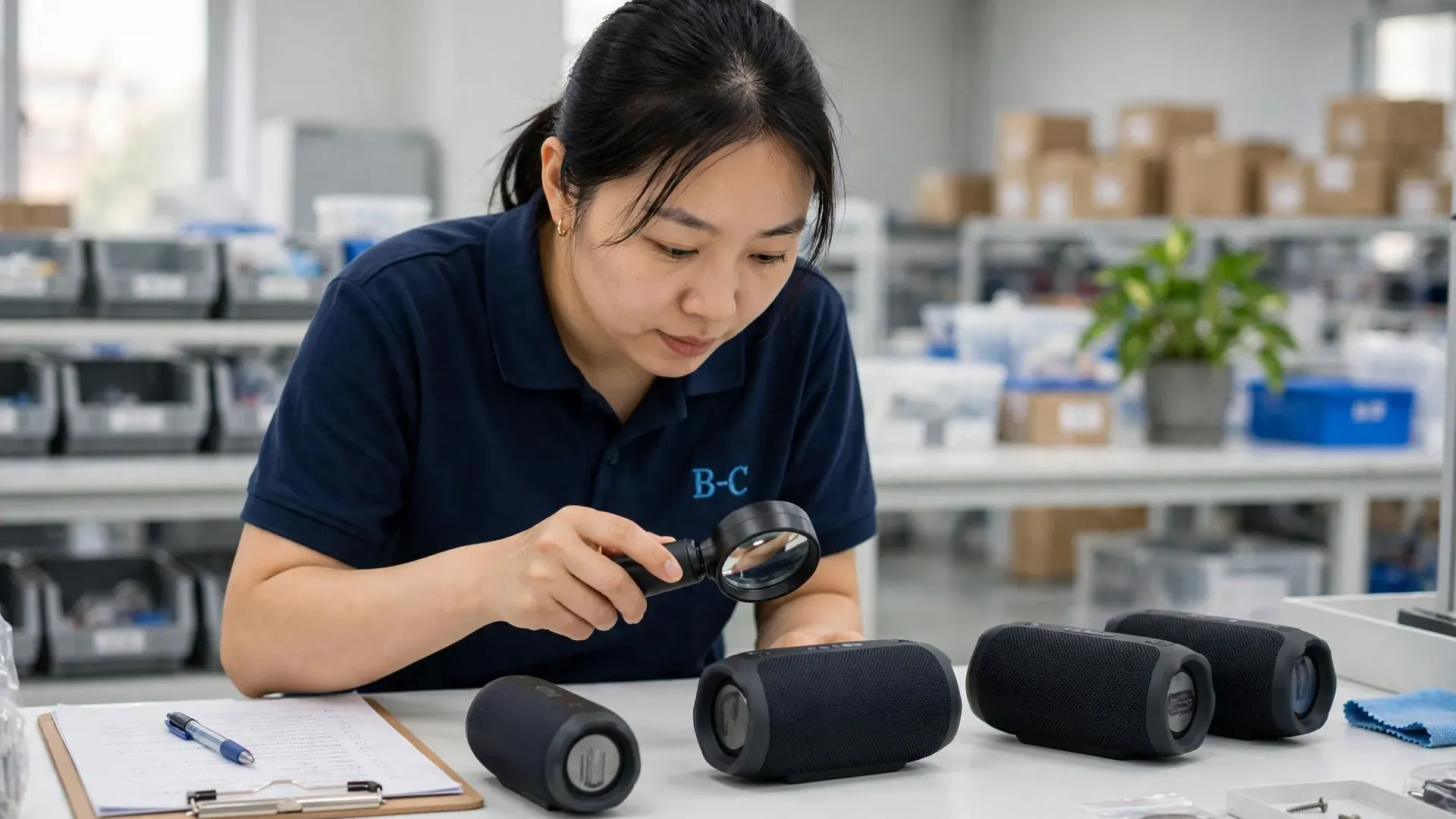
The first step is sampling. The lab tests a sample of the finished product — not raw materials, and not a prototype made from different materials. For CPSIA, the sample should come from the production run, or from a pre-production sample made with the exact materials, colours and components that will be used in mass production. Testing a golden sample made with different paint or plastic tells you nothing about the goods that will ship.
The second step is the lab. For CPSIA, the lab must be CPSC-accepted for the specific test. For Prop 65 screening, any competent lab can run the chemical analysis, but the interpretation — whether the results require a warning — should be done by someone who understands the safe-harbor levels and the exposure calculation. Ask the lab for a written report that names the chemicals tested, the results in ppm, and the standard applied. Keep that report with the product file.
The third step is timing. Testing takes days, not hours, and if a test fails, reformulation and retesting take longer. Build testing into the order timeline: test the pre-production sample, confirm the result, then release mass production. The most expensive mistake is testing after the goods are made, when a failure means remaking the order or shipping goods you cannot sell.
The fourth step is retesting. A passing test covers the product as tested — the same materials, the same supplier, the same production process. If the factory changes a material, a colour, a coating or a component supplier, the test result no longer necessarily applies. Make material changes a trigger for a new test, and write that into the purchase order: no material substitution without notice and retesting.
Common mistakes that cost importers money
The first mistake is relying on the supplier's certificate. A factory may show you a test report from another buyer, another product, or another year. That report is not your certificate, and it does not cover your product. Your CPC must be based on testing of your product, from your production run.
The second mistake is confusing CE marking with CPSIA compliance. CE is a European conformity mark. It says nothing about CPSIA lead limits, phthalate limits or the CPC. A product can be CE-marked and still fail CPSIA testing.
The third mistake is treating a Prop 65 warning as a substitute for compliance. A warning satisfies Prop 65. It does not satisfy CPSIA, and it does not make a children's product compliant. Conversely, passing CPSIA does not remove the need for a Prop 65 warning in California. Both obligations stand on their own.
The fourth mistake is testing too little. Some importers test one colour and assume the others pass, or test the main body and skip the zipper, the button or the print. Lead and phthalates vary by component and by colour — a red paint can fail where a blue paint passes. Test every material and every colour that will ship, or be explicit with the lab about what is covered and what is not.
The fifth mistake is treating testing as a one-off cost rather than a line in the order budget. Testing a children's product typically costs far less than a single failed shipment, and far less than a Prop 65 settlement. Budget for it at the quoting stage, not after the order is placed. If a quote does not include testing, the testing still has to happen — the only question is whether you planned for it.
What we can and cannot do
We can help you work out, before you order, whether your product is likely to fall under CPSIA, whether it needs a Prop 65 assessment, and what tests to ask the lab for. We can coordinate sample testing with a third-party lab, check the test report against the order, and build the testing step into the production timeline so mass production only starts after the sample passes. We can also run a free supplier background check before you place the order — because a factory that changes materials without telling you is the factory whose test results stop meaning anything.
What we cannot do is issue a Children's Product Certificate — only the importer or manufacturer can issue a CPC, based on testing by a CPSC-accepted lab. We cannot guarantee that a product will pass testing, and we cannot test on the factory's behalf. We also cannot give legal advice on Prop 65 exposure calculations or warning wording; for a product with a borderline result, the right step is a short review by a compliance specialist. What we can do is make sure the question is asked early, the test is done on the right sample, and the result is in your hands before the goods leave the factory.
The bottom line
CPSIA and Prop 65 are not reasons to avoid sourcing from China. They are reasons to plan. Know before you order whether your product is a children's product, whether it will be sold in California, and what your sales channel will ask for. Test the pre-production sample with a CPSC-accepted lab where CPSIA applies, screen for the common Prop 65 chemicals where California is in the picture, and write material-change rules into the purchase order. The importers who get caught by these rules are almost never the ones who did not know they existed. They are the ones who found out after the goods were made.
If you are about to place an order and are not sure which tests apply, get a free supplier background check — send us the product details and the markets you sell in, and we will help you work out the testing plan before you commit to production.
Related: B&C Sourcify Sourcing Services — factory sourcing, supplier verification and quality control from Shenzhen.