Industry Insights
Beyond Shopify and Amazon: Running Etsy and eBay Orders Through One China Warehouse
eBay counts the hours to the first scan; Etsy counts the impression the parcel makes. One China warehouse can serve both — but only if each channel keeps its own promise.
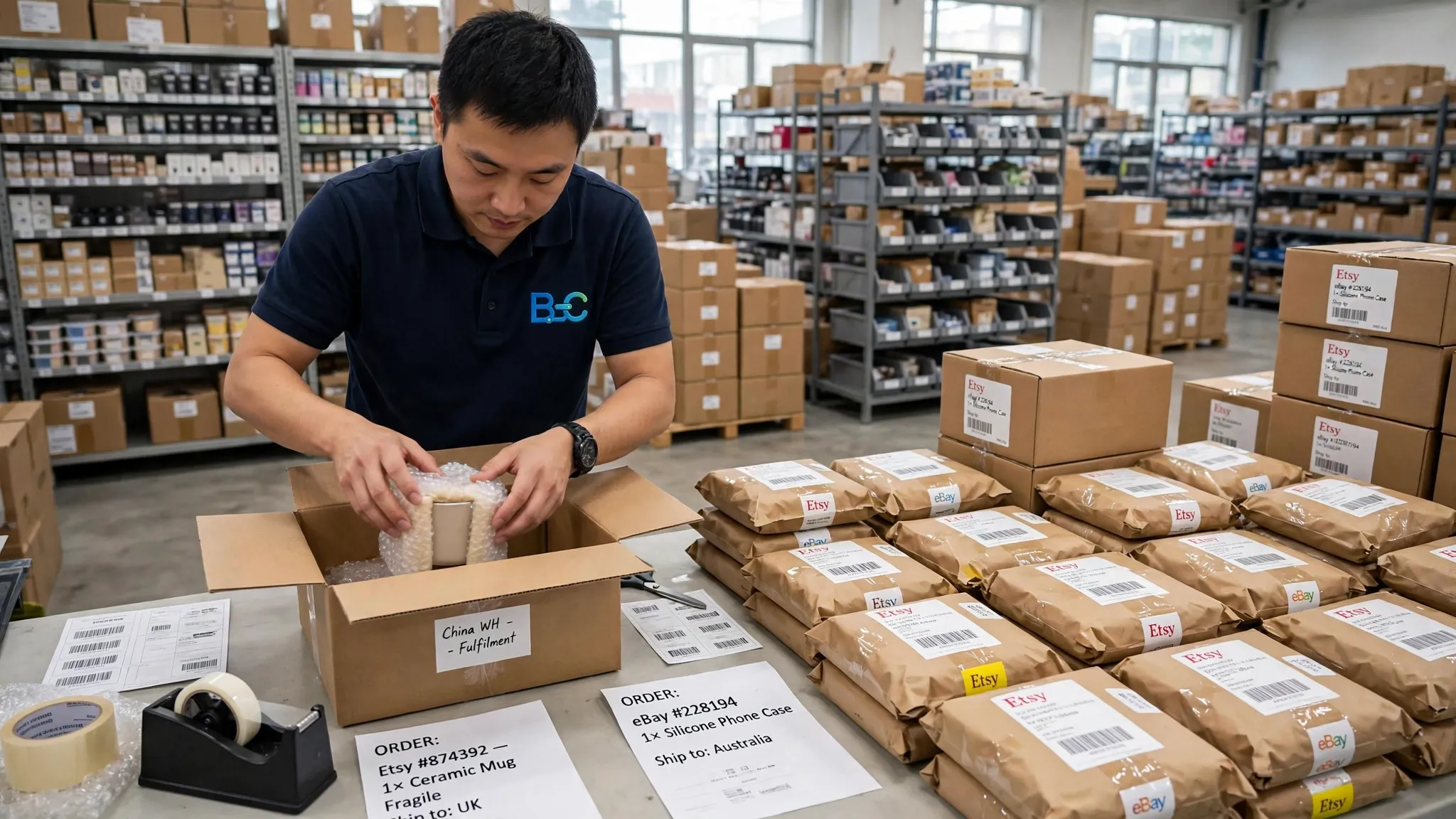
Most sellers who add Etsy or eBay to a Shopify or Amazon business expect the new channel to behave like the old ones. It does not. The two marketplaces run on different clocks, judge sellers on different things, and punish different mistakes — and the sellers who struggle are usually the ones who averaged the two into one workflow and hoped for the best.
The good news is that the two channels can share a warehouse, a stock pool and a pick team. The discipline is in keeping their promises separate: eBay's promise is speed you can measure, Etsy's promise is care you can see. One China warehouse can deliver both, but only if each channel is configured on its own terms.
Two clocks, not one
eBay's core operational lever is handling time. It is declared per listing and measured against the first carrier scan — not the moment the order was packed, and not the moment the label was printed. A listing that promises one business day and scans on day three is late in a way the buyer can see and the seller cannot argue with. Handling time feeds directly into seller performance, and repeated misses cost visibility before they cost the account.
Etsy's lever is processing time, plus the impression the parcel makes. Etsy buyers will accept a longer stated dispatch window if the listing is honest about it — handmade and personalised goods come with that expectation built in. What they do not accept is a parcel that looks like it came from an anonymous warehouse: no branding, no note, a shipping label that tells a different story from the listing.
So eBay rewards a tight clock and punishes variance. Etsy rewards a predictable promise and punishes anonymity. A shared warehouse can deliver both, but only if the two promises are set up separately rather than averaged into one.
One warehouse, two promises
In practice, running both channels from one China warehouse comes down to three separations:
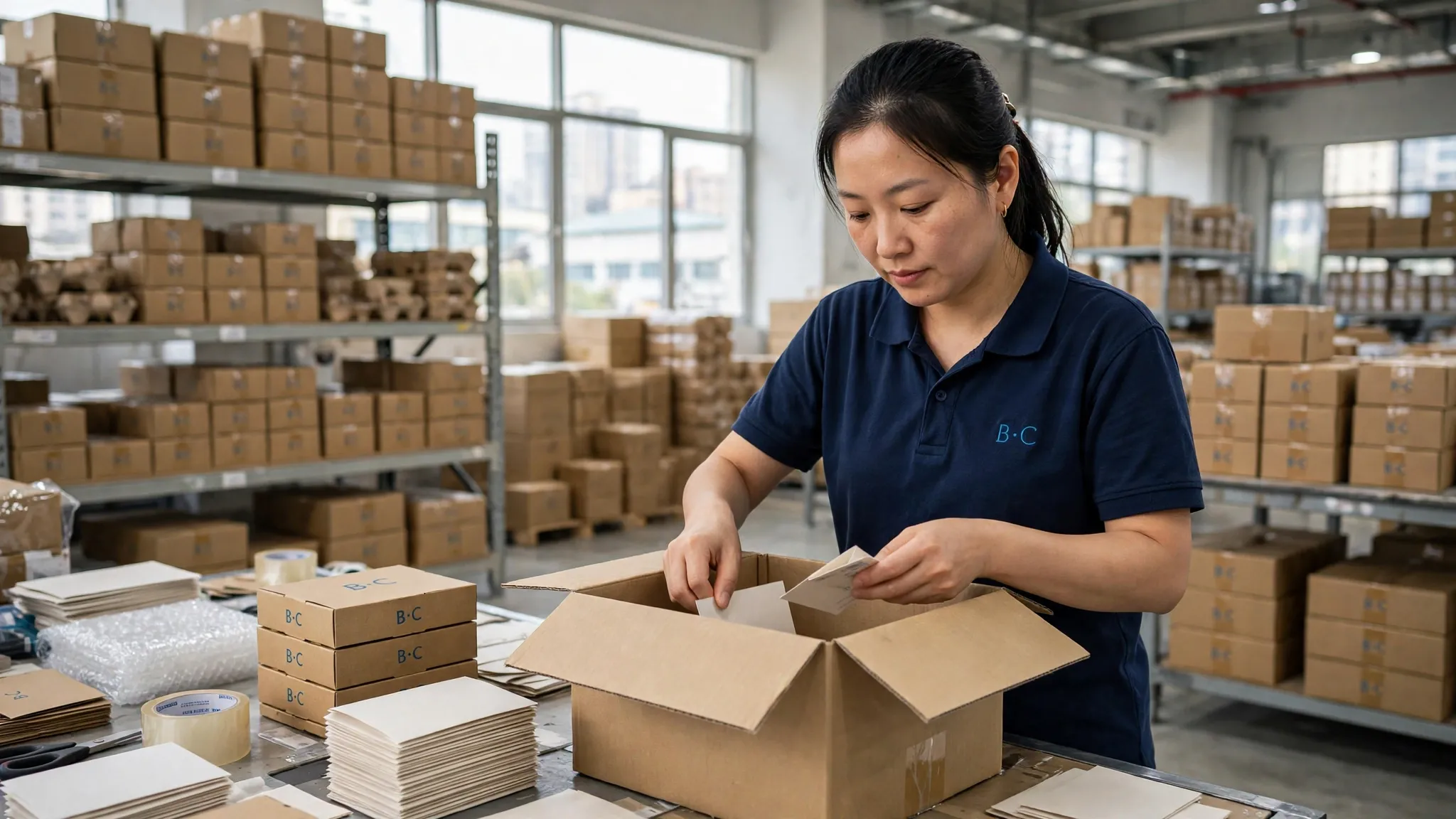
- Separate dispatch rules. eBay orders get the fastest lane and the earliest cutoff, because the handling-time clock is already running. Etsy orders get the presentation lane: branded packaging, an insert or thank-you card, and a check that the personalisation matches the order before the parcel closes. The same team does both; the rules are different.
- Separate cutoff discipline. A cutoff is only useful if the warehouse meets it on its worst normal day. Our warehouse cut-off is 4pm, Monday to Saturday: orders in before 4pm are picked, packed and dispatched the same day. eBay listings should be written around that cutoff, not around a best-case morning.
- Separate tracking habits. eBay wants the tracking number uploaded promptly — it protects the seller's metrics and answers the buyer's first question before it is asked. Etsy buyers check tracking less urgently but read the delivery estimate more closely, so the listing's processing time and the carrier's real transit window have to agree.
The mistake is to promise both channels the same thing. The fix is to promise each channel what it actually measures, and to run the warehouse so both promises hold.
The Etsy details that trip sellers up
Three Etsy specifics catch sellers who are used to Shopify or Amazon:
- Personalisation blocks the pick. A personalised order — a name, a date, a photo — cannot be picked until the buyer's text or image has been confirmed. That step has nothing to do with warehousing, and it sits outside the warehouse's control. Listings should carry a processing time that includes it, and the warehouse needs the confirmed details attached to the order, not buried in a message thread.
- The parcel is part of the product. Etsy buyers photograph unboxings, and a plain poly mailer with a supplier's label reads as a broken promise. Neutral, unbranded outer packaging with your own insert, tissue or thank-you card costs little and protects the story the listing told. (The customs declaration still states the true origin — presentation can be white-label, paperwork cannot.) See branded inserts and gift packaging.
- Small orders, high touch. Etsy orders are often single items at modest values, which makes the per-order handling cost a larger share of the margin. A warehouse that inspects every piece and packs to a standard is worth more here than one that ships fast and hopes — a wrong item in a one-item order is a 100% failure rate for that customer.
The eBay details that trip sellers up
And three eBay specifics:
- Item location is disclosed. eBay shows the item's location on the listing, so a China-based stock position is visible before purchase. That shapes both conversion and expectations — the honest move is a handling time and delivery estimate that match the real transit window, not one that implies local stock.
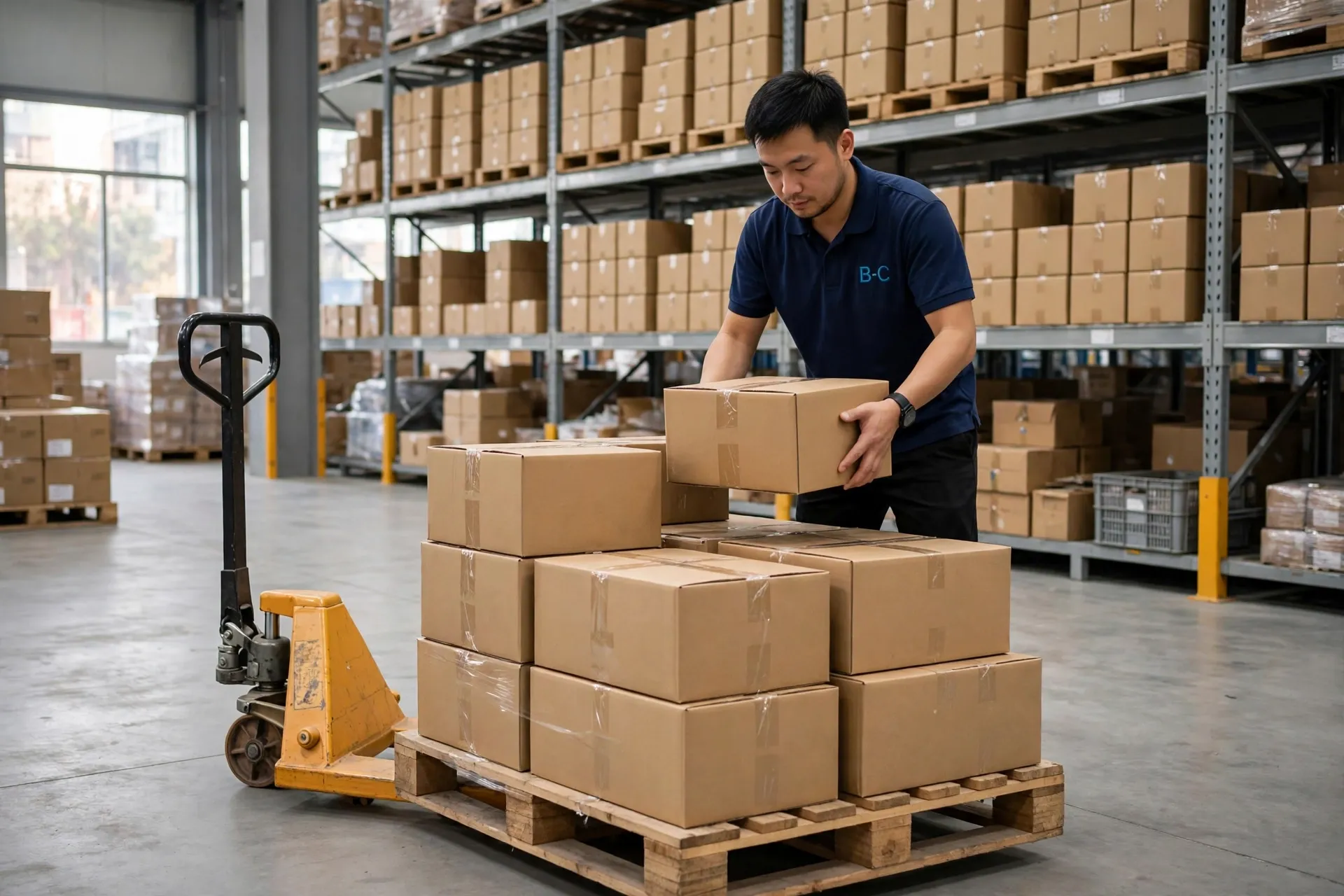
- The first scan is the deadline. Handling time ends at the first carrier scan, so the gap between packing and carrier pickup is part of the promise. A warehouse with a daily carrier pickup and same-day dispatch protects the metric; a warehouse that packs today and ships tomorrow does not.
- Tracking upload is not optional. Uploading the tracking number promptly keeps the seller's shipping metrics clean and cuts "where is my order" messages. It should happen automatically when the parcel leaves, not as a manual step at the end of the day.
One inventory pool, no overselling
The reason to run both channels from one warehouse is inventory. The same SKU listed on Etsy and eBay draws from one stock pool, so a sale on either channel reduces the same count — and the listing quantities stay honest without manual reconciliation. Split the stock across two locations and the same SKU can sell out on one channel while sitting unsold on the other, or worse, oversell on both at once.
This only works if the inventory count is live and shared. Orders from every channel — Etsy, eBay, Shopify, Amazon — should flow into one system, whether by automatic sync or by a daily order export, and the stock level should update with every pick. A warehouse that runs channels on separate spreadsheets will oversell eventually; it is a matter of volume, not of care.
What we do differently
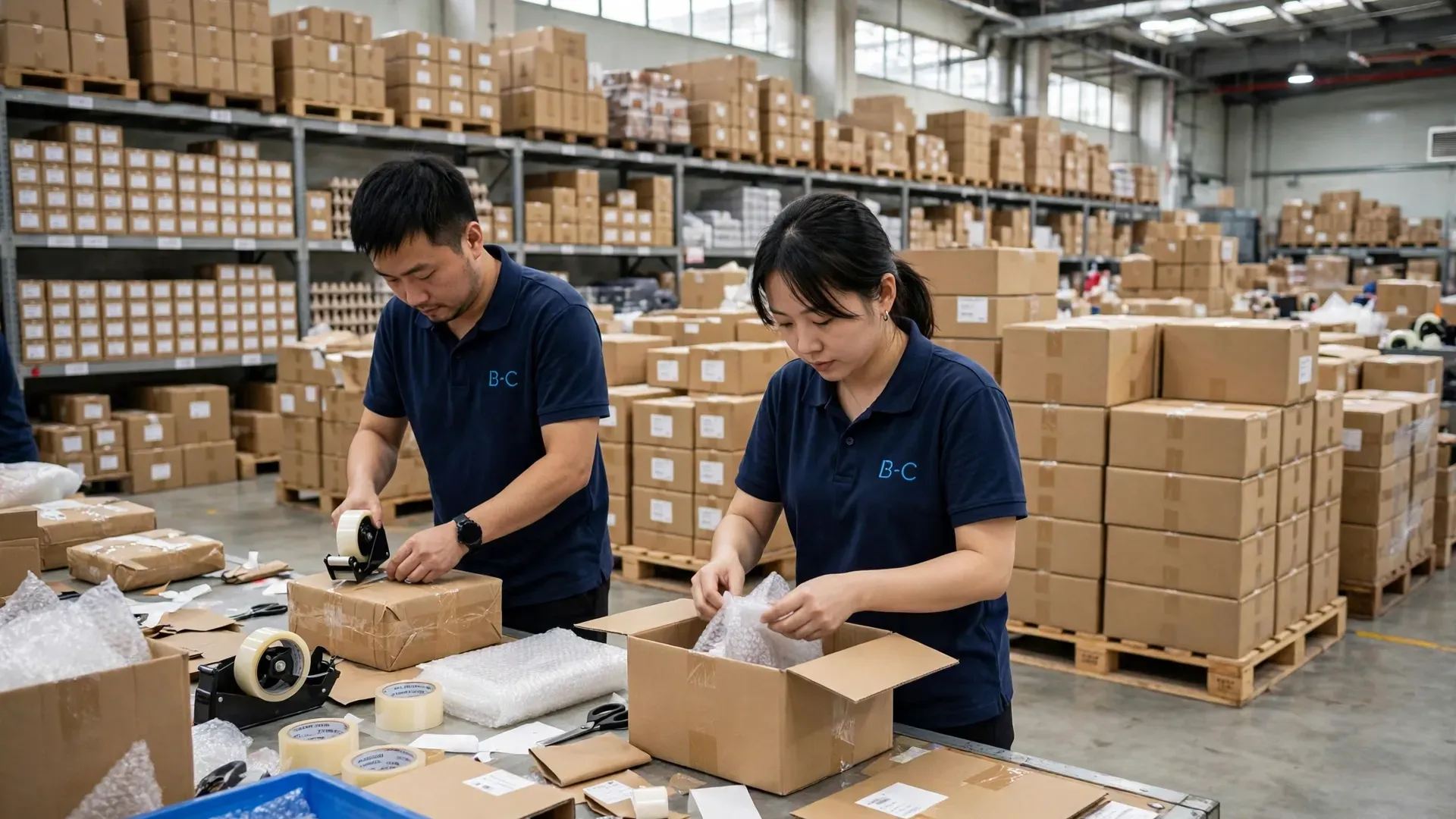
We run Etsy and eBay orders through the same Shenzhen warehouse that handles our Shopify and Amazon fulfilment, with the channel rules configured separately. Every piece is fully inspected before it ships — product, damage, packaging — and orders in before the 4pm cut-off go out the same day, Monday to Saturday. Packaging is white-label by default: neutral outer packaging, no supplier documents inside, your insert or card included when you provide it. Tracking numbers flow back to the marketplace as the parcel leaves.
Because the same team also sources product, a seller who needs a restock does not start a new conversation with a new supplier. The warehouse that ships the order is the team that can reorder the stock, check it on arrival, and put it back on the shelf.
What we can and cannot do
We can run Etsy, eBay, Shopify and Amazon orders from one inventory pool, pack white-label, inspect every piece, dispatch same-day before the cut-off, and return tracking to each marketplace. We can hold stock in Shenzhen and ship direct to your customer in 7–15 working days for most destinations, with Europe typically faster at 5–7 working days.
What we cannot do is make a parcel from China arrive in two days, and we will not quote a transit time we cannot keep — the honest delivery window belongs in the listing, because a disappointed buyer costs more than a slower sale. We cannot hide the item location on eBay, which the platform discloses, and we cannot misstate the country of origin on a customs declaration. Presentation can be white-label; paperwork must be true.
The bottom line
Etsy and eBay are not two versions of the same channel. One measures the hours to the first scan; the other measures the care in the parcel. Run them from one warehouse with separate rules for each, keep the inventory in one pool, and write listing promises the warehouse can keep on its worst normal day. That is the whole discipline — and it is what keeps both seller accounts healthy while the order count grows.
If you sell on Etsy, eBay or both and want one warehouse behind them, get a fulfilment quote within 24 hours — and we will map your listings to a dispatch plan that fits each channel's clock.
Related: B2C Fulfilment from China — our fulfilment service for DTC brands and marketplace sellers, covering warehousing, pick and pack, branded packaging and international shipping.