Inside a China Fulfillment Warehouse on Black Friday: Capacity, Cut-Offs and Triage Rules
Black Friday turns a China warehouse into a triage ward: cut-offs move, carriers cap space and late orders wait. Here is how capacity really works — and how to keep your orders moving.
Black Friday is the one day of the year when a fulfillment warehouse stops being a logistics operation and becomes a triage ward. Orders arrive faster than hands can pack them. Carriers cap the space they will take. Cut-off times move earlier without warning. And somewhere in the pile, a customer who ordered at 9 a.m. is wondering why their parcel has not shipped by 6 p.m.
If your stock sits in a China warehouse, this is the week that decides whether Black Friday makes you money or costs you your reviews. This article explains what actually happens inside the warehouse on the day — how capacity works, how cut-offs are set, and how orders are prioritised when everything cannot go at once — so you can plan around it instead of discovering it.
What "capacity" actually means in a warehouse
When a warehouse talks about capacity, it does not mean floor space. It means how many orders the team can pick, pack and hand to a carrier in a day — and that number is set by people, benches and carrier collections, not by square metres.
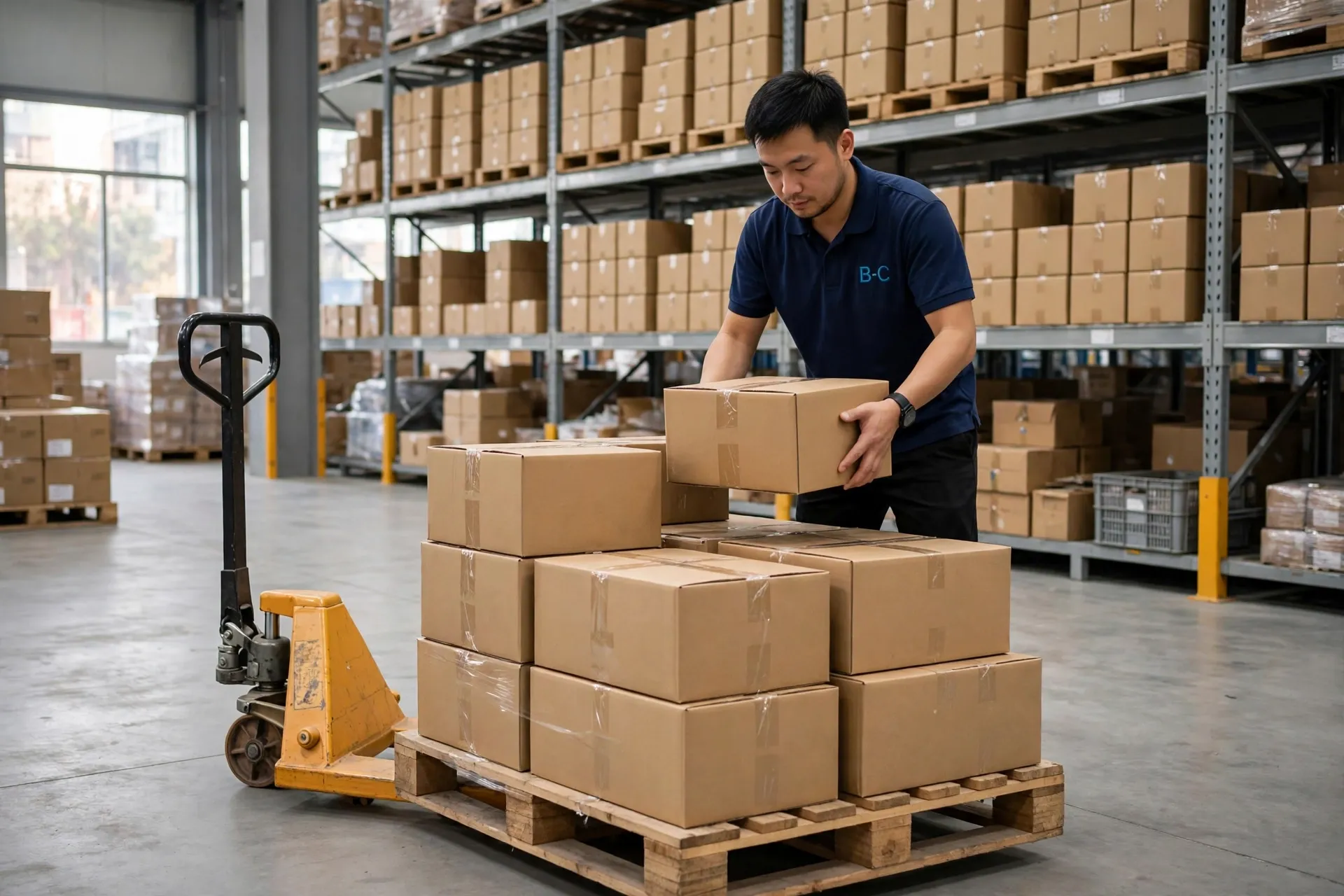
A normal day in our Shenzhen warehouse runs at a steady pace: orders come in, the team picks them against the packing list, quality-checks each item, packs, labels and stages them for the carrier's evening collection. On Black Friday, the order volume can be five to ten times a normal day, and it arrives in waves — a surge at midnight when the sale starts, another at lunchtime, another in the evening when shoppers get home.
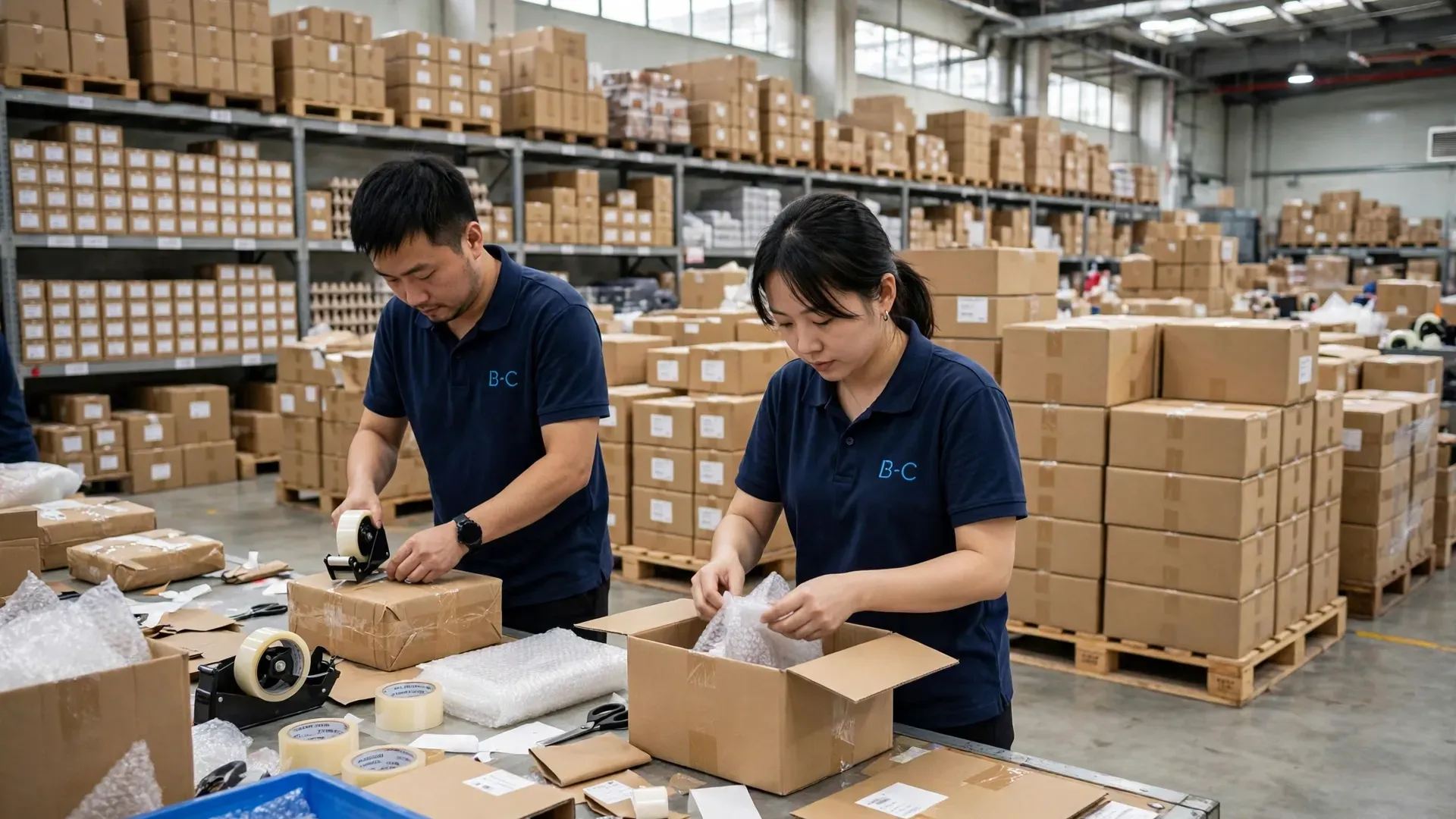
The bottleneck is rarely the picking. It is the packing bench and the quality check. Every order still gets its full inspection — product, damage, packaging — because skipping the check to go faster is how wrong items and broken products get shipped, and those cost far more than a day's delay. A warehouse that promises to ship ten times its normal volume on Black Friday without adding staff or changing its process is either cutting corners or does not understand its own numbers.
Capacity is also set by the carrier. Each courier collects a fixed number of parcels per day from each warehouse, and at peak season that allocation fills up. When it does, packed parcels wait for the next collection. Your order can be packed, labelled and ready — and still sit in the warehouse overnight because the carrier's truck is full. That is not a warehouse delay. It is a carrier capacity limit, and it is the single most common reason Black Friday parcels arrive late.
Cut-offs: the times that decide whether your order ships today
Every warehouse runs on cut-off times: the last moment an order can arrive and still make that day's carrier collection. On a normal week, a typical cut-off is mid-afternoon — orders received before then ship the same day, orders after it ship the next morning.
On Black Friday, cut-offs move earlier and they move without much notice. Three things push them: the volume of orders already in the queue, the carrier's collection time, and the time the team needs to clear the backlog before the next wave arrives. A warehouse that normally cuts off at 4 p.m. may cut off at noon on Black Friday, and the next day's cut-off depends on how much of the backlog is still standing.
This is why "same-day dispatch" is a promise no honest warehouse makes on Black Friday. What a good warehouse does instead is publish its cut-off for the day, update it as the queue changes, and tell you where your orders stand in it. If your warehouse does not communicate cut-offs during peak week, ask for them — and plan your store's delivery promises around the worst case, not the best.
Practical advice for sellers: set your store's delivery estimate to the slow end of the normal range — seven to fifteen working days from China is the honest window at peak — and say so before the customer buys. A customer who expected a parcel in ten days and gets it in eight is happy. A customer who was promised five days and gets it in eight opens a dispute.
Triage rules: how orders get prioritised when everything is urgent
When a warehouse cannot ship everything on the day it arrives, it has to choose an order. Every warehouse has a triage rule, whether it admits it or not. Here is how a sensible one works, and what to ask yours.
First come, first served is the default, and it is the fairest rule for most orders. But three exceptions are standard. Express and priority shipments go before standard ones, because the customer paid for speed and the carrier slot is booked. Orders with a carrier booking — a pallet or a booked collection — go before loose parcels, because the truck is already coming. And orders that are complete go before orders waiting on stock: a warehouse will not hold a finished order while it waits for one missing item in another.
What should not happen is silent reordering — your orders pushed back because a bigger client's orders arrived later. If your warehouse runs a fair queue, ask them to confirm it in writing before peak week. If they will not, that tells you something about where you stand.
There is one triage decision that belongs to you, not the warehouse: which orders to expedite. If you have a limited number of express slots, use them for your highest-value customers and your most time-sensitive products — the orders where a late delivery costs a review or a repeat customer — not for the orders that arrived first.
What sellers should have done before Black Friday
Most Black Friday warehouse problems are decided weeks before the day itself. The sellers who sail through it are the ones who did four things in advance.
They sent stock early. Stock that arrives in the warehouse in the first week of November is counted, checked and shelved before the rush. Stock that arrives in the week of Black Friday joins a receiving queue, and receiving is the first thing that slows down when the packing benches are full. If your goods arrive on the 25th, do not expect them to be available to pick on the 26th.
They confirmed their best sellers. A warehouse packs fastest when it knows which SKUs will move. Tell your warehouse your top five SKUs for the sale, and ask them to pre-position those items near the packing benches. A picker who walks ten metres to fetch your best seller will pack half as many orders as one who reaches for it.
They agreed the rules in writing. Cut-off times, the triage order, the communication channel for the day, and what happens to orders that miss the carrier collection — all of it should be agreed before the sale starts, not negotiated at midnight when the queue is already long.
And they set customer expectations before the sale, not during it. A banner on the product page — "Black Friday orders ship within 2–3 working days, delivery 7–15 working days" — costs nothing and prevents most of the "where is my order" messages that flood a seller's inbox on the Saturday after.
What happens to orders that miss the cut-off
An order that misses the cut-off does not disappear. It goes into the next day's queue, at the front, ahead of the new orders that arrive overnight. A good warehouse will tell you which orders missed the cut-off and why — carrier capacity, or a queue that ran long — and give you a revised dispatch time. If your warehouse goes quiet about missed orders, that is a problem worth raising before the next peak, not after it.
Two things to check when an order is delayed. First, whether the delay is the warehouse or the carrier: a packed parcel waiting for collection is a carrier problem, and no amount of warehouse effort will fix it. Second, whether your customer has been told. A short message — "your order is packed and waiting for the next carrier collection, it will ship tomorrow" — turns a delay into a minor inconvenience. Silence turns it into a dispute.
The mistakes that cost sellers the most on Black Friday
The expensive mistakes are predictable, and they are almost all avoidable.
The first is sending stock late and expecting it to be picked the same day. Receiving, checking and shelving take time, and at peak they take more time, not less.
The second is changing the offer mid-sale. A new SKU, a new bundle, a new insert added on the day means new packing instructions, new checks, and a slower line while the team learns the new product. Freeze your offer a week before the sale.
The third is promising delivery times you do not control. Your store's promise should be based on the carrier's peak-season transit time plus a buffer, not on the fastest delivery you have ever seen in a quiet week.
The fourth is not having a returns plan. Black Friday generates returns in January — wrong sizes, changed minds, gifts that did not fit. A warehouse that can receive, inspect and restock returns in China saves you the cost of shipping them back across the world, and the sellers who arrange that in November are the ones whose January is calm.
And the fifth is treating the warehouse as a black box. The sellers who get the best service on Black Friday are the ones who talk to their warehouse in the week before it: confirming stock levels, confirming cut-offs, confirming the plan. A five-minute message on the Monday before the sale is worth more than a dozen urgent messages on the day itself.
What we can and cannot do
We can receive your stock early and hold it ready for the sale, pre-position your best sellers at the packing benches, publish daily cut-off times during peak week and tell you where your orders stand in the queue, prioritise express and booked shipments transparently, and pack and photo-verify every order before it leaves. We can also hold a buffer of your fastest-moving stock so a late delivery from your supplier does not leave you with nothing to sell on the day.
What we cannot do is make a carrier take more parcels than its daily allocation, or guarantee same-day dispatch on the busiest day of the year — any warehouse that promises that is promising something it does not control. We cannot receive, check and shelve a delivery that arrives on Black Friday morning and have it available to pick the same afternoon. And we cannot skip the quality check to go faster: a wrong item shipped quickly is still a wrong item, and it costs you a customer.
The bottom line
Black Friday in a China warehouse is a capacity problem with a simple shape: too many orders, too few hours, and a carrier that can only take so much. The sellers who do well are not the ones with the biggest sale. They are the ones who sent stock early, froze their offer, agreed the cut-off and triage rules in writing, and told their customers the honest delivery window before they bought. Do that, and your warehouse can do its job. Skip it, and no warehouse can save the sale.
If you want your Black Friday orders packed, checked and shipped from our Shenzhen warehouse — with daily cut-offs and a clear queue — get a fulfillment quote in 24 hours. Tell us your SKUs, your expected volume and your sale dates, and we will confirm the cut-off times, the triage rules and the stock position before the rush starts.
Related: Peak-Season DTC Fulfillment Checklist — the full pre-season checklist for your warehouse and your store; Q4 Inventory Math: How Much Stock to Hold in China, In Transit and at Amazon — how much stock to hold where before the sale; B2C Fulfillment from China — picking, packing, inspection and direct shipping from our Shenzhen warehouse.