Unboxing as a QC Step: Inserts and Thank-You Cards Without Slowing the Packing Line
A thank-you card is not just a nice touch — it is the last check before a parcel seals. Here is how to add inserts to every order without slowing your packing line.
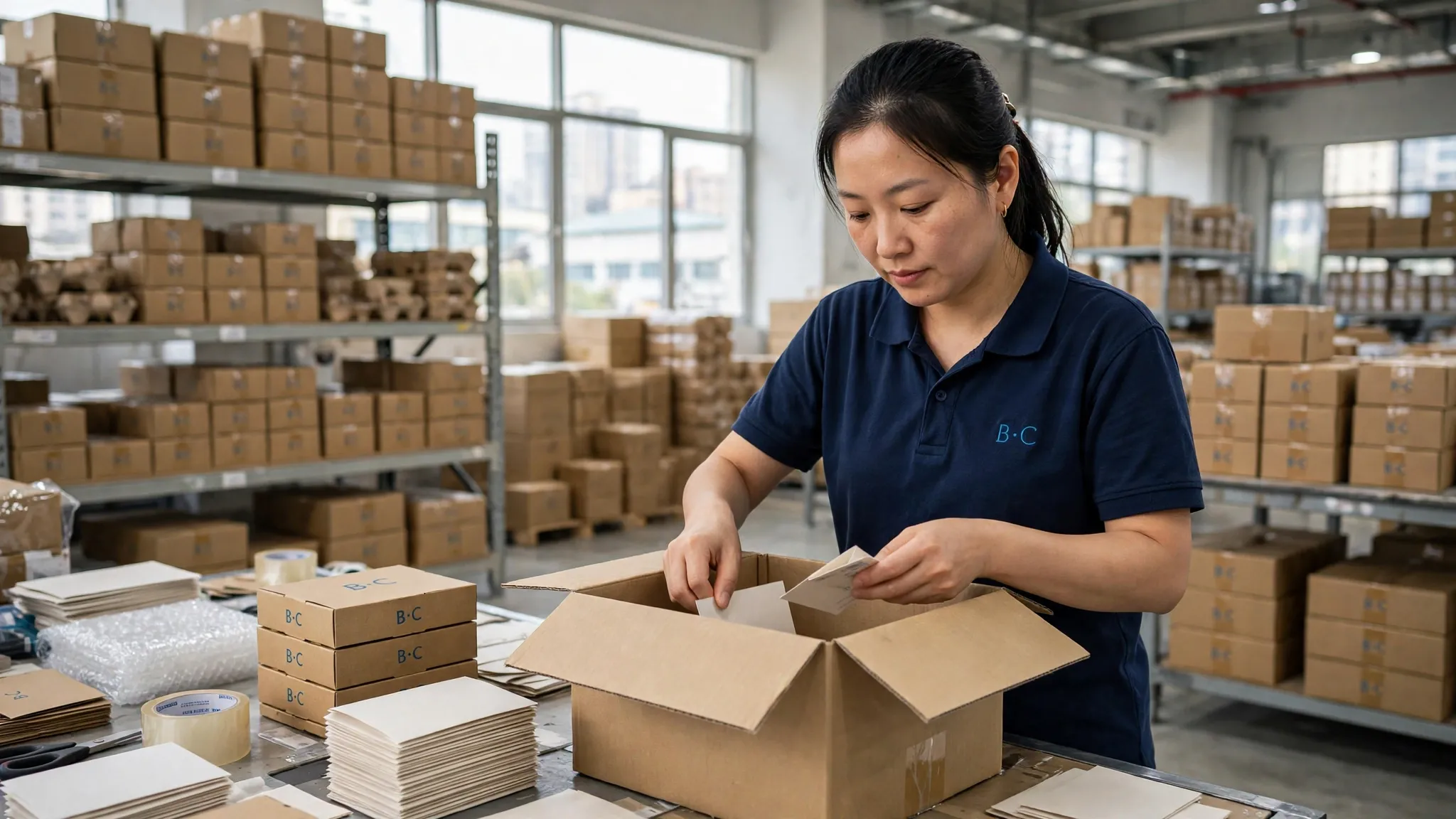
The unboxing is the first physical moment a customer has with your brand. For a store that ships from China, it is often the only moment: no shop assistant, no branded storefront, just a box that arrives at a door. What is inside that box — and in what order the customer finds it — decides whether the parcel feels like a brand delivery or a warehouse shipment.
What inserts actually do
An insert is any printed item that goes into the parcel alongside the product. Most DTC brands use four or five kinds, and each one has a job.
A thank-you card sets the tone. A short, genuine message — your brand name, a line of thanks, and nothing else — makes a parcel feel personal. The best ones are specific to the product, not a generic card used for every SKU. A card that mentions the product the customer bought reads as care; a card that could belong to any parcel reads as filler.
A care or instruction card prevents support tickets. Washing instructions for a textile product, charging instructions for an electronic one, a note on how to fit or assemble something — the information a customer needs in the first ten minutes. A product that arrives without instructions generates a message to your store; the same product with a clear card does not.
A warranty and returns card tells the customer what to do if something is wrong, and where to go. It should state the return window, the contact channel, and what the customer should keep — the order number, the packaging — in plain language. A customer who knows how to reach you is a customer who messages you instead of opening a dispute.
A review request card asks for a review at the right moment: after the customer has seen the product, not before. A short card with a QR code to your review page works better than a long email sent three days later, and it works best when it does not offer an incentive that the marketplace forbids. Check your platform's rules before you promise anything in exchange for a review — Amazon, for example, does not allow incentives for reviews, and a card that offers one can get your listing in trouble.
A discount or repeat-purchase card brings the customer back. A code for the next order, printed on a card that is hard to throw away, is the cheapest retention tool in e-commerce. Keep the code simple and the expiry generous; a code that has already expired when the customer tries it does more harm than no code at all.
Why the insert is a QC step
Here is the part most sellers miss. In a warehouse that packs hundreds of orders a day, the insert is checked against the order before the box is sealed. That check catches mistakes that nothing else catches.
A wrong insert usually means a wrong order. If the picker pulled the wrong SKU, the insert for the ordered product will not match the item in the box — the card says one product, the item is another. A packer who checks the card against the item catches the error. A packer who just drops in whatever card is nearest does not, and the customer receives the wrong product with the right card, or the right product with the wrong card. Either way, the brand looks careless.
The insert also catches variant mistakes. A card printed for the US market going into a parcel bound for Germany, a care card in English going to a French customer, a warranty card with a US returns address going to an Australian buyer — these are all small errors that a customer notices immediately, and they all happen at the packing bench, not at the factory.
And the insert is the last visible check. Once the box is taped, the only record of what went inside is the packer's word and, if the warehouse takes one, a photo. A missing insert is invisible from the outside, which is why it has to be verified before sealing, not after.
How to add inserts without slowing the line
The fear that stops most sellers is speed. A packing line that handles hundreds of orders a day cannot afford an extra minute per order. The answer is not to skip the inserts. It is to build them into the line properly.
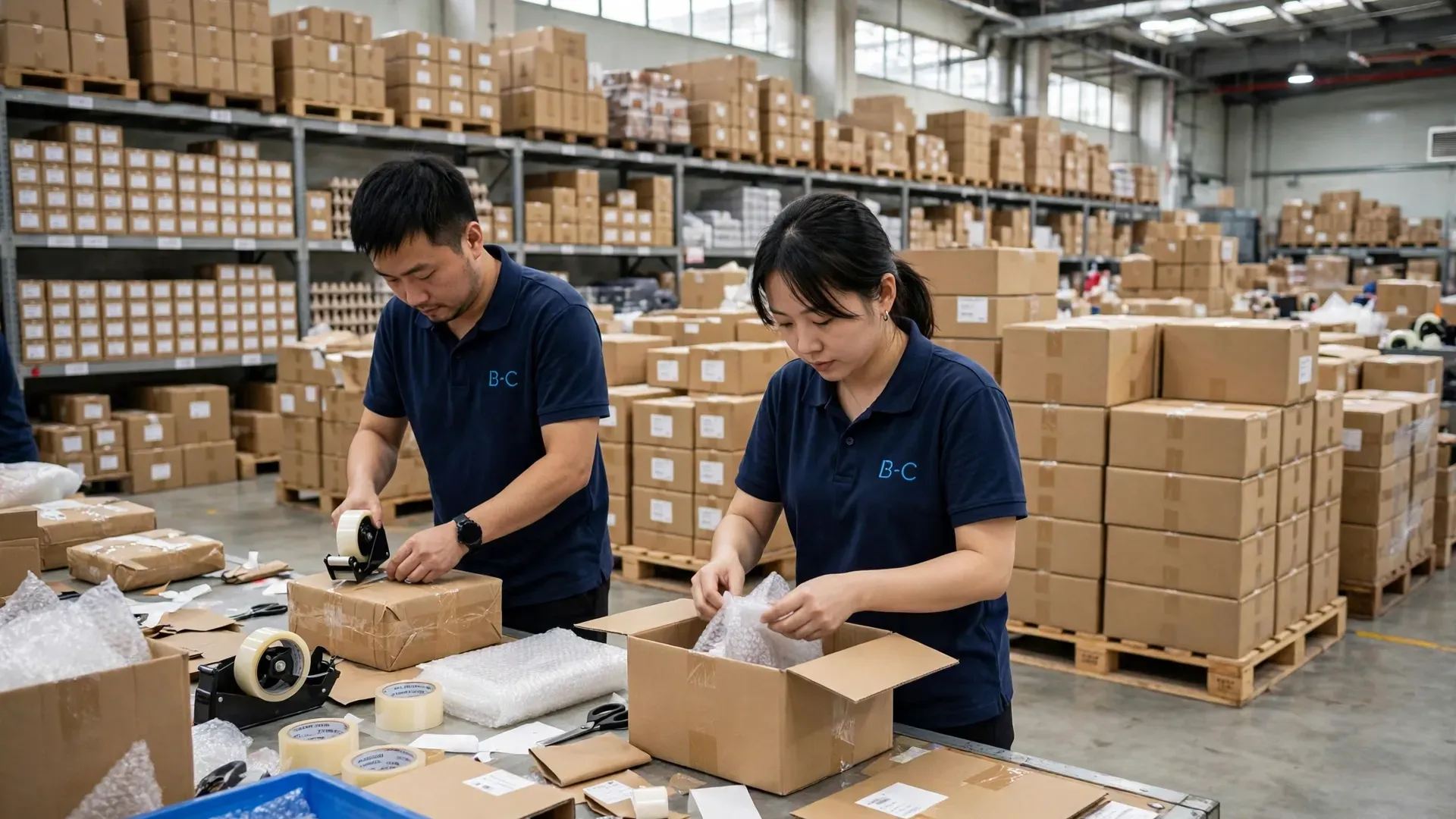
Pre-kit the inserts per SKU. The inserts for each product — thank-you card, care card, warranty card — should arrive at the packing bench as a single set, already counted and bundled for that SKU. A packer who reaches for one bundle is fast. A packer who picks three separate cards from three separate piles is slow, and will eventually pick the wrong one. Pre-kitting is the single biggest speed improvement in insert handling.
Put the insert step before the seal, not after it. The packing sequence should be: pick, inspect, pack, insert, verify, seal. The insert goes in after the product check and before the tape. An insert added after sealing means reopening the box, which costs more time than the insert ever saved.
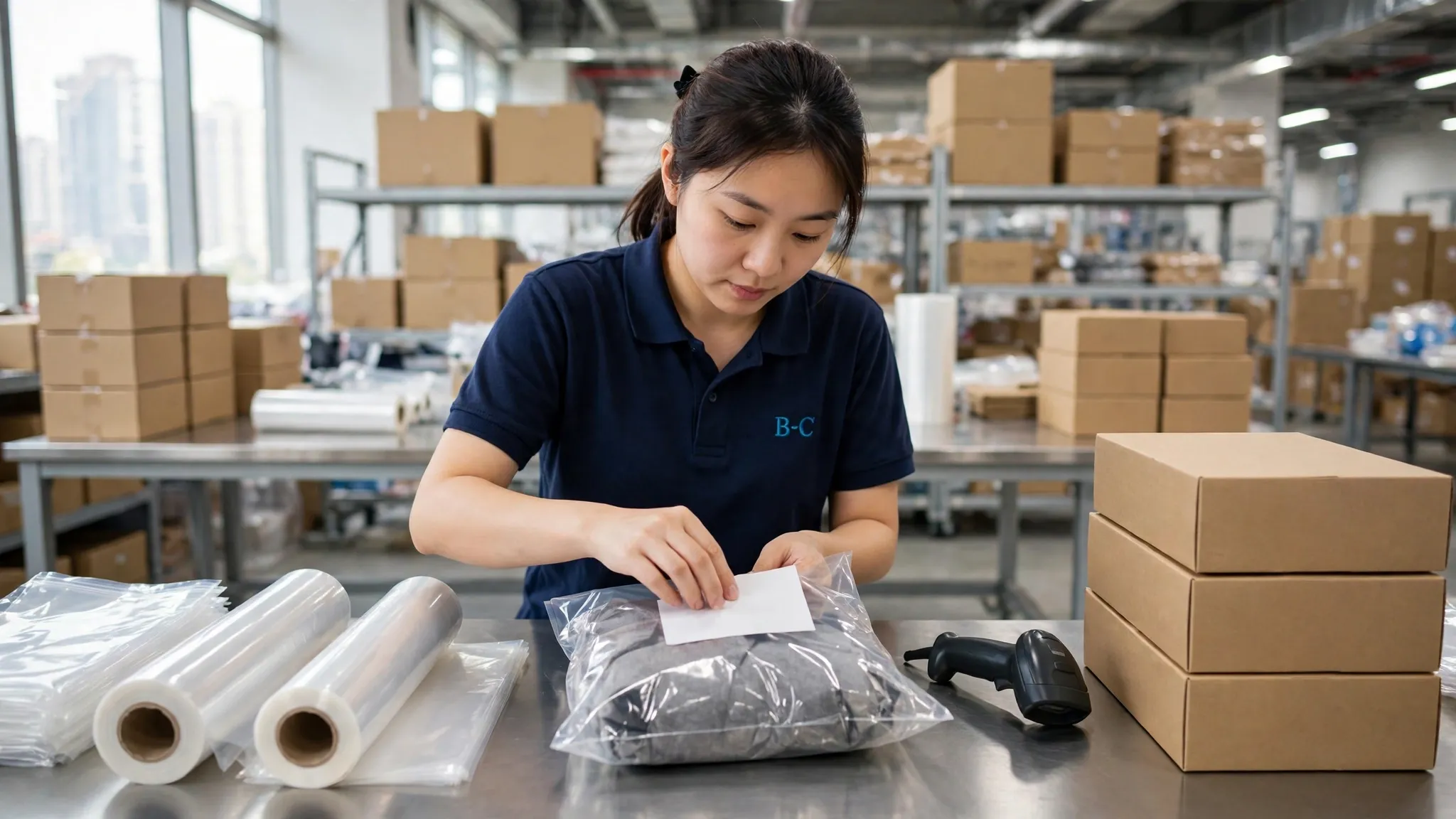
Use a scan or a checklist, not memory. For orders with more than one insert, or with market-specific variants, the packing checklist should list the exact inserts for that order, and the packer should confirm each one. A barcode scan of the insert set against the order is better still: it turns a judgement call into a pass-or-fail check, and it takes seconds.
Keep the insert stock at the bench. Inserts stored in another room, or in a box that has to be fetched, add walking time to every order. The day's insert sets should sit at the packing bench, within arm's reach, counted for the day's expected volume. Running out mid-shift means either stopping the line or shipping without inserts — both are worse than the minute it takes to restock.
Photograph the open box. A photo of the packed box, taken before sealing, with the product and the inserts visible, is the cheapest dispute protection a seller can buy. When a customer says "the thank-you card was missing" or "I received the wrong item", the photo answers the question in seconds. It also keeps the packing team honest: people pack more carefully when the box is photographed.
The mistakes that slow the line — or cost you money
Loose inserts. A card that is not fixed in place slides around in transit, ends up under the product, or falls out when the customer opens the box. A card tucked under the product, or slipped into a sleeve or a pocket in the packaging, stays where the customer will see it. If the card matters, secure it.
Wrong language or market variant. A thank-you card is a brand moment; a thank-you card in the wrong language is a brand embarrassment. Market-specific inserts need market-specific picking, and that means the warehouse needs to know which variant goes to which destination. Confirm the variants before the first shipment, not after the first complaint.
Late changes. A new insert design, a new discount code, a new card added mid-week — every change means new packing instructions, a new check, and a slower line while the team learns it. Freeze your insert set before a sale or a launch, and change it between campaigns, not during them.
Weight and size. Inserts add weight and thickness. A thick card in every parcel adds up across thousands of orders, and on a volumetric-weight shipment it can push a parcel into the next weight band. Keep cards light — a single folded card, not a booklet — and check the weight impact before you commit to a heavy insert across all orders.
Forgetting the platform rules. Marketplaces have rules about what can go inside a parcel. Amazon does not allow inserts that direct customers off Amazon, or that offer incentives for reviews. Etsy and Shopify are more permissive, but your own store's inserts still have to comply with the law of the destination country — no misleading claims, no unapproved health claims, no counterfeit branding. Check the rules for each channel you sell on, and use a different insert set where the rules differ.
What we can and cannot do
We can kit your inserts per SKU and per market, store them at the packing bench, and add them to every order as part of the standard packing sequence — with a checklist check and a photo of the open box before sealing. We can handle market-specific variants, so a German customer gets the German card and a US customer gets the US one, and we can flag an order when the insert set does not match the product in the box. We can also source the printing locally if you need cards produced in China, and we can hold a buffer of inserts so a reprint delay never stops the line.
What we cannot do is add inserts to a parcel that has already been sealed and handed to the carrier without reopening it — that is a rework job, and it costs time and a new label. We cannot print your inserts overnight: printing takes a few days, and a new design needs a proof before it goes to press. And we cannot make an insert fix a product problem — a beautiful thank-you card does not make up for a damaged or wrong item, and no amount of packaging theatre replaces a proper inspection.
The bottom line
A thank-you card is not decoration. It is the last check before a parcel seals, the first brand moment a customer sees, and the cheapest retention tool a DTC brand owns. The sellers who do it well treat inserts as part of the packing process, not an afterthought: pre-kitted per SKU, checked against the order, photographed before sealing. The sellers who do it badly add cards at random, in the wrong language, or after the box is taped — and then wonder why the line is slow and the reviews mention sloppy packing. Get the inserts right, and every parcel that leaves the warehouse carries your brand with it, not just your product.
If you want inserts, thank-you cards and branded packaging added to your orders from our Shenzhen warehouse — kitted per SKU, checked before sealing, and photographed for your records — get a fulfillment quote in 24 hours. Send us your insert designs and your SKUs, and we will confirm the kitting, the packing sequence and the photo record before your next shipment.
Related: Breaking Free from Price Wars: How Shopify Sellers Unlock a 30% Price Premium with B&C's Custom Packaging — the packaging decisions that lift perceived value; Single-Piece Light Customization: 100% Full Inspection for Shopify Orders — the full-inspection step your inserts sit on top of; Custom Packaging & Branding Solutions — our custom packaging range, from mailer boxes to inserts and thank-you cards.