Sourcing Guides
EU GPSR Is in Force: What Importers from China Must Fix on Labels and Paperwork
The EU's General Product Safety Regulation is now in force. This guide covers what importers from China must fix on labels, paperwork and online listings — and what to check before the next shipment.
The EU's General Product Safety Regulation — GPSR, Regulation (EU) 2023/988 — has been in force since 13 December 2024. It replaced the 2001 General Product Safety Directive, and it changed more than the name. The old directive was implemented differently in each member state and barely mentioned online sales. The new regulation applies directly across the EU, names a responsible person for every product, and reaches into online listings in a way the old rules never did.
For importers buying from China, the practical effect is simple: the label, the paperwork and the listing all have to carry information that many shipments still do not. The goods themselves may be unchanged. What changed is what must travel with them, and who is answerable when it does not.
This guide covers the five things the GPSR requires of an importer, the responsible-person rule that catches most first-time importers out, and a checklist to run before your next shipment leaves China. It is written for importers and brands, not lawyers — and where your product has its own sector rules (toys, electronics, cosmetics, food-contact materials), those rules apply on top of the GPSR, not instead of it.
What the GPSR actually requires
The regulation is long, but an importer's obligations reduce to five things:
- A safe product. Products placed on the EU market must be safe under normal and reasonably foreseeable conditions of use. Safety is assessed against European standards where they exist, and against the product's characteristics, presentation, labelling and instructions where they do not. The GPSR is the safety net: where a product-specific EU law already covers a risk, that law governs; where it does not, the GPSR does.
- A product that can be identified. Every product must carry a type, batch or serial number, or another element that identifies it — on the product itself, or on its packaging or an accompanying document where the size or nature of the product makes that impractical. A batch number is not bureaucracy; it is what makes a recall possible without pulling every unit you ever sold.
- A named manufacturer. The product must carry the manufacturer's name, registered trade name or trade mark, and a postal and electronic address. If the manufacturer is outside the EU — as a Chinese factory is — that information still has to be there, and it has to be real: a working address, not a trading company's mailbox.
- A responsible person established in the EU. Every product sold in the EU must have an economic operator established in the EU who is responsible for it. This is the change with the most practical consequences, and it gets its own section below.
- Safety information the buyer can understand. Where needed for safe use, the product must come with instructions and safety information in a language the consumer can easily understand — which in practice means the language of the market where it is sold. A warning printed only in English on a product sold in France does not meet that test.
Those five are the importer's side of the bargain. The factory's side is the technical documentation behind them — and the importer's job is to verify that it exists before the goods ship, not to discover its absence at a customs check.
The responsible person: the change that catches importers out
Under the old directive, the question of who was responsible for a product's safety in the EU was often left vague, especially for goods sold online. The GPSR ends that. Every product must have a responsible person — an economic operator established in the EU — and the regulation names who that can be: the manufacturer (if established in the EU), the importer, an authorised representative, or a fulfilment service provider established in the EU.
For a Chinese factory selling to an EU importer, the practical reading is straightforward: if no other EU-established operator is named, the importer is the responsible person. That is not a formality. The responsible person must be able to produce the technical documentation, cooperate with market surveillance authorities, and act if the product turns out to be unsafe — including notifying authorities and, where needed, recalling it.
Three consequences follow from that, and all three are worth settling before you order:
- Your name and address go on the product. The importer's name, registered trade name or trade mark, and postal and electronic address must appear on the product, its packaging, or an accompanying document. This is a labelling requirement, not a suggestion — and it is the single most common gap we see on shipments from China, where cartons often carry only the factory's details.
- You need the manufacturer's documentation in hand. The responsible person must be able to show the technical documentation: a description of the product, an analysis of the risks, the standards applied, and the test reports that support the safety claim. If your supplier cannot produce it, you are the one who cannot answer the authority's question. Ask for it before the deposit, and check that it names the model you are buying — a test report for a different model is not documentation for yours.
- Online sales do not escape this. Products offered for sale online must display the responsible person's details and the safety information before the purchase is made — on the listing, not in the parcel. Marketplaces have their own obligations under the GPSR, including acting on unsafe-product notices and cooperating with the EU's Safety Gate alert system. A listing that omits the responsible person is a listing that can be taken down.
If you are selling into the EU through a fulfilment service provider established in the EU, that provider can be the responsible person — but only if the arrangement is agreed and the provider accepts the role. It is not automatic, and it should be confirmed in writing before the first shipment.
Labels: what must physically be on the product or packaging
The labelling checklist for a GPSR-compliant shipment is short, and every item on it is checkable at pre-shipment inspection:
- Manufacturer identification — name, registered trade name or trade mark, plus a postal address and an electronic address. This must be the manufacturer, not a trading company that arranged the order.
- Importer identification — your name or trade mark and your postal and electronic address, as above.
- Product identification — type, batch or serial number, or another identifier that lets a specific production run be traced.
- Warnings and safety information — where the product needs them for safe use, printed in the language of the destination market, and legible. Pictograms help but do not replace the words where words are required.
- Instructions for use — where needed, in the right language, included with the product rather than available only online.
One practical note: the GPSR allows this information to go on the packaging or in an accompanying document where the product itself is too small or the shape makes direct marking impractical. That is a genuine allowance, not a loophole — the information must still be there, and it must still be legible and durable. A sticker that peels off in transit is not a label.
Paperwork: the technical file and what to keep
Behind every compliant product is a technical file. The GPSR requires the manufacturer to draw up technical documentation before the product is placed on the market, and to keep it for ten years after the product was placed on the market. The file has to contain, at minimum, a general description of the product and its essential properties, and an analysis of the risks — including the results of any safety assessments and the standards or specifications applied.
For an importer, the paperwork questions are practical ones:
- Does the file exist, and does it name your model? A file for a near-identical model is not a file for yours. Check the model number, the specifications and the test reports against the quotation, line by line.
- Are the test reports current and from a real laboratory? A test report from an unaccredited lab, or one that predates a design change, may not survive a market surveillance check. Ask which laboratory issued it and when.
- Who holds a copy? The responsible person must be able to produce the documentation when a market surveillance authority asks. If the only copy sits in a factory filing cabinet in Guangdong, that is a problem you will discover at the worst possible moment. Hold a copy yourself, or make sure your agent does.
- What about your own records? Keep your order records, the supplier's documentation, and your inspection reports. If a product is ever questioned, the paper trail is how you show the checks were done.
None of this requires a legal department. It requires asking for documents before the deposit, reading them, and keeping them. The importers who struggle with the GPSR are rarely the ones who could not comply — they are the ones who never asked.
Online listings: the rules most sellers miss
The GPSR is the first EU product-safety law written with online sales in mind, and its distance-selling rules are the part most sellers have not yet caught up with:
- The listing must show the responsible person. Before a consumer buys, the online offer must display the name and contact details of the manufacturer and of the responsible person, along with the product identifier and the safety information and warnings. This applies whether you sell through your own store or a marketplace.
- Marketplaces must act on unsafe products. Online marketplaces have to run processes for removing unsafe products when notified, cooperate with market surveillance authorities, and give traders a way to provide the required information. A marketplace can also be required to act on a Safety Gate notification.
- Safety Gate is public. The EU's Safety Gate (formerly RAPEX) publishes alerts on dangerous products, and market surveillance authorities use it to coordinate. A product that appears there is a product whose importer has a problem that does not stay quiet.
The listing check is the easiest of all the GPSR checks to run, because it needs no factory cooperation — just a look at your own store. If your listing does not show the responsible person's details and the safety information, fix it before the next order ships, not after a marketplace asks.
What to check before your next shipment
A short pre-shipment GPSR checklist, in the order that catches problems cheapest:
- Confirm the responsible person. Who is the EU-established operator for this product — you, your authorised representative, or your fulfilment provider? Is it agreed in writing?
- Check the labels. Manufacturer name and addresses, importer name and addresses, batch or serial number, warnings and instructions in the destination-market language. Check them on the actual carton at inspection, not on the artwork file.
- Read the technical documentation. Does it exist, does it name your model, and do the test reports cover the current design? Hold a copy.
- Check the listing. Does the online offer show the responsible person's details, the product identifier and the safety information before purchase?
- Check the product-specific rules. GPSR is the safety net. If your product is a toy, an electrical product, a cosmetic, a food-contact material or anything else with its own EU legislation, that legislation applies too — and its requirements (such as CE marking under a specific directive) are separate from the GPSR.
One more note for UK-bound goods: the GPSR is an EU regulation and does not apply in Great Britain, where the General Product Safety Regulations 2005 still govern. If you sell into both the EU and the UK, the two regimes have to be handled separately — the same label will not necessarily satisfy both.
What we do differently
GPSR compliance is mostly a discipline problem, not a knowledge problem — and discipline is what an agent on the ground is for.
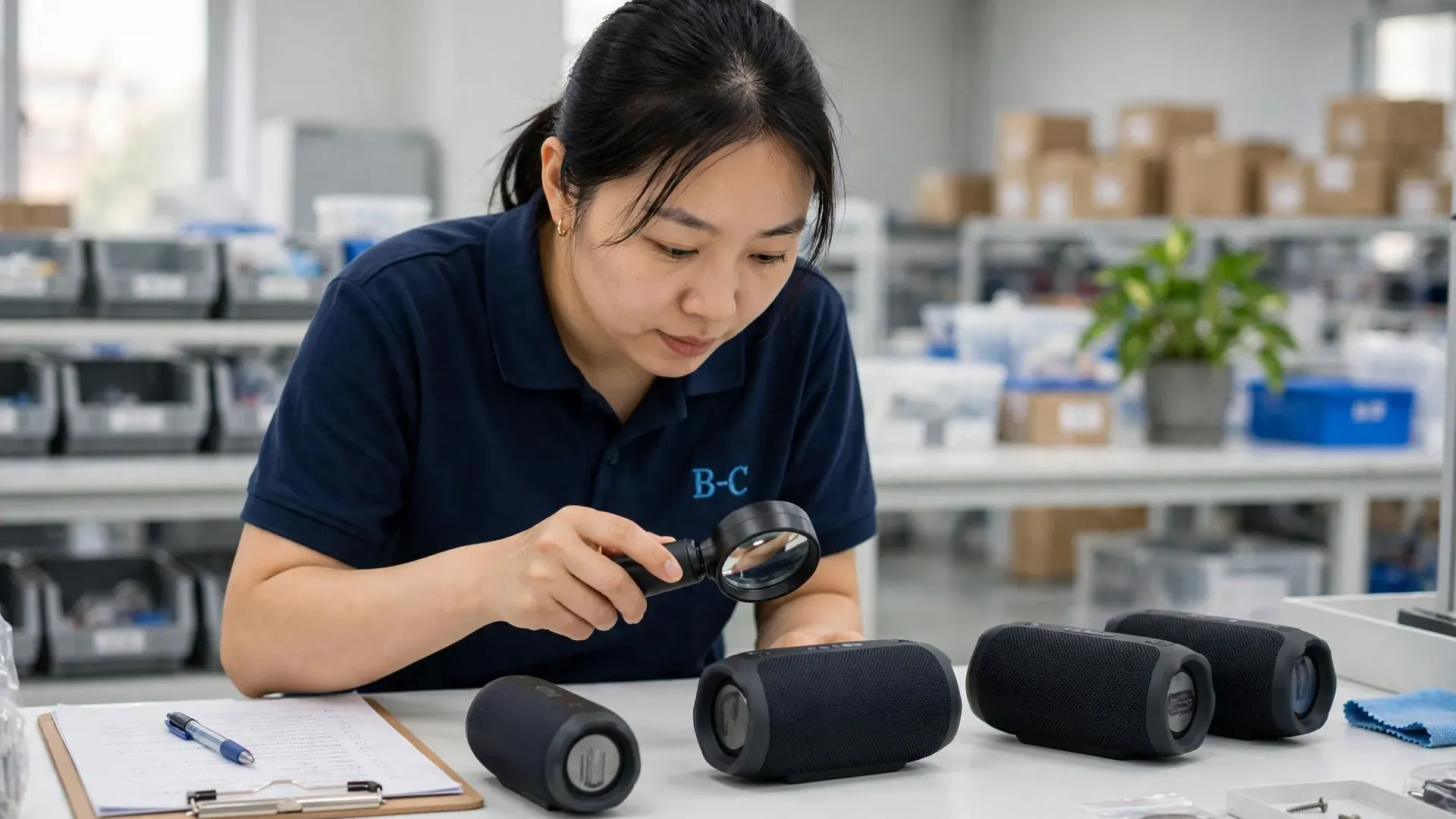
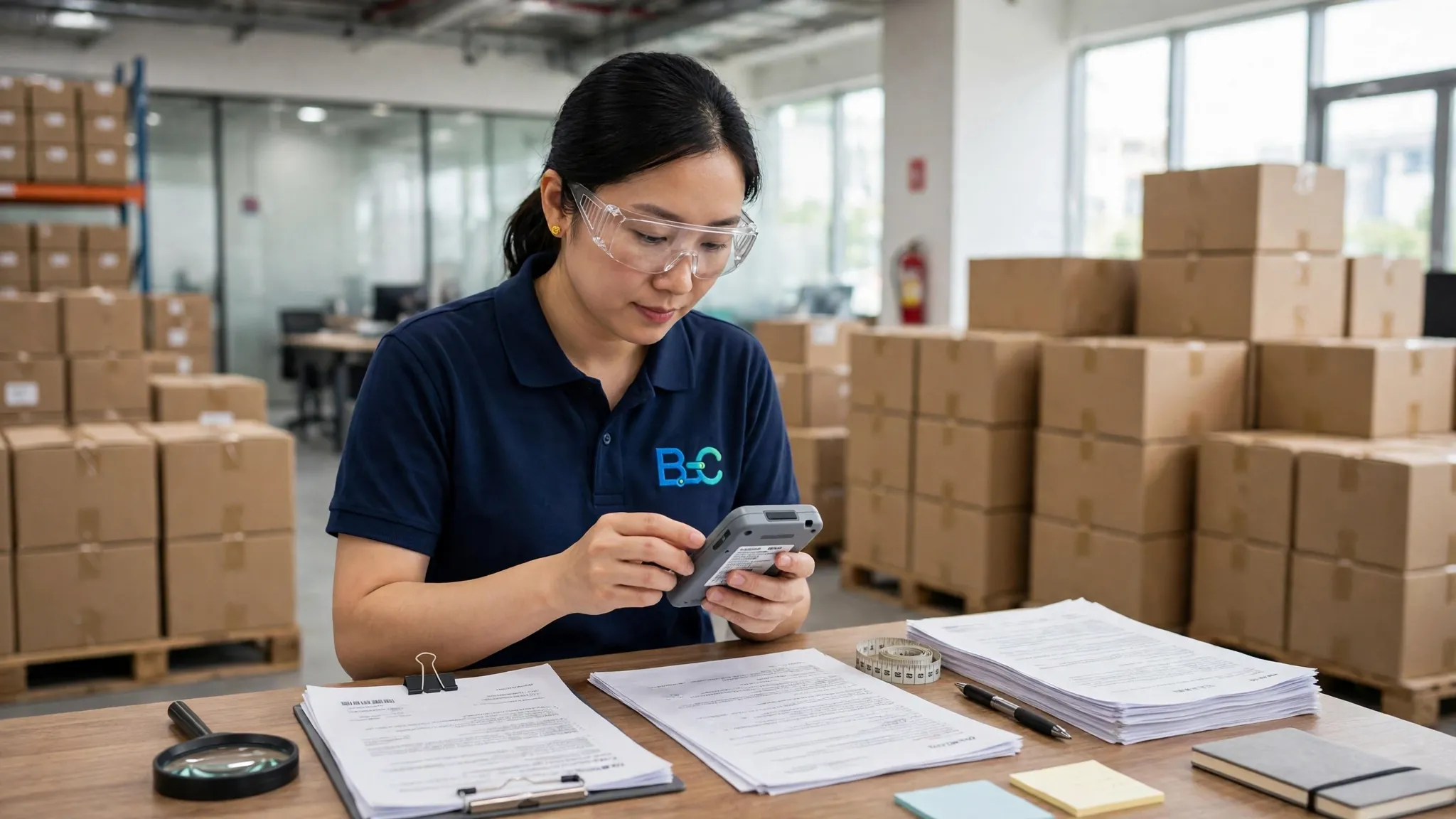
We verify the supplier before any money moves, and we read the technical documentation against the model actually being quoted: model number, specifications, test reports, and whether the laboratory and the dates stand up. We check the labels on the real cartons at pre-shipment inspection — manufacturer and importer details, batch numbers, warnings in the right language — because artwork files and shipping cartons are not always the same thing. And we hold copies of the documentation, so the file is available when it is needed rather than sitting in a factory drawer.
Because we consolidate orders across buyers, a smaller importer gets the same document discipline as a large one: the checks do not shrink with the order size.
What we can and cannot do
We can verify a supplier's background, check technical documentation and test reports against the model you are buying, confirm labels and packaging at inspection, coordinate compliant packaging and labelling with the factory, and hold the documentation on file for you.
What we cannot do is act as your EU responsible person — that role needs an operator established in the EU, and we are based in Shenzhen. We cannot give legal advice, and this article is not legal advice: for regulated products, or where you are unsure whether a product-specific law applies, a qualified adviser in your market should review the position. And we cannot make a non-compliant product compliant by relabelling it — if the documentation does not support the product, the answer is to fix the product or find a factory whose documentation does.
The bottom line
The GPSR did not make importing from China harder. It made the paperwork honest: a named manufacturer, a named responsible person, a traceable product, and safety information the buyer can read. Importers who build those four things into their order process — checked before the deposit, verified at inspection — will find the regulation straightforward. Importers who treat it as a labelling afterthought will find it at the worst possible moment: a marketplace takedown, a customs hold, or a Safety Gate alert.
If you have a product or a supplier quote and want the GPSR position checked before you commit, send it to us for a factory quote within 24 hours and we will read the labels and documentation against the requirements for your market — including the checks most quotations leave out.
Related: B2B Sourcing from China — our sourcing service for importers and brands, covering supplier verification, documentation checks, quality inspection and compliant shipping.