Sourcing Guides
FOB, CIF or DDP? The Shipping Term That Costs First-Time Importers the Most
FOB looks cheapest until destination charges land. A real anonymized case shows how a $500 port bill erased the saving — and how to choose FOB, CIF or DDP by destination and order size.
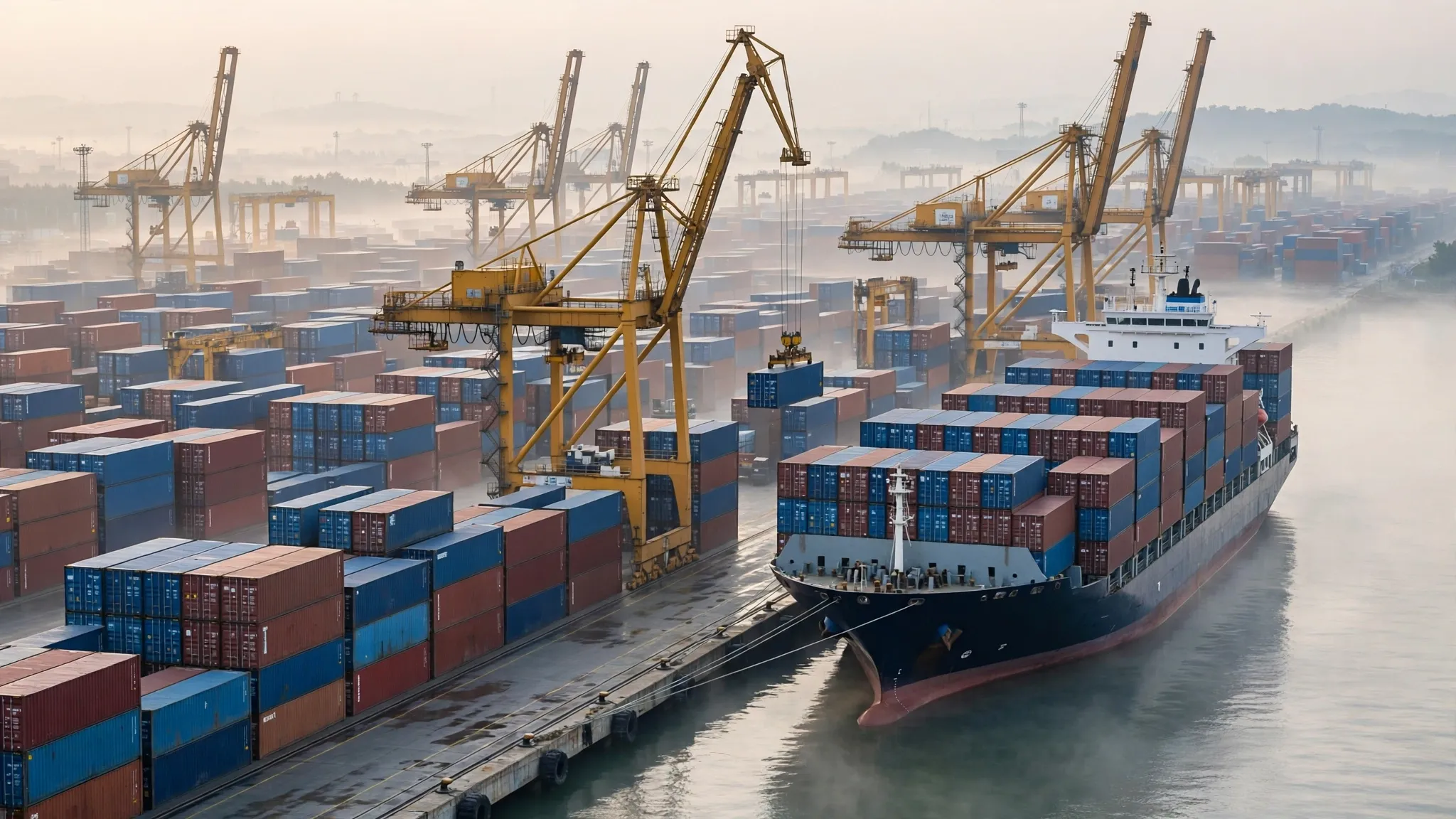
Most first-time importers choose FOB because it feels like control: your forwarder, your shipping, your terms. What the quote comparison never shows is where the money actually moves. Under FOB, the seller's job ends when the container crosses the ship's rail in China — and the charges waiting for you at the destination port are set by people you did not choose, at prices you cannot negotiate after the fact. This is not a rare edge case. It is the standard business model of a certain kind of forwarder, and it is the single most common reason a "cheap" first order from China lands at a higher total cost than the same order shipped CIF.
Below: how the three terms really differ once the goods leave China, one real case (details anonymized), and how to choose by destination and order size.
The three terms, in one paragraph each
FOB (Free On Board) — the seller delivers the goods onto the vessel at the Chinese port. From that moment, freight, insurance and every destination charge are yours. You (or your nominated forwarder) arrange and pay the ocean freight. Clean in theory; the catch is in the destination charges, below.
CIF (Cost, Insurance and Freight) — the seller arranges and pays freight and insurance to your destination port. You still handle import customs, duties and the local delivery from the port. The seller's forwarder sets the destination-side handling charges — which is why a CIF quote that looks suspiciously cheap on freight sometimes reappears as inflated port charges. Ask for the destination charges in writing before you compare.
DDP (Delivered Duty Paid) — the seller (or their agent) delivers to your door with duties and taxes paid. One all-in number, no port surprises, no customs broker for you to manage. The trade-off: you see less of the cost breakdown, and for some destinations and product types DDP is not available or not advisable — a seller who offers DDP on everything, everywhere, without asking what the goods are, is a seller to double-check. See DDP fulfilment for DTC brands.
The nominated-forwarder trap (real case, anonymized)
A European buyer ordered a small trial shipment from a Chinese supplier — about 2.5 CBM, shipped FOB to Portugal. The buyer used their own nominated forwarder, expecting to save on freight. The ocean freight itself was fine. What arrived at destination was a local-charges invoice of roughly US$500 — terminal handling, documentation, "release" and assorted fees set by the forwarder's destination agent — for a 2.5 CBM shipment. That single invoice was about what the entire CIF price to the same port would have been. The goods were held until it was paid; there was nothing to negotiate, because the buyer had never agreed those prices with anyone — the forwarder's agent set them unilaterally, and this is legal and common under FOB when the destination agent is not yours.
This is the mechanism to understand: under FOB with a forwarder you did not choose at destination, the party who decides your destination costs has no relationship with you and no reason to keep them low. Some forwarders quote near-zero ocean freight precisely because the profit sits in the destination charges.
Choosing by situation
- Small trial orders (a few CBM) to Europe or North America: ask for CIF and DDP quotes next to FOB, and compare landed totals, not freight lines. For small volumes, DDP by sea or rail is frequently the cheapest and the only option with a fixed total. If you stay with FOB, get your forwarder's destination charges in writing before the goods sail.
- Regular volume, your own reliable forwarder with a real destination network: FOB works well — the trap is not FOB itself, it is FOB with a forwarder whose destination agent you have never priced.
- Rail-served destinations (Poland and much of Central/Eastern Europe on the China–Europe rail network): DDP by rail often beats sea freight on both time and total cost for small-to-mid volumes, because it skips the port-handling layer entirely. When we quote Poland-bound orders, rail DDP is usually the first option we price.
- Any term, any route: the question that protects you is not "what is the freight?" but "what is every charge between the factory gate and my warehouse, and who sets each one?" A quote that cannot answer that in writing is not a cheap quote — it is an unfinished one.
What we do / what we do not do
We quote the way we would want to be quoted: for every order we lay out the term options (FOB / CIF / DDP where available) with the full charge list written in advance — freight, destination charges, duties where DDP applies — and the invoiced total is the quoted total. If a destination charge is genuinely unknowable in advance, we say so and name the range instead of hiding it. What we cannot do: control the destination charges of a forwarder you nominate yourself — if you ship FOB on your own forwarder, those charges are between you and them, which is exactly why we raise the question before the goods leave, not after. See what a fulfilment quote needs from you.
Not sure which term fits your next order? Send us the product, quantity and destination — Get a Factory Quote in 24 Hours — and we will price the realistic options side by side, destination charges included, so the comparison is honest before you commit.