How Many SKUs Can a China Warehouse Handle Well? Complexity Limits, Explained
SKU count matters less than what each SKU demands. How warehouse complexity scales — variants, picking, labelling, accuracy — and when your catalogue outgrows one warehouse.

Ask a warehouse how many SKUs it can handle and the honest answer is always another question: what kind of SKUs? A warehouse holding 2,000 SKUs of the same phone case in different colours is a different operation from a warehouse holding 200 SKUs that each need different packaging, labelling, kitting and quality checks. The number alone tells you almost nothing. The complexity behind the number tells you everything.
This guide explains how SKU complexity actually scales in a China fulfilment warehouse, where the limits show up, and what to do when your catalogue outgrows the setup you have.
SKU count is the wrong number to ask about
A SKU — a stock keeping unit — is one sellable variation of a product: one size, one colour, one pack quantity. Ten colours of one T-shirt is ten SKUs. A seller with 50 products and 20 variations each has 1,000 SKUs.
But warehouses do not struggle with counting SKUs. They struggle with what each SKU demands:
- Storage. Each SKU needs its own bin location, even if only a few units sit in it. A thousand SKUs means a thousand locations to label, find and count. Slow-moving SKUs occupy shelf space that earns nothing.
- Picking. Every order line is a pick. An order with three different SKUs takes three picks, three chances to grab the wrong item, and three times the walking if the SKUs are stored far apart.
- Labelling and customisation. SKUs that need different labels, inserts, gift boxes or custom packaging each need their own packing instruction. One wrong label on a multi-SKU order is a wrong-item complaint.
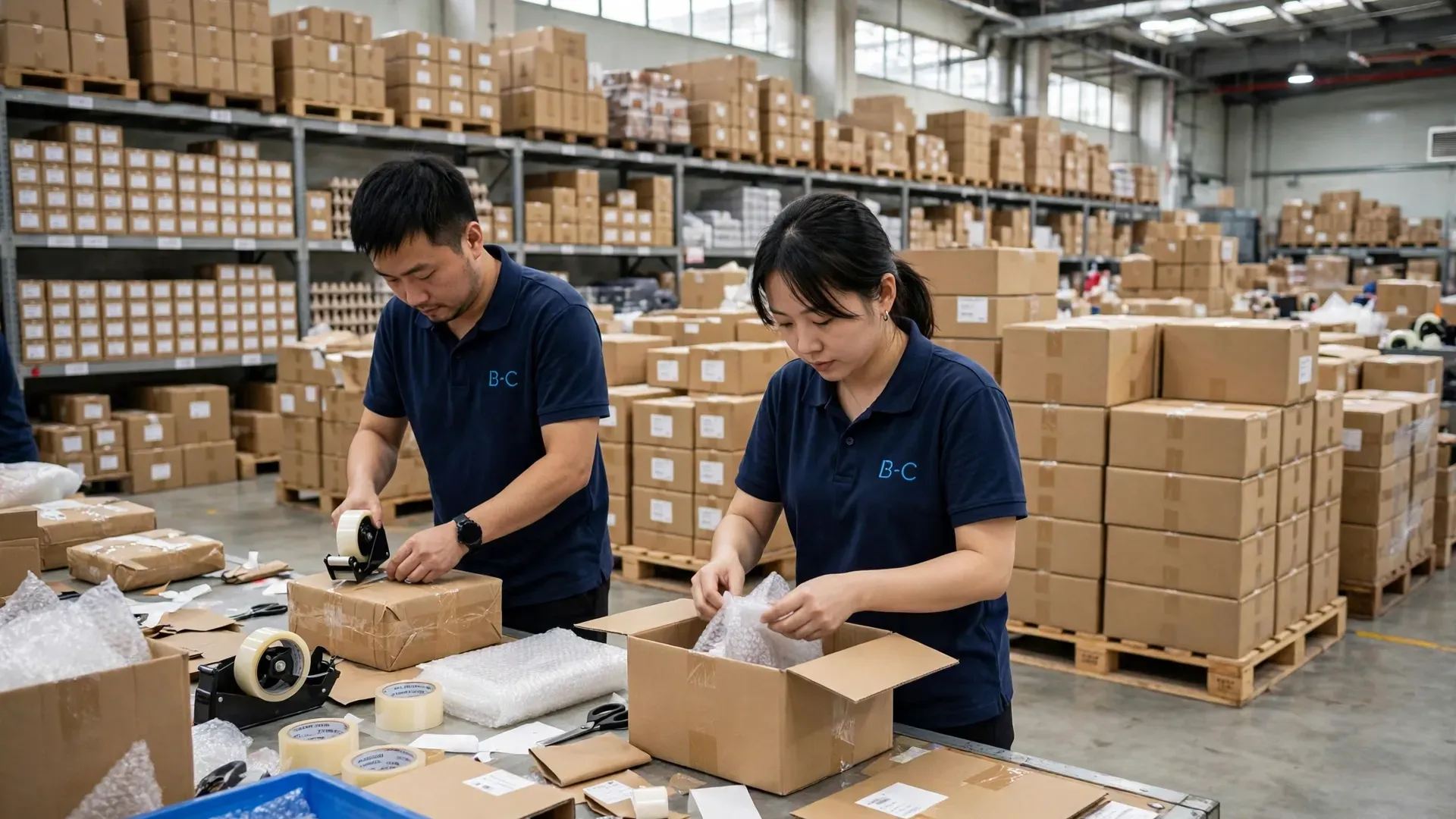
- Inspection. SKUs that need a per-piece check — electronics tested before packing, apparel checked for stains and stitching — each add handling time. A warehouse that inspects every item cannot move as fast as one that ships sealed cartons.
- Inventory accuracy. More SKUs means more counts to get wrong. A miscounted SKU is a stockout on your store, or an oversell that has to be cancelled.
Two sellers can both have 500 SKUs and need completely different warehouses. The one selling 500 variations of a simple product with one label each is easy. The one selling 500 products that each need kitting, custom boxes and inspection is hard.
The real limits, in practice
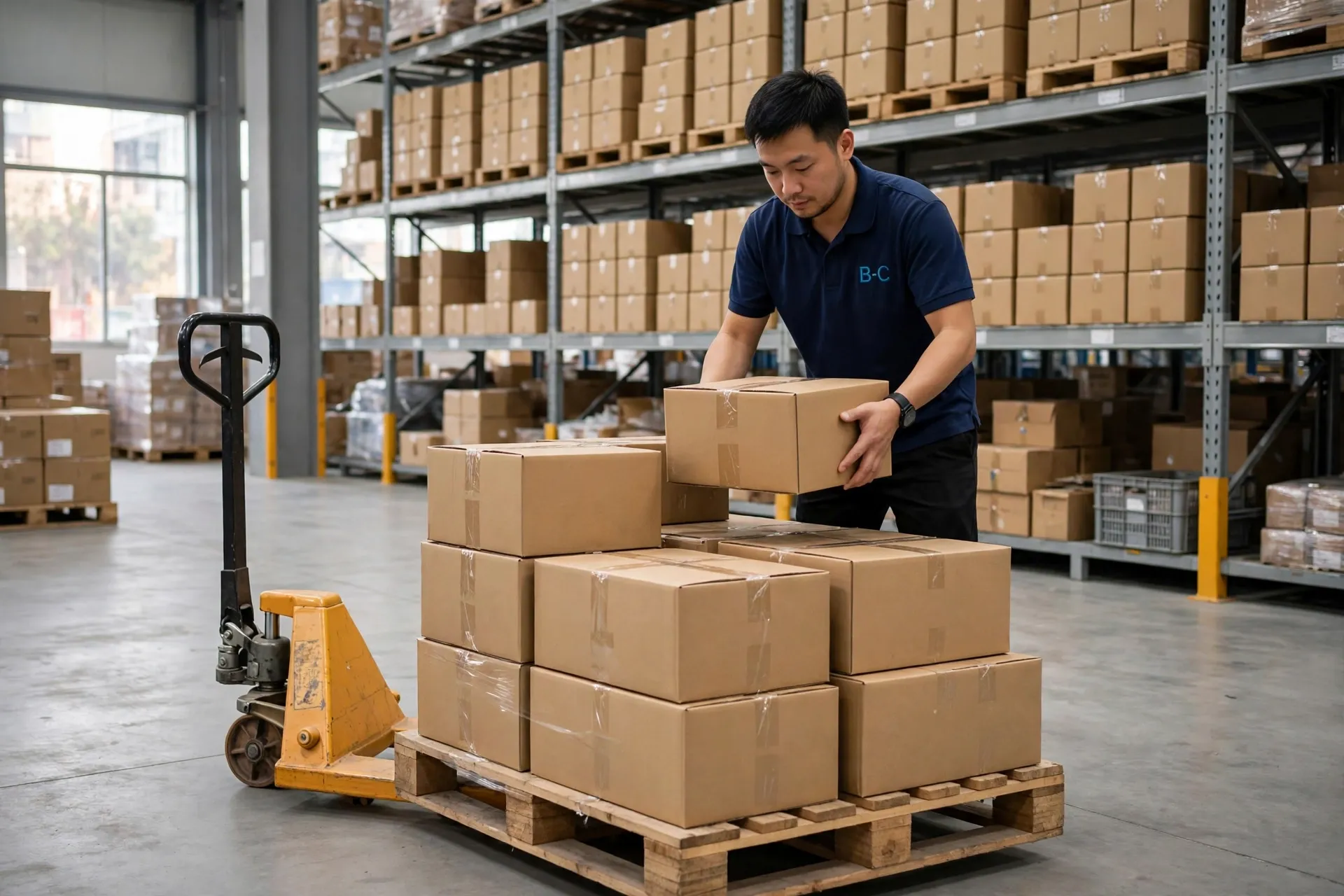
Storage space. A warehouse fills up in SKU locations long before it fills up in cubic metres. Hundreds of small bins holding a few units each waste aisle space and shelf height. The practical fix is simple: slow SKUs get consolidated into denser storage, fast SKUs sit near the packing benches, and dead SKUs get cleared — not kept because they might sell one day.
Picking accuracy. Pick error rates climb with SKU count and with visual similarity. Ten near-identical black phone cases in different model numbers are a picking trap; a picker grabbing the wrong model is the most common multi-SKU error. Warehouses that handle many similar SKUs well use barcode scanning at the pick and a second scan at pack-out, so the wrong item is caught before it leaves. If your warehouse picks by eye, a growing SKU count is a growing error rate.
Packing time per order. A single-SKU order packs in a minute or two. A five-SKU order with mixed packaging — one item in a gift box, one with an insert card, one needing a bubble mailer instead of a poly bag — can take three times as long. Packing time is the hidden cost of catalogue breadth: the warehouse charges by the order, but the labour inside the order grows with the number of lines and the number of special instructions.
Inventory counts. A warehouse with 200 SKUs can count everything every week. A warehouse with 2,000 SKUs cannot; it counts on a cycle, fast movers more often, slow movers less often. The more SKUs you have, the more you depend on cycle counting being done properly — and the more a single missed count can hide for weeks.
Returns handling. Every SKU that comes back needs a decision: restock, refurbish, or write off. With a handful of SKUs that decision is quick. With hundreds, returned items pile up waiting for someone who knows each product well enough to judge it.
Rough ranges — what "well" looks like
There is no industry-standard maximum, and any warehouse that quotes one without asking about your products is guessing. But as a rough guide for a China fulfilment warehouse doing per-order picking and packing for DTC sellers:
- Under 100 SKUs: straightforward. One team can know the whole catalogue. Counts are quick, picking errors are rare, and most warehouses handle this comfortably.
- 100–500 SKUs: the normal range for a growing DTC brand. Works well with barcode scanning, clear bin labelling and written packing instructions per SKU. This is where good warehouse discipline starts to matter.
- 500–2,000 SKUs: workable, but only with systems: a warehouse management system that tracks bin locations, cycle counts on a schedule, and kitting instructions that are written down, not memorised. Without those, accuracy slips.
- Over 2,000 SKUs: a different kind of operation. Needs dedicated inventory staff, regular cycle counting, and usually a conversation about whether slow SKUs should be consolidated, cleared, or moved to a separate storage arrangement. Very few DTC sellers need this many active SKUs in one warehouse — if you do, ask whether all of them are still selling.
These are ranges, not rules. A warehouse that inspects every item before packing will hit its limit sooner than one that ships sealed cartons — because the inspection time per SKU adds up. A seller whose products all share one box size and one label will scale further than a seller whose products each need custom packaging.
When your catalogue outgrows the warehouse
Watch for the signs: pick errors rising, packing times stretching, stockouts on SKUs the system said were in stock, and returned items sitting unprocessed. When they appear, the answer is rarely a bigger warehouse. Usually it is one of these:
- Prune dead SKUs. SKUs with no sales in 60–90 days cost storage, counting time and attention. Clear them or consolidate them before adding new ones.
- Consolidate variants. Ten colours that each sell two units a month are ten SKUs doing the work of one. Bundling slow variants into a single "assorted" SKU, where the market allows it, cuts complexity fast.
- Split the catalogue. Fast movers stay in the pick-and-pack warehouse. Slow movers, seasonal stock and bulk inventory can sit in cheaper deep storage and be called forward when needed.
- Write the instructions down. Every SKU with a special requirement — a label, an insert, a gift box, a check — needs a written packing instruction attached to the SKU, not carried in one person's head. This is the single cheapest fix for multi-SKU errors.
What we can and cannot do
We can receive, store and pick multi-SKU orders from our Shenzhen warehouse, inspect each item before packing, apply your labels, inserts and custom packaging per SKU, consolidate orders from several suppliers into one shipment, and keep a per-SKU inventory count so you know what is actually on the shelf. We handle orders across the range most DTC sellers operate in — from a handful of SKUs to several hundred — and we will tell you plainly when a catalogue has grown past the point where one warehouse and one picking flow still make sense.
What we cannot do is make a thousand-SKU catalogue behave like a ten-SKU one. Complexity is real, and it shows up as time: more picks, more checks, more counting. We also cannot keep slow-moving SKUs on the shelf indefinitely at no cost — storage is finite, and stock that does not move eventually needs a decision. What we can do is flag the slow movers, suggest consolidation, and keep the fast movers flowing while the catalogue gets sorted.
The bottom line
Do not ask a warehouse how many SKUs it can hold. Ask how it picks, how it counts, and what happens when two SKUs look identical. The answer to those three questions tells you more about whether your catalogue will run cleanly than any number will. Keep the active catalogue as small as the business allows, write down the packing instruction for every SKU that needs one, and count on a cycle — and a warehouse of a few hundred SKUs will run better than a warehouse of two thousand that nobody can keep track of.
If you are planning to move a multi-SKU catalogue to a China warehouse and want to know whether your mix fits, get a fulfillment quote in 24 hours — send your SKU list and your packing requirements, and we will tell you how it would run before the first order ships.
Related: B2C Fulfillment from China — warehousing, per-order inspection, custom packing and DDP delivery for DTC brands shipping from Shenzhen.