Sourcing Guides
How to Pay Chinese Suppliers Safely: Deposit, Milestone and Balance Terms That Protect You
Payment terms are a risk decision first: 30/70, 50/50, milestones, letters of credit, open account and escrow compared, plus the rule that no payment moves until the previous step is verified.

The wire transfer is the one step in sourcing from China that you cannot undo. A sample can be remade, a shipment can be re-routed, a bad carton can be re-packed — but money sent to the wrong account, or to the right account under the wrong terms, is gone or stuck. That is why experienced importers treat payment terms as a risk decision first and a cost decision second. The cheapest term is rarely the safest, and the safest term is not always the most expensive.
This article explains the payment terms Chinese suppliers actually use, what each one protects you against and what it does not, and how to structure payment so that every instalment is tied to something you can verify before the money moves.
The terms you will actually be offered
30% deposit, 70% before shipment (30/70). The default for most factory orders. You pay 30% to start production and 70% after the goods are made, usually after you approve photos, video or an inspection report. It is simple and factories accept it readily. Its weakness is the balance payment: once you pay the 70%, your leverage is gone, so the inspection that happens before that payment is the whole protection. Never pay the balance on photos alone for a first order.
50/50. Common for smaller orders, custom tooling or a first order with a new supplier. More of your money is at risk before production, but the supplier takes you seriously and may prioritise your slot. Only accept it when the supplier has already been verified and the order value is small enough that you can absorb a loss.
Milestone payments. The deposit is split against production stages — for example 30% deposit, 30% when raw materials arrive or the first article is approved, 40% after final inspection passes. This is the best structure for larger or custom orders, because each payment follows a checkable event. Factories resist it on small orders, where the administration costs more than the protection is worth.
Letter of credit (L/C). A bank guarantee: the bank pays the supplier only when the shipping documents match the terms exactly. Strong protection on paper, but expensive (bank fees, document preparation), slow, and only practical for larger orders — typically above US$30,000–50,000. It also protects the supplier as much as you: if the documents are in order, the bank pays even if you are unhappy with the goods. An L/C is a documents deal, not a quality deal.
Open account / net terms (OA). You pay 30, 60 or 90 days after shipment. Excellent for cash flow and almost never available to a new buyer. Suppliers offer it only after a history of reliable orders. If a brand-new supplier offers you open account with no history, ask yourself what they are getting out of it.
Escrow and third-party payment platforms. Services such as Alibaba Trade Assurance, PayPal or an escrow agent hold your payment until delivery conditions are met. Useful for small first orders with an unverified supplier. The protection is only as good as the platform's dispute process, and fees and currency limits apply. Note that paying through a platform does not replace verifying the supplier — it only changes who holds the money while you argue.
Term | Your cash at risk before goods exist | What it protects | Best for |
|---|---|---|---|
30/70 | 30% | Deposit discipline, if inspection precedes the balance | Standard repeat orders |
50/50 | 50% | Supplier commitment on small/custom orders | Small first orders with a verified supplier |
Milestones | Staged, each tied to a check | Payment follows verified progress | Large or custom orders |
Letter of credit | Bank-backed | Documents match the contract | Large orders, new relationships |
Open account | Nothing until after shipment | Cash flow | Established relationships only |
Escrow / platform | Held by a third party | Dispute process, not quality | Small first orders |
The rule that matters more than the term: pay against verification
Whatever term you agree, the structure that protects you is the same: no payment moves until the previous step has been verified by someone other than the supplier. That means:
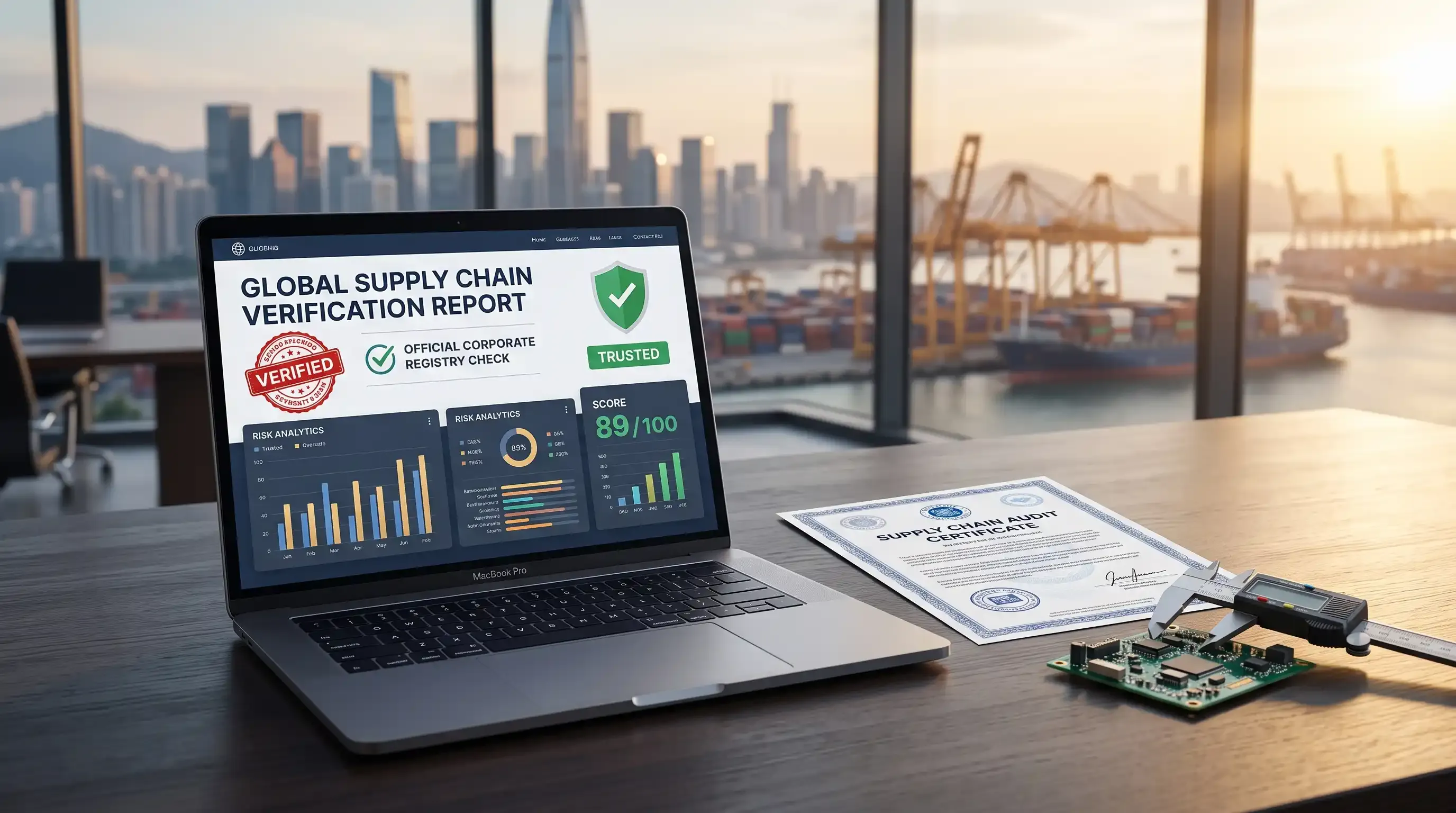
- Before the deposit: verify the supplier exists and is who they claim to be — business licence, factory address, export history. A background check at this point costs far less than any deposit. This is the step most buyers skip, and the step most fraud starts with.
- Before the mid-payment (if any): confirm raw materials or the first article against your specification — photos with a date stamp, a video call from the production floor, or a sample of the production batch.
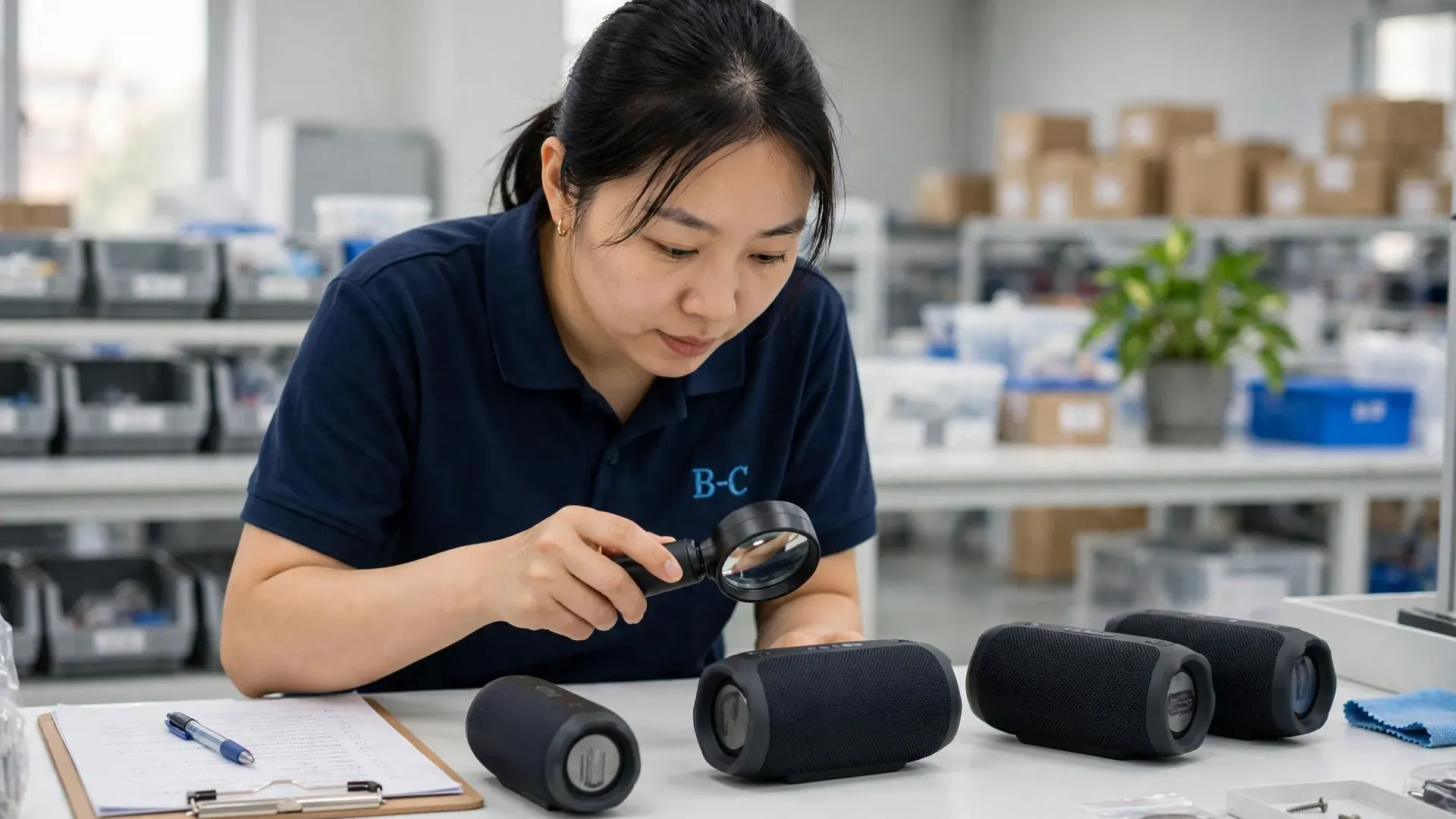
- Before the balance: inspect the finished goods — ideally a pre-shipment inspection against an agreed AQL standard — and confirm the packing list, carton count and shipping marks match the order. The balance is your last lever; once it is paid, the only remaining pressure is the relationship.
- After shipment: confirm the bill of lading details (consignee, port, container number) match the contract before you treat the order as complete.
If a supplier asks you to pay the balance before inspection, or to change the receiving bank account mid-order by email, stop. A bank-account change is the single most common payment-fraud pattern in cross-border trade: verify it by a phone or video call to a number you already have, never by replying to the email that announced it.
Red flags in payment terms
- A deposit above 50% for a standard product with no tooling.
- Pressure to pay the full amount before production "to lock the price" — price locks are done in the contract, not by prepayment.
- A request to pay a personal bank account, or an account in a different company name from the contract, with no explanation.
- A discount offered only if you pay 100% upfront. The discount is the price of your protection.
- Refusal to accept any inspection before the balance payment.
Any one of these does not prove a supplier is dishonest. Two or more together mean you should verify before you pay anything, or walk away.
What we provide vs. what most agents and forwarders provide
Most sourcing agents quote a price and pass your payment through. A forwarder moves boxes and does not touch the payment risk at all. That leaves the payment structure entirely on you.
What we do differently at B&C Sourcify: we build the payment gates into the order. Before you pay a deposit, we run the supplier background check (business registration, factory verification) and tell you what we found. During production we follow up on the milestones you agreed, and before the balance we arrange inspection and report the result to you in writing — with photos and the actual defect list, not a one-line "all good". Our fee for this work is agreed in writing before you commit, and the bill is what was agreed — no unclear temporary surcharges added afterwards.
What we can do — and what we cannot do
We can: verify a supplier before your deposit; structure milestone terms into the order and follow up on each gate; arrange pre-shipment inspection before the balance; check the shipping documents against the contract; and tell you honestly when a payment term a supplier is pushing is a bad fit for the order size.
We cannot: recover a wire transfer you have already sent to a fraudulent account — no agent can, and anyone who promises to is selling you something. We also cannot force a supplier to accept terms they have not agreed to; what we can do is tell you before you sign whether the terms on the table protect you, and what to change.
The bottom line
Safe payment is not about finding a magic method. It is about never paying for a step that has not been verified, and never letting the balance go before inspection. Get the supplier checked before the deposit, tie every payment to a checkable event, and keep the balance as your leverage until the goods have passed inspection. If you are about to wire a deposit and any part of this feels unclear, send us the supplier's details and the proposed terms first — we will check the supplier and review the terms, and give you a written quote within 24 hours.
Get a Factory Quote in 24 Hours — send us your product list and the supplier's proposed payment terms, and we will verify the supplier and confirm the payment structure in writing. Or start with a Free Supplier Background Check before you pay any deposit.
The wire transfer is the one step in sourcing from China that you cannot undo. A sample can be remade, a shipment can be re-routed, a bad carton can be re-packed — but money sent to the wrong account, or to the right account under the wrong terms, is gone or stuck. That is why experienced importers treat payment terms as a risk decision first and a cost decision second. The cheapest term is rarely the safest, and the safest term is not always the most expensive.
This article explains the payment terms Chinese suppliers actually use, what each one protects you against and what it does not, and how to structure payment so that every instalment is tied to something you can verify before the money moves.
The terms you will actually be offered
30% deposit, 70% before shipment (30/70). The default for most factory orders. You pay 30% to start production and 70% after the goods are made, usually after you approve photos, video or an inspection report. It is simple and factories accept it readily. Its weakness is the balance payment: once you pay the 70%, your leverage is gone, so the inspection that happens before that payment is the whole protection. Never pay the balance on photos alone for a first order.
50/50. Common for smaller orders, custom tooling or a first order with a new supplier. More of your money is at risk before production, but the supplier takes you seriously and may prioritise your slot. Only accept it when the supplier has already been verified and the order value is small enough that you can absorb a loss.
Milestone payments. The deposit is split against production stages — for example 30% deposit, 30% when raw materials arrive or the first article is approved, 40% after final inspection passes. This is the best structure for larger or custom orders, because each payment follows a checkable event. Factories resist it on small orders, where the administration costs more than the protection is worth.
Letter of credit (L/C). A bank guarantee: the bank pays the supplier only when the shipping documents match the terms exactly. Strong protection on paper, but expensive (bank fees, document preparation), slow, and only practical for larger orders — typically above US$30,000–50,000. It also protects the supplier as much as you: if the documents are in order, the bank pays even if you are unhappy with the goods. An L/C is a documents deal, not a quality deal.
Open account / net terms (OA). You pay 30, 60 or 90 days after shipment. Excellent for cash flow and almost never available to a new buyer. Suppliers offer it only after a history of reliable orders. If a brand-new supplier offers you open account with no history, ask yourself what they are getting out of it.
Escrow and third-party payment platforms. Services such as Alibaba Trade Assurance, PayPal or an escrow agent hold your payment until delivery conditions are met. Useful for small first orders with an unverified supplier. The protection is only as good as the platform's dispute process, and fees and currency limits apply. Note that paying through a platform does not replace verifying the supplier — it only changes who holds the money while you argue.
Term | Your cash at risk before goods exist | What it protects | Best for |
|---|---|---|---|
30/70 | 30% | Deposit discipline, if inspection precedes the balance | Standard repeat orders |
50/50 | 50% | Supplier commitment on small/custom orders | Small first orders with a verified supplier |
Milestones | Staged, each tied to a check | Payment follows verified progress | Large or custom orders |
Letter of credit | Bank-backed | Documents match the contract | Large orders, new relationships |
Open account | Nothing until after shipment | Cash flow | Established relationships only |
Escrow / platform | Held by a third party | Dispute process, not quality | Small first orders |
The rule that matters more than the term: pay against verification
Whatever term you agree, the structure that protects you is the same: no payment moves until the previous step has been verified by someone other than the supplier. That means:
- Before the deposit: verify the supplier exists and is who they claim to be — business licence, factory address, export history. A background check at this point costs far less than any deposit. This is the step most buyers skip, and the step most fraud starts with.
- Before the mid-payment (if any): confirm raw materials or the first article against your specification — photos with a date stamp, a video call from the production floor, or a sample of the production batch.
- Before the balance: inspect the finished goods — ideally a pre-shipment inspection against an agreed AQL standard — and confirm the packing list, carton count and shipping marks match the order. The balance is your last lever; once it is paid, the only remaining pressure is the relationship.
- After shipment: confirm the bill of lading details (consignee, port, container number) match the contract before you treat the order as complete.
If a supplier asks you to pay the balance before inspection, or to change the receiving bank account mid-order by email, stop. A bank-account change is the single most common payment-fraud pattern in cross-border trade: verify it by a phone or video call to a number you already have, never by replying to the email that announced it.
Red flags in payment terms
- A deposit above 50% for a standard product with no tooling.
- Pressure to pay the full amount before production "to lock the price" — price locks are done in the contract, not by prepayment.
- A request to pay a personal bank account, or an account in a different company name from the contract, with no explanation.
- A discount offered only if you pay 100% upfront. The discount is the price of your protection.
- Refusal to accept any inspection before the balance payment.
Any one of these does not prove a supplier is dishonest. Two or more together mean you should verify before you pay anything, or walk away.
What we provide vs. what most agents and forwarders provide
Most sourcing agents quote a price and pass your payment through. A forwarder moves boxes and does not touch the payment risk at all. That leaves the payment structure entirely on you.
What we do differently at B&C Sourcify: we build the payment gates into the order. Before you pay a deposit, we run the supplier background check (business registration, factory verification) and tell you what we found. During production we follow up on the milestones you agreed, and before the balance we arrange inspection and report the result to you in writing — with photos and the actual defect list, not a one-line "all good". Our fee for this work is agreed in writing before you commit, and the bill is what was agreed — no unclear temporary surcharges added afterwards.
What we can do — and what we cannot do
We can: verify a supplier before your deposit; structure milestone terms into the order and follow up on each gate; arrange pre-shipment inspection before the balance; check the shipping documents against the contract; and tell you honestly when a payment term a supplier is pushing is a bad fit for the order size.
We cannot: recover a wire transfer you have already sent to a fraudulent account — no agent can, and anyone who promises to is selling you something. We also cannot force a supplier to accept terms they have not agreed to; what we can do is tell you before you sign whether the terms on the table protect you, and what to change.
The bottom line
Safe payment is not about finding a magic method. It is about never paying for a step that has not been verified, and never letting the balance go before inspection. Get the supplier checked before the deposit, tie every payment to a checkable event, and keep the balance as your leverage until the goods have passed inspection. If you are about to wire a deposit and any part of this feels unclear, send us the supplier's details and the proposed terms first — we will check the supplier and review the terms, and give you a written quote within 24 hours.
Get a Factory Quote in 24 Hours — send us your product list and the supplier's proposed payment terms, and we will verify the supplier and confirm the payment structure in writing. Or start with a Free Supplier Background Check before you pay any deposit. See how sourcing agent fees work.