Private Label Without the Lawsuit: Trademark and IP Checks Before You Order from China
Your logo on a product does not make it yours. Run these trademark and IP checks before ordering private-label goods from China — so the shipment clears customs and no lawyer's letter follows.
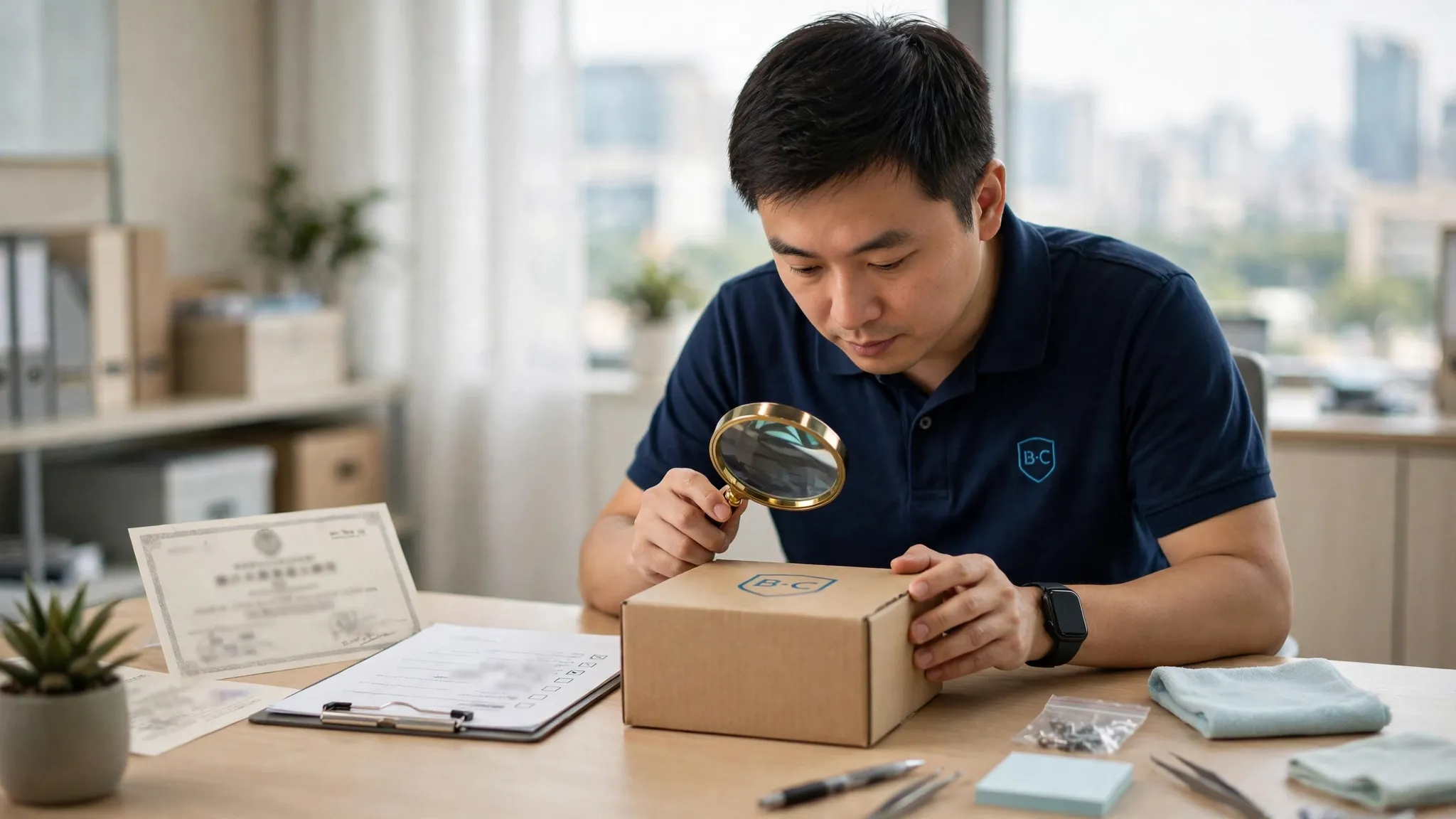
Private label looks simple from the buyer's side: you send a logo, the factory prints it on a product, the product arrives with your brand on it. The legal reality is less simple. Putting your logo on a product does not make the brand yours, and ordering a product with someone else's brand on it — even by accident — can cost you the shipment, the listing, and, in the worst case, a legal claim that follows you home.
Most private-label IP problems are not caused by bad intentions. They are caused by checks that were never run: a name that was already registered in the market you sell into, a design the factory copied from a brand you have never heard of, an artwork file that contained a licensed image nobody licensed. Every one of those is checkable before the order is placed, and every one is far cheaper to fix before production than after the goods have shipped.
This guide covers the six checks to run before you order private-label goods from China, and what to do when a check comes back with a problem.
Check 1: Is the trademark yours to use?
A trademark is not yours because you designed the logo, registered the domain, or have been selling under the name for a year. It is yours because you own the registration — or, in some markets, because you can prove earlier use — for the goods you sell, in the country you sell them in.
Before you put a name on an order, search it:
- Search the trademark register in every market you sell into. The United States (USPTO), the European Union (EUIPO), the United Kingdom (UK IPO) and other national registers are all searchable online for free. Search the exact name and close variations — similar names in the same product class can conflict even when they are not identical.
- Search the right class. Trademarks are registered by class of goods. A name registered for cosmetics does not automatically block the same name for phone accessories — but a name registered for the same or closely related goods does. Check the class that matches your product, not just the name.
- Check for common-law use, not just registrations. In the US and the UK, a business using a name in trade can have rights even without a registration. A quick search of the market — Amazon, Google, the app stores — for the same name on the same kind of product is a cheap second check.
- Check the name in the language of the market. A name that is harmless in English can be an existing brand, or an unfortunate word, in another language. This matters most for brands sold across Europe, where one name meets a dozen languages.
If the search finds a conflict, do not negotiate with yourself about how different your product is. Change the name, or get advice before you order. A name change before the first order costs a logo file. A name change after a seizure costs the shipment.
Check 2: Is the trademark registered where it matters — including China?
Many buyers register their trademark at home and assume the job is done. It is not. Trademark rights are territorial: a US registration gives you no rights in China, and a Chinese registration gives you no rights in the US.
China runs a first-to-file system. In most cases, the first party to file a trademark in China owns it in China — regardless of who used it first elsewhere. That creates a specific risk for private-label buyers: a third party can register your brand in China, and then your own factory's shipment of your own branded goods can be stopped at Chinese customs as infringing goods. It happens, and it happens to brands that have never sold a unit in China.
The practical answer is to file in China as well as in your home market, in the class covering your goods, before the first production order. Filing in China is a routine procedure, the cost is modest compared with a seized shipment, and the registration becomes a tool you can use — including recording it with Chinese customs so infringing exports can be stopped. Consider also filing through the Madrid Protocol if you sell in several markets, which lets one application cover multiple countries.
If you have not yet registered anywhere, the order of work is simple: file at home first, file in China second, and do not put the brand on a production order until at least the home filing is in. A pending application is not the same as a registration, but a filed application with a clear filing date is a far stronger position than no filing at all.
Check 3: Does the product itself infringe?
The brand is only half the question. The product itself — its shape, its decoration, its packaging — can infringe someone else's rights even when your trademark is clean.
- Design rights. A distinctive product shape, a pattern, or a decorative feature may be protected as a registered design or design patent. "Inspired by" a well-known product is not a defence if the design is substantially the same in the eyes of the law. If the product you want looks very much like a famous one, ask why — and ask the factory where the design came from.
- Copyright. Characters, illustrations, song lyrics, photographs and artwork are protected by copyright whether or not they are registered. A factory catalogue that offers products printed with cartoon characters, sports logos or famous artwork is offering products that need a licence. If nobody in the chain holds one, the risk lands on the importer — that is, on you.
- Trade dress. The overall look of a product and its packaging — colours, layout, shape — can be protected as trade dress in some markets. Copying the look of a leading brand's packaging, even with a different name on it, can be a problem.
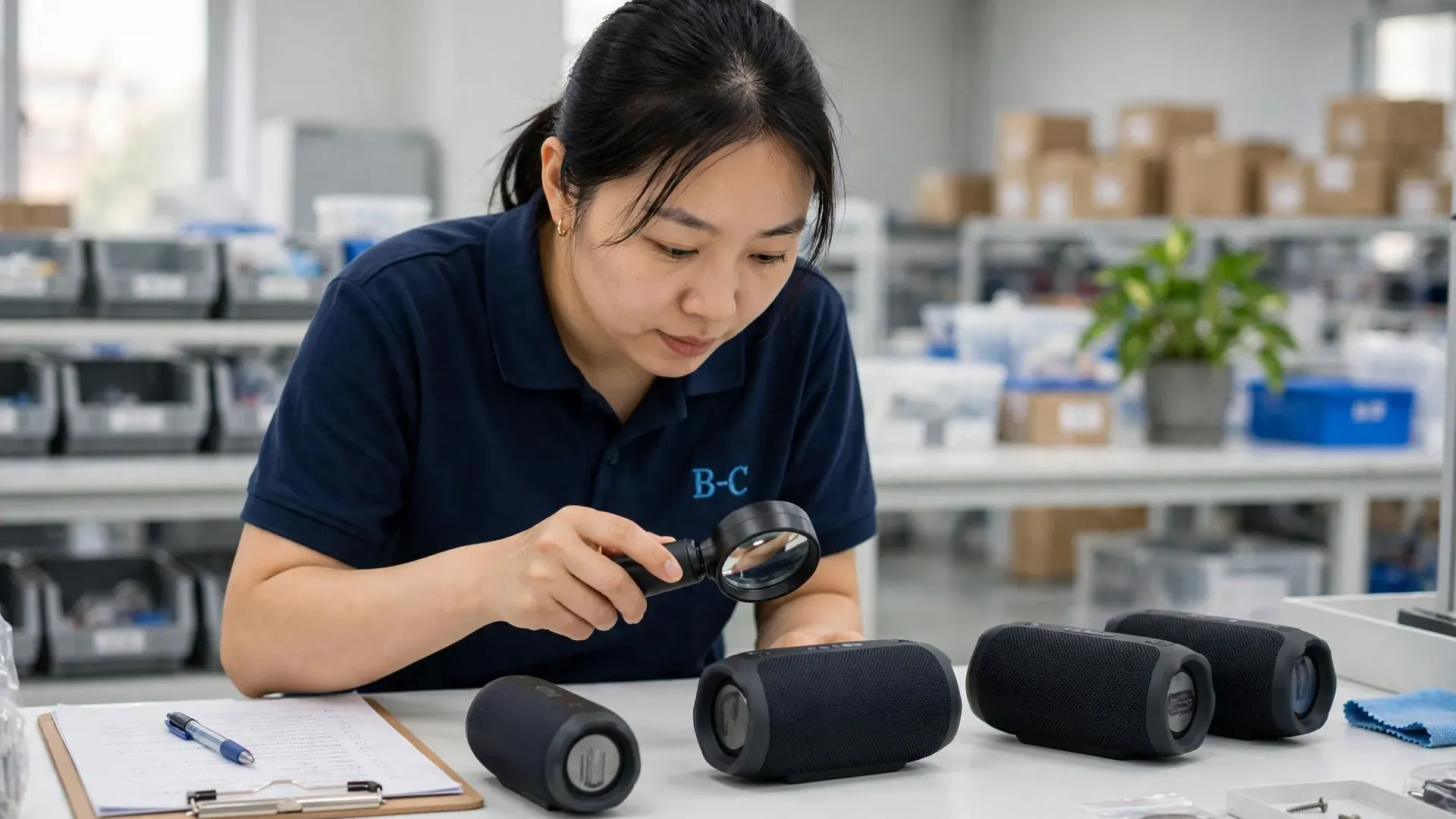
Ask the factory a direct question before you order: is this your own design, or is it based on another brand's product? A factory that designed the product itself can usually show you the design files and the development history. A factory that cannot answer the question is giving you an answer of a different kind.
Check 4: Does the factory have the right to make it?
Some private-label orders involve a licensed product: the factory is authorised to make goods carrying a brand, a character or a technology that belongs to someone else. In those cases the authorisation itself needs checking.
- Ask for the authorisation letter — and read it. It should name the brand owner, the factory, the products covered, the markets covered and the dates. An authorisation that covers the domestic market does not cover export. An authorisation that expired last year does not cover this year's order.
- Verify it with the brand owner where the stakes are high. For a large order, a short email to the brand owner confirming the factory is an authorised manufacturer is cheap insurance. Brand owners would much rather confirm an authorisation than seize a shipment.
- Watch for documents that look too easy. Authorisation letters are among the most commonly forged documents in sourcing. A letter with no contact details for the brand owner, a personal email address instead of a company domain, or a scope that conveniently covers exactly what you asked for deserves a second look.
If the factory cannot produce an authorisation for a branded product, treat the product as unlicensed — whatever the catalogue says.
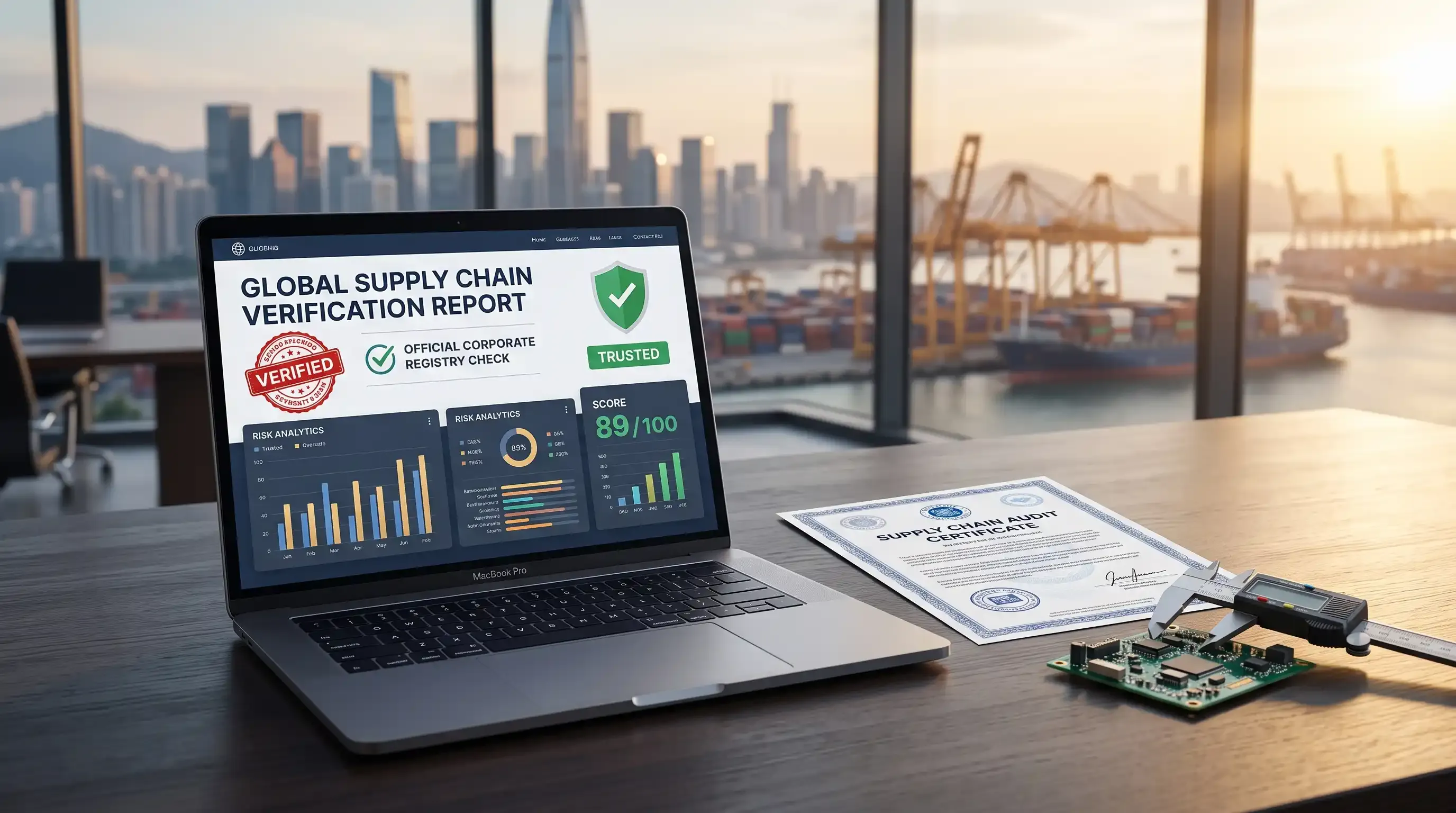
If you are unsure whether a factory is who it claims to be, or whether its documents hold up, a free supplier background check can verify the company's registration, export history and the claims in its paperwork before you send a deposit.
Check 5: Who supplied the artwork — and who owns it?
The artwork file is where many IP problems quietly enter an order. The factory prints what you send; if what you send contains someone else's protected work, the factory's printer does not make it yours.
- Fonts and icons. A font downloaded for free, or an icon set taken from a design site, may be licensed for personal use only. Commercial use on a product and its packaging needs a commercial licence. Check the licence on every font and icon in your artwork file.
- Stock photos and illustrations. A stock image licensed for a website banner is not necessarily licensed for printing on a product or a retail box. Check the licence terms for the specific use — print runs, product packaging and resale have different terms from web use.
- Your designer's files. If a freelancer made your logo or packaging, confirm in writing that the rights were transferred to you, and that the design does not contain third-party material. A handover file is not a rights transfer unless the contract says so.
- The factory's own artwork. If the factory supplies the design, ask who owns it and whether it is used for other buyers. A design the factory sells to ten buyers is not your private label, however good it looks.
Keep a simple file for every order: the artwork source, the licence or transfer document, and the trademark registration numbers. If customs or a platform ever asks, that file is the difference between a delay and a seizure.
Check 6: What happens at customs — and on the platform?
Even a clean order can be stopped if the paperwork does not match the goods. Three things to get right:
- Declare the brand accurately. Customs declarations should state the brand as it appears on the goods. A shipment of branded goods declared as unbranded, or under a different brand name, invites inspection and can be treated as suspicious even when everything else is in order.
- Know the platform rules. Amazon, eBay, Shopify and other platforms run their own IP enforcement, and a rights holder's complaint can take a listing down within days — often before any court is involved. Amazon Brand Registry protects registered brands, but it protects the registered owner; if you have not registered, you cannot use it to defend your own listing, and a competitor who has registered a similar name can use it against you.
- Keep the paper trail. Registration certificates, authorisation letters, licences and the factory's invoice showing the brand as ordered: keep them with the shipment file. A customs officer or a platform reviewer who can see the documents in one place resolves the question faster than one who has to ask for them.
A pre-order checklist you can use
Run this before the deposit is paid, not after the goods are on the water:
- Trademark searched in every sales market, in the right class — no conflicts.
- Trademark filed at home and in China, in the class covering your goods.
- Product design checked: own design confirmed, no copied characters, artwork or trade dress.
- Factory authorisation verified where a third-party brand is involved.
- Artwork file audited: fonts, icons and images all commercially licensed; designer rights transferred in writing.
- Customs declaration matches the brand on the goods; registration certificates and licences filed with the shipment documents.
- Platform position checked: Brand Registry or equivalent in place, or application filed, before the listing goes live.
Any check that fails is a reason to pause, not a reason to hope. The fix is almost always cheaper before production: a different name, a different design, a licence, or a different factory.
What we can and cannot do
We can check a factory's registration and export history, verify the documents it provides, coordinate artwork and packaging specifications with the factory, and keep the paper trail — registrations, authorisations, licences — in the shipment file so it is there when customs or a platform asks for it. We can also flag the common risks: a product that looks copied, a brand that is already registered in the destination market, a factory that cannot show an authorisation.
What we cannot do is give legal advice or act as your lawyer. Trademark searches and filings, licence negotiations and infringement assessments are legal work, and for a high-value brand you should have a trademark attorney run the search and file the applications. We cannot guarantee that a product is free of infringement — no agent can, because the factory's design history is ultimately the factory's to disclose. And we cannot make a customs authority or a platform accept goods that a rights holder has complained about; what we can do is make sure the documents that support your position are in order before the question is asked.
The bottom line
Private label is a branding decision, not a printing decision. The checks are unglamorous — a register search, a filing in China, a question about where a design came from, a licence check on a font — and they are the whole difference between a brand you own and a shipment you lose. Run them before the deposit, keep the paper trail, and the brand on the box will be an asset instead of a liability.
If you are planning a private-label order and want the factory, the documents and the artwork checked before you commit, send us the details for a free supplier background check and we will run the verification with you — before the deposit, not after the seizure.
Related: Custom Promotional Gifts and Corporate Merchandise — custom-branded products where logo printing, artwork and packaging all need to be right the first time.