Production Monitoring in China: Tracking Your Order Inside the Factory Without Flying In
Once your deposit is paid, your order disappears inside the factory for weeks. Production monitoring — milestone checks, photo evidence and inline inspections — keeps you in control.
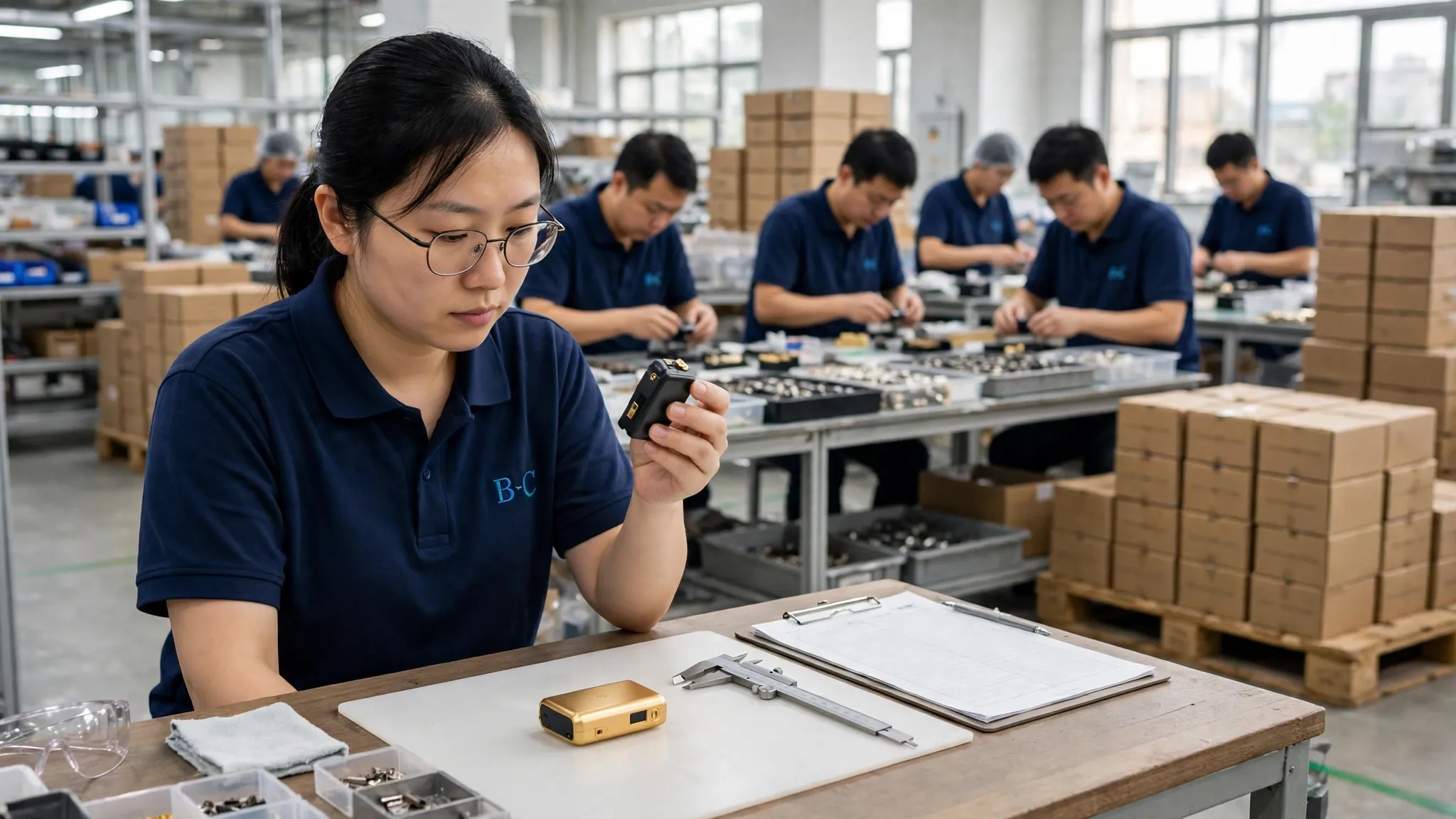
The deposit is paid, the production schedule is confirmed, and then — silence. For the next three to six weeks, your order exists only as a date on a calendar and a promise in a chat window. Most buyers accept this silence as normal. It is not. It is the period when orders actually go wrong.
A factory rarely fails at the start of an order. The sample was good, the price was agreed, the specification was signed. Orders fail in the middle: a material is swapped for a cheaper one on day ten, a production line is reassigned to a bigger customer, a mould starts wearing out and nobody tells you, a small specification detail is "simplified" to save time. By the time the goods arrive at your warehouse, the cost of fixing any of it is the cost of the whole order.
Production monitoring is the work that fills that silence. It is not a single inspection at the end. It is a series of checks at defined points during production, each one catching a different kind of problem while it is still cheap to fix. This guide explains what those points are, what to check at each one, what good evidence looks like, and who should be doing the checking.
Why the middle of production is where orders fail
Three things change between the approved sample and the finished bulk order, and none of them shows up in a final inspection report until it is too late.
First, materials. The sample was made with the specified material. Bulk production buys material in volume, and the temptation to substitute a cheaper grade — thinner fabric, lower-grade plastic, a different metal alloy — is highest once the order is running and the buyer is not watching. The substitution is usually invisible in a finished product until it fails in use: a bag strap that tears, a coating that peels, a bracket that bends.
Second, capacity. Your order shares the factory floor with other orders. When a bigger customer pushes an urgent order, or a machine breaks down, your production slot shrinks. The factory rarely announces this. Instead, the schedule slips a few days at a time, and you find out your goods are late when the ship has already sailed without them.
Third, drift. Production is a repetitive process, and small deviations accumulate: a cutting template wears, a new operator joins the line, a print colour shifts slightly from batch to batch. Each deviation is small. Together, by unit five hundred, they can add up to a product that no longer matches the sample you approved.
A pre-shipment inspection at the end catches some of this — the wrong material in a finished product, the colour drift across cartons. But it cannot recover lost production days, and it cannot un-make five hundred units of the wrong thing. Monitoring during production catches each problem at the point where fixing it costs hours, not a re-order.
What production monitoring actually covers
Production monitoring is not one visit. It is a schedule of checks tied to the production process itself. The exact checkpoints depend on the product, but the structure is the same for almost every order: confirm the inputs before production starts, verify the first finished units against the sample, check the line while it is running, and inspect before shipment. Each check answers a different question, and skipping one leaves a specific blind spot.
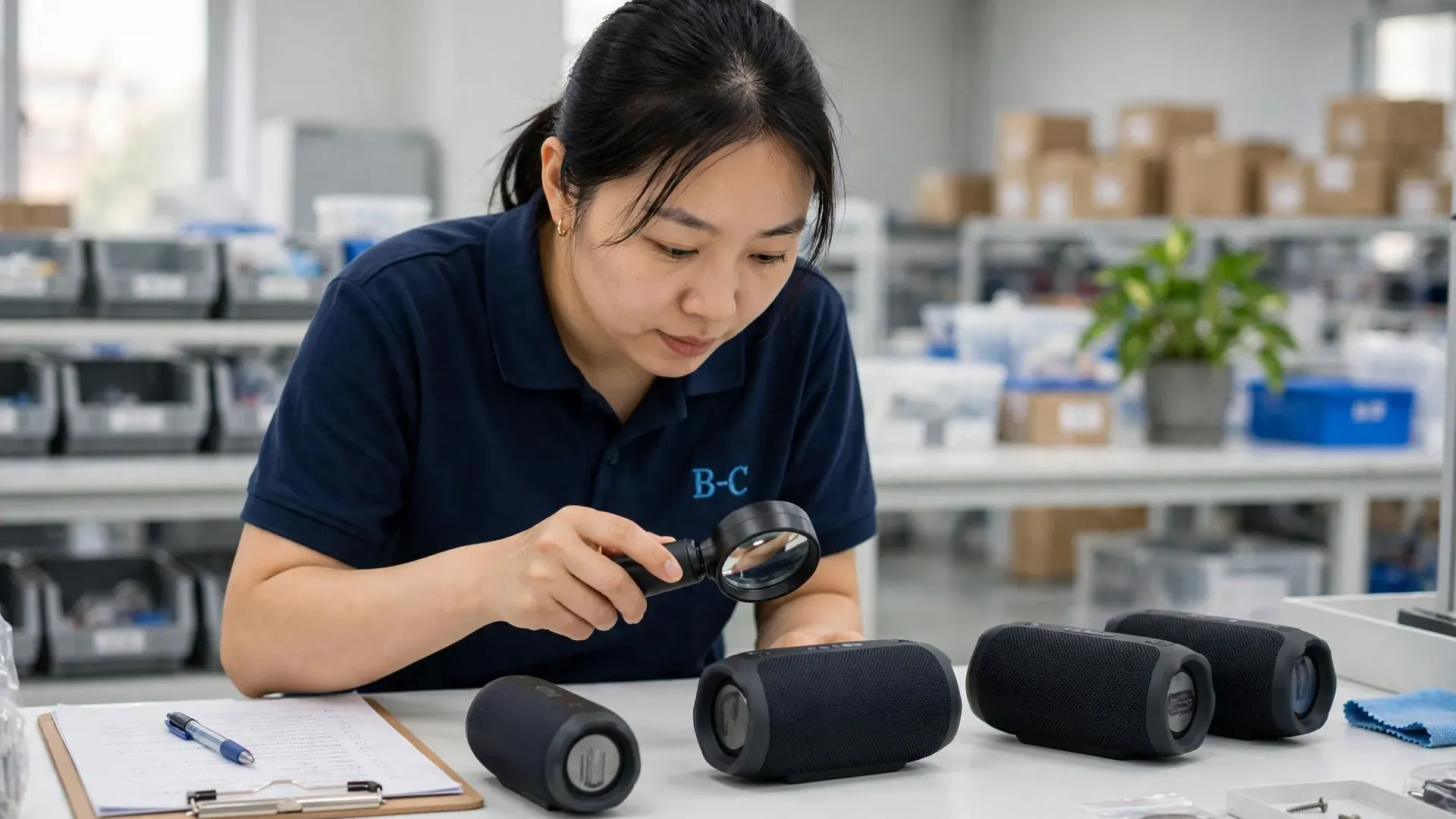
The checks are done by someone physically present at the factory — your own staff, a third-party inspector, or a sourcing partner on the ground. They are not done by asking the factory for a progress report. A factory's own progress report is useful, but it is the factory reporting on itself. Monitoring means an independent pair of eyes on the line, the materials, and the finished units.
The five milestones that matter
1. Pre-production check — before the first unit is made
This is the most valuable check and the most commonly skipped. It happens after materials arrive at the factory and before mass production begins. What to verify: the raw materials match the specification — the right fabric weight, the right plastic grade, the right metal thickness, the right colour masterbatch. The moulds or tooling are ready and in good condition. The golden sample — the approved reference unit — is on the production line where operators can see it, not locked in the manager's office.
This is also the point to confirm the production schedule in detail: how many units per day, which lines, what the daily output target is, and what happens if a machine goes down. A schedule agreed in general terms is not a schedule. A schedule with daily targets and a named person responsible for it is.
If the materials are wrong, this is the moment to stop. Once they are cut, sewn, moulded or assembled, the material is spent, and the argument about who pays for the replacement is much harder.
2. First-article check — the first finished units
Once the line has produced its first units — usually the first five to ten — they are checked in full against the golden sample and the specification: dimensions, weight, colour, function, stitching or assembly quality, packaging. This is where specification drift is caught at its cheapest. If the first units are wrong, the line is stopped, the cause is found, and production restarts correctly. If the first units are right, they become the reference for the rest of the run.
Many buyers skip this check because the sample was already approved. But the sample was made by the factory's best hands, often in small numbers, under close supervision. The first production units are made by the line that will make all five hundred. They are not the same thing, and the difference is exactly what this check exists to find.
3. Inline inspection — while the line is running
At around 20 to 30 percent of production, an inspector visits the line while it is running. The point is not to re-check finished units — it is to watch the process: are operators following the specification, is the material being handled correctly, is the defect rate within the agreed limit, are defective units being separated or quietly packed? A line that is producing defects at a steady rate will produce the same defects for the rest of the run unless someone intervenes.
Inline inspection also catches the quiet changes: a material batch that changed mid-run, an operator who has started skipping a step, a machine that needs adjustment. These are the problems that a final inspection finds as a pattern across hundreds of units — too late.
4. Mid-production progress check — around 50 to 70 percent
This is the schedule check. How many units are actually finished against the plan? Is the daily output on target? Are there material shortages ahead — a component that will run out before the order completes? Is the packing keeping pace with production, or will finished goods pile up unpacked at the end?
This check is where delivery dates are saved or lost. A production run that is 20 percent behind at the halfway point will not catch up by itself. Knowing at the midpoint means you can act — agree overtime, split the shipment, warn your customers, adjust your launch date — instead of learning about the delay the day the goods were supposed to ship.
5. Pre-shipment inspection — before the goods leave
The final check, done when production is complete and at least 80 percent of the goods are packed: a random sample drawn against an agreed acceptance standard, checking the same points as the first-article check plus packaging, labelling, carton marking and quantity count. This is the last gate. If it fails, the goods do not ship until the problems are fixed or the defective units are replaced.
Pre-shipment inspection is the check most buyers know about, and it is necessary. But on its own it is not production monitoring. It is the final exam. Monitoring is the coursework that makes the exam passable.
If you need someone on the ground in China checking these milestones for your order, get a factory quote in 24 hours — tell us the product, the quantity and the production schedule, and we will build the monitoring plan into the order.
What good evidence looks like
A monitoring visit that produces no evidence is a visit that did not happen. Every checkpoint should produce a short written report with dated photographs and, where it matters, video: materials with their labels visible, the production line in operation, measurements being taken, defects found with the defect clearly shown. The report should state what was checked, what was found, and what action was taken — not just that the visit happened.
Three things separate useful evidence from decoration. First, dates: every photo should carry the date it was taken, and the report should be sent the same day, not a week later. Second, specifics: "production is going well" is not evidence; "210 of 500 units finished, 4 defective units found in a 30-unit sample, stitching fault on the left seam" is evidence. Third, comparison: photos of the production unit next to the golden sample, so the difference — or the match — is visible rather than asserted.
Ask for this evidence standard before production starts, not after the first report arrives empty. A factory that knows evidence is expected behaves differently from one that knows nobody is looking.
Red flags that mean stop the line
Some findings are routine and fixable. Others mean production should stop until the problem is resolved. The most serious: the material is not the specified material. A wrong material cannot be fixed by rework — it has to be replaced, and every unit made with it is wasted. Production should stop immediately.
Other stop-the-line signals: the factory has subcontracted your order to another workshop without telling you; the production schedule has slipped so far that the delivery date is no longer achievable on the current plan; the defect rate in the inline sample is climbing rather than falling; or the factory refuses access for a scheduled check. A factory with nothing to hide does not refuse a visit it agreed to. Refusal is itself the finding.
Smaller issues — a single operator's mistake, a packaging detail, a colour that is slightly off in one batch — are fixed on the line and recorded. The difference between a routine fix and a red flag is whether the problem is in one unit or in the process that makes all of them.
Who does the monitoring
There are three ways to get these checks done, and the right one depends on the size of the order and how often you order from China.
Flying in yourself works if you order rarely and the order is large enough to justify the trip. You see the factory with your own eyes, which no report replaces. But a single visit covers a single day of a multi-week production run, and most buyers cannot be on the ground for every milestone.
A third-party inspection company sends a professional inspector for each checkpoint and delivers a standardised report. This is reliable and independent, but it is priced per visit, and the inspector knows your product only from the specification sheet. They will catch defects against the spec. They are less likely to catch the things that are not written in the spec but matter to your customers.
A sourcing partner on the ground combines the two: someone who knows your product and your quality standard, who can visit at each milestone, and who can act on findings the same day — stop the line, renegotiate the schedule, reject a material batch — because they are your representative in China, not just a reporter. The difference is not the inspection. It is the authority to act on what the inspection finds.
Whichever route you choose, the principle is the same: the checks are scheduled before production starts, the evidence standard is agreed in advance, and the person doing the checking reports to you, not to the factory.
What we can and cannot do
We can build a monitoring plan into your order before production starts, visit the factory at each milestone, check materials against your specification, compare first production units with the golden sample, run inline and pre-shipment inspections, and send you same-day photo and video evidence with a written report. When we find a problem, we can stop the line, work with the factory on the fix, and confirm the fix before production resumes. That is the core of what a sourcing partner on the ground exists to do.
What we cannot do is monitor a production run we were not told about until it is finished, or verify the quality of goods that have already shipped. Monitoring works because it happens during production; a pre-shipment inspection can reject a bad batch, but it cannot recover the weeks the order took to make. We also cannot guarantee a factory's schedule — we can report it honestly, flag slippage early, and push for recovery, but the factory owns its production line. What we guarantee is that you will know what is happening, when it is happening, while there is still time to act.
The bottom line
Production monitoring is not an extra cost on an order. It is the mechanism that protects the money already committed — the deposit, the materials, the weeks of waiting. An order that is checked at five points costs a little more attention than an order that is left alone. An order that arrives wrong costs the whole order.
Before your next production run starts, ask who will be checking each milestone, what evidence they will send, and what happens when they find a problem. If the answer to any of those is silence, that silence is the risk. Get the plan agreed before the deposit is paid — not after the goods arrive.
If you have an order going into production and want the milestones covered, get a factory quote in 24 hours — send the product, quantity and schedule, and we will put the monitoring plan in place before the first unit is made.
Related: B2B Sourcing from China — supplier verification, sampling, production monitoring and pre-shipment inspection for orders sourced from China.