Q4 Inventory Math: How Much Stock to Hold in China, In Transit and at Amazon
Q4 stockouts and overstock both cost money. Here is the inventory math for Q4 — how much to hold in China, in transit and at Amazon, and when to reorder.

Every Q4, the same two mistakes show up in sellers' warehouses. One seller runs out of their best product in the second week of December, watches the listing go dark for the biggest shopping days of the year, and spends January explaining to customers why their orders shipped late. Another seller ends January with three months of slow-moving stock in an Amazon warehouse, paying storage fees on products that will not move until spring.
Both mistakes come from the same cause: the stock decision was made by feel, not by math. Q4 inventory is not a guess. It is a calculation with four inputs — how fast you sell, how long replenishment takes, how much demand varies, and how much a stockout costs you versus how much overstock costs you. Get the calculation right and the rest of Q4 — the promotions, the cut-offs, the carrier choices — falls into place.
The three places your stock lives
The first step is to stop thinking of "inventory" as one number. For a seller shipping from China, stock lives in three places, and each one behaves differently.
Stock in China — in your supplier's warehouse or your China fulfilment warehouse — is the cheapest place to hold it and the slowest place to reach a customer from. It is your buffer: the stock you draw on when Amazon runs low, and the stock you ship directly to customers who order from your own store. Holding stock in China costs little in storage, but every unit there is a unit that is not yet earning.
Stock in transit is stock on a ship, a plane, or a truck. It is paid for, it is moving, and it is not available to sell. In Q4, transit times stretch — carriers add surcharges, ports congest, and a shipment that took 25 days in September can take 35 in December. Transit stock is the part of your inventory that most sellers forget to count, and it is the part that causes the most stockouts: the goods exist, but they are on the water while your listing is empty.
Stock at Amazon — in FBA warehouses — is the stock that actually sells to Amazon customers. It is also the most expensive place to hold in Q4, because Amazon raises storage fees in the final quarter of the year, and because overstock there ties up cash and warehouse space at the highest cost. The goal is to keep enough at Amazon to cover sales until the next replenishment arrives, and not much more.
A healthy Q4 plan keeps all three buckets visible at all times. At any moment you should be able to say: this many units in China, this many in transit, this many at Amazon, and this many days of cover each bucket represents at your current sales rate. If you cannot say that, you are managing Q4 by feel.
The math: daily sales, lead time, safety stock
The core calculation is simple, and it is worth doing on paper for every product that matters.
Start with daily sales. Take the last four weeks of sales for the product, and separately take the same period last year if you have it, plus the sales you expect from your Q4 promotions. A product that sells 20 units a day in October may sell 50 a day in the two weeks before Christmas. Plan for the Q4 rate, not the October rate — but be honest about it. A forecast that assumes every product triples is not a forecast; it is a wish.
Next, lead time: the number of days from the moment you decide to reorder to the moment the new stock is available to sell at Amazon. For a China-sourced product, that is production time plus transit time plus Amazon's receiving and processing time. In Q4, use the slow end of each range. If production normally takes 10 days and transit 25, plan on 12 and 30 in December, and add a few days for Amazon receiving, which also slows in peak season. A lead time that is optimistic by a week is a stockout waiting to happen.
Then safety stock: the extra units you hold to cover the days when demand is higher than average or replenishment is slower than expected. The standard formula is straightforward: safety stock equals your daily sales rate multiplied by the number of extra days of cover you want for variability. A common starting point is 7 to 14 days of cover for a fast-moving product in Q4 — more if the product's sales are volatile or the supplier's lead time is unreliable, less if sales are steady and the supply chain is proven. The right number depends on how much a stockout costs you: for a product with strong organic ranking, a few days out of stock can cost weeks of ranking recovery, so the safety stock is worth more than its storage cost.
Finally, the reorder point: the stock level at which you place the next order. It is your daily sales rate multiplied by your lead time, plus your safety stock. When your available stock — at Amazon plus in transit — falls to the reorder point, order. Not when the warehouse is empty. Not when you notice the listing is about to go dark. At the reorder point, every time.
A worked example makes this concrete. Suppose a product sells 30 units a day in Q4, your total lead time from order to Amazon availability is 40 days, and you want 10 days of safety cover. Your reorder point is 30 × 40 + 30 × 10 = 1,500 units. When your combined Amazon and in-transit stock falls to 1,500, you order. And the order quantity should cover the period until the next order can arrive — roughly daily sales multiplied by your order cycle, plus safety stock, minus what you already have on hand and in transit. These are example numbers, not a prescription: your rates, lead times and variability are different, and the calculation only works if you use your own.
How much in each bucket
Once you know the total, the question is how to split it across the three buckets — and the answer depends on where your sales come from.
If most of your sales are on Amazon, most of your stock should be at Amazon or in transit to Amazon, with a smaller reserve in China for emergency top-ups. A common Q4 split for an Amazon-heavy seller is roughly two to three weeks of sales at Amazon, one replenishment cycle in transit, and a reserve of one to two weeks in China. The China reserve is your insurance: if a shipment is delayed or Amazon receives slowly, you can air-freight a small top-up or fulfil direct orders from China while the main shipment catches up.
If you also sell through your own store, the China warehouse earns a larger share. Direct orders can be fulfilled from China in a matter of days, so holding stock there serves two channels at once — it is the reserve for Amazon and the working stock for your store. Sellers who run both channels often hold a bigger China buffer and replenish Amazon in smaller, more frequent shipments, which keeps Amazon storage fees down and leaves the flexibility in China, where storage is cheap.
The split also changes through the quarter. In early November, hold more in China and less at Amazon: you still have time to move stock, and Amazon's Q4 storage fees are already in effect. By late November, shift the balance forward — the stock needs to be at Amazon before the December rush, because a shipment that leaves China on 5 December may not be available to sell until after the peak has passed. And after Christmas, reverse the flow: stop replenishing Amazon, let the FBA stock draw down, and hold the remainder in China, where it costs little to wait for January demand.
If you need help running the numbers or moving stock between warehouses, get a fulfilment quote in 24 hours — send your sales rates and your current stock positions, and we will work out the split and the reorder dates with you.
The costs of getting it wrong — both directions
Overstock and stockout are not equal mistakes, and knowing which one costs you more is part of the calculation.
A stockout in Q4 costs the lost sales, obviously. But for an Amazon seller it costs more than that: a listing that goes out of stock loses its sales velocity, and when the product returns, its ranking has often slipped — which means it sells more slowly even after stock is back. A stockout on a product with paid advertising running is worse still: you are paying for clicks that land on a page that cannot be bought. And a stockout during a promotion you already announced is a customer-service problem as well as a sales problem.
Overstock costs storage fees — and in Q4 those fees are at their highest at Amazon. It also costs cash: every unit sitting in a warehouse is money that cannot be spent on the products that are selling. And for seasonal or trend-driven products, overstock can become dead stock: a Christmas product that is still in the warehouse in February is not inventory, it is a loss waiting to be written down.
The balance point is different for every product. For a proven bestseller with steady demand, lean towards holding more: the stockout cost is high and the product will sell through. For a new or seasonal product with uncertain demand, lean towards holding less at Amazon and keeping the reserve in China, where the holding cost is low and the stock can be redirected. For a product with a short shelf life or a trend that may fade, keep the total order small and reorder more often — frequency is cheaper than a warehouse full of unsellable stock.
Cut-offs, carriers and the December calendar
Q4 inventory math is not only about quantities. It is also about dates — and the dates move every year.
Work backwards from the last day you want to be able to promise delivery. For Amazon FBA, that means the date by which stock must be received and processed at the fulfilment centre, not the date it leaves China. For direct orders from your China warehouse, it means the last shipping date for each destination, by carrier — and those dates differ by country, by service, and by whether the destination is served by air or sea.
Build a simple calendar for December: the last date to place a production order, the last date to ship by sea, the last date to ship by air, and the last date Amazon can receive stock in time for the peak. Then add a buffer of several days to each, because Q4 is when carriers and ports are least reliable. A shipment that is "on time" in October is a shipment that is a week late in December.
Two practical rules follow from the calendar. First, place your last big production order earlier than feels necessary. The factory's capacity is also stretched in Q4, and a production slot booked in November is a slot you have; one requested in December is a slot you may not get. Second, decide in advance which products get air freight if a shipment slips, and which do not. Air freight in December is expensive, and it is worth it for a high-margin bestseller and not worth it for a low-margin slow mover. Making that decision in November, calmly, is far better than making it on 18 December under pressure.
What to do with the stock that is left
Every Q4 ends with leftover stock somewhere, and what you do with it matters as much as how you planned it.
First, count it — in all three buckets — in the first week of January. Stock in China, stock in transit, stock at Amazon. Sellers who skip this count start the new year not knowing what they own.
Second, decide product by product: keep, move, or clear. Stock that sells steadily through the year stays where it is. Stock that sells only in Q4 should be consolidated in the cheapest location — usually China — and held for next year, if the product has a next year. Stock that is not going to sell should be cleared: a January promotion, a bundle with a selling product, or a price cut that recovers what it can. Holding dead stock in an expensive warehouse while hoping it sells is the most expensive option of all.
Third, write down what the quarter taught you. Which products sold faster than forecast and which slower. Which lead times stretched and by how much. Which reorder points worked and which were too late. That note is the starting point for next year's Q4 plan, and it is worth more than any template — because it is your numbers, from your products, in your markets.
What we can and cannot do
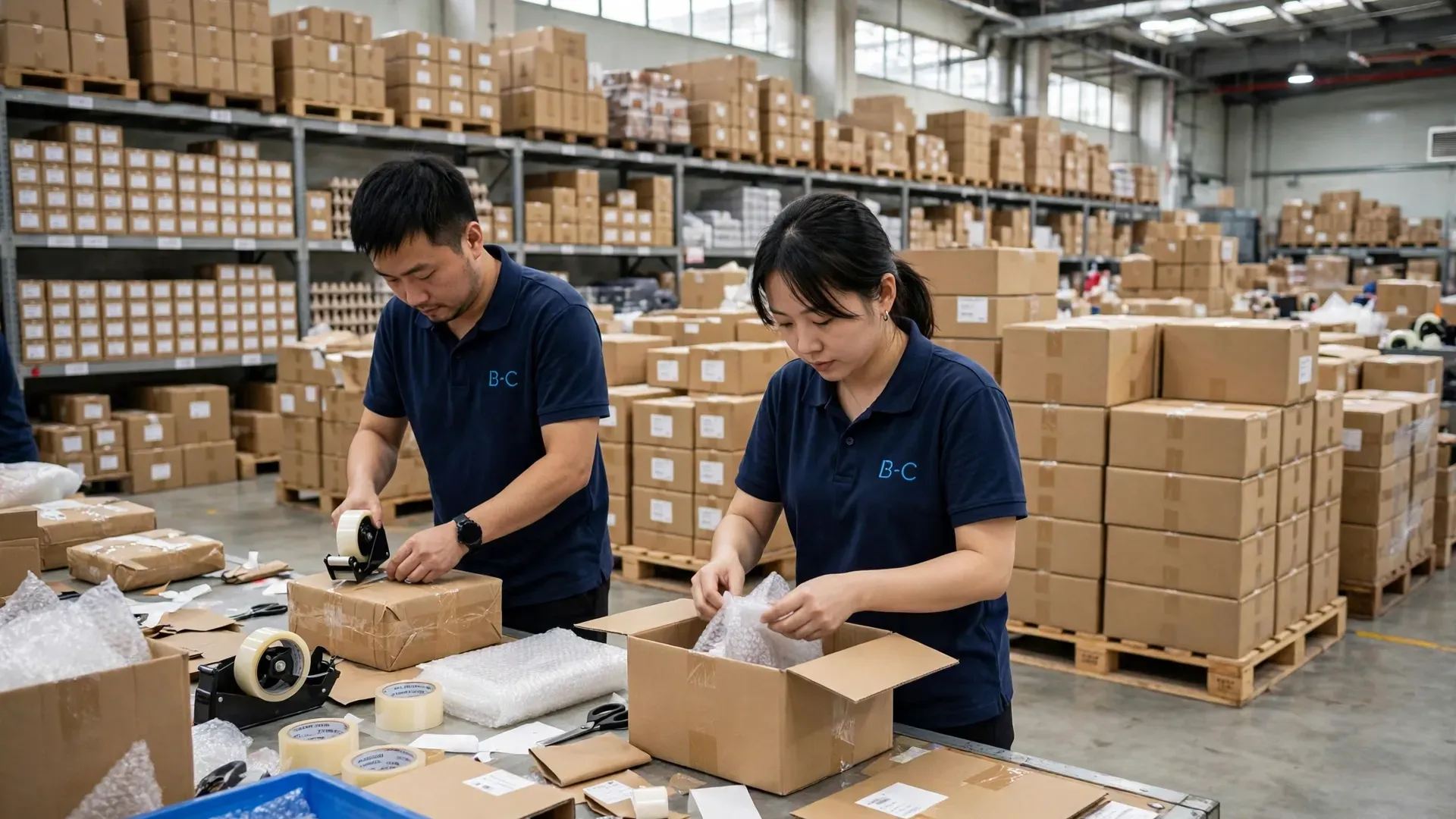
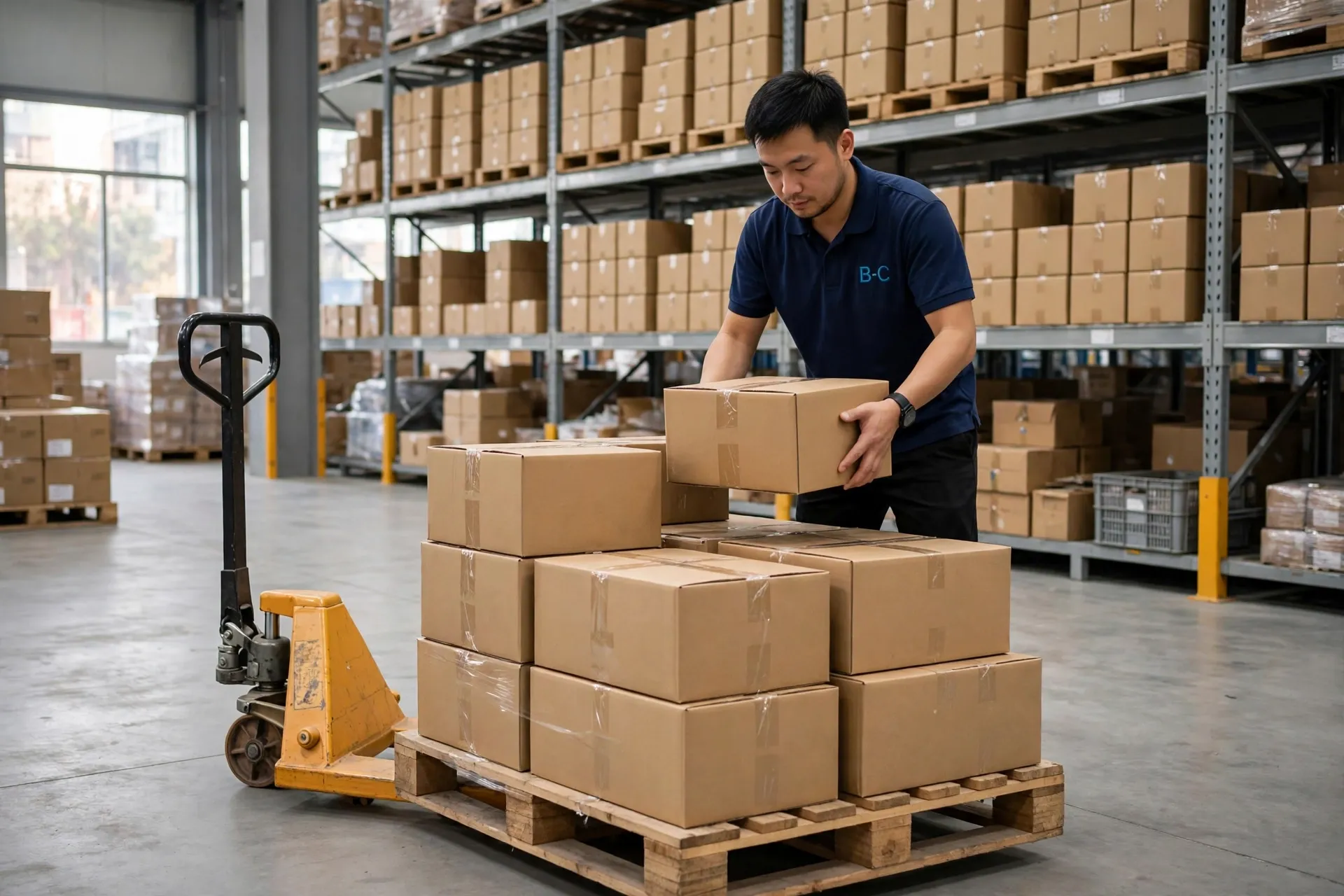
We can hold your stock in our China warehouse, split it between China, in-transit and Amazon replenishment, fulfil direct orders from China while your Amazon stock is on its way, and give you a weekly stock position — how many units in each bucket and how many days of cover that represents — so the reorder decision is made on numbers, not on feel. We can also receive goods in the morning and ship them the same afternoon, and run a full inspection on every order before it leaves.
What we cannot do is guarantee a sales forecast, or make Amazon receive your stock faster than its own processing time in peak season. We cannot turn a product with no demand into a seller by holding more of it, and we cannot promise a delivery date that depends on a carrier's Q4 schedule. What we can do is give you the real lead times, the real stock positions, and an honest view of what will arrive when — and then move the stock as fast as the chain allows.
The bottom line
Q4 inventory is a calculation, not a gamble. Work out your daily sales at Q4 rates, your true lead time from order to Amazon availability, and a safety stock that reflects what a stockout actually costs you. Split the total across China, in transit and Amazon according to where your sales come from, and shift the balance forward as December approaches. Set your reorder points in advance, build your December calendar backwards from the last delivery date, and count everything in January.
The sellers who do this well are not the ones with the most stock. They are the ones who know, on any given day in Q4, exactly how many units they have, where those units are, and how many days of sales that represents. If you want that picture for your own products, get a fulfilment quote in 24 hours — send your current stock positions and sales rates, and we will map the three buckets and the reorder dates for your Q4.
Related: B&C Sourcify Fulfilment Services — China warehouse fulfilment, Amazon FBA prep and direct-to-customer shipping from Shenzhen.