The Real Cost of a Wrong Address: Address Validation for Orders Shipped from China
A wrong address rarely means a quick fix. For a parcel shipped from China it can mean a return, a re-ship, or a lost order — and the cost is higher than the original freight.
The Real Cost of a Wrong Address: Address Validation for Orders Shipped from China
A parcel with the wrong address does not bounce back the way a wrong email does. There is no instant error message, no automatic correction. The parcel travels for days — sometimes across an ocean — before anyone discovers the problem. By then the options are expensive: return it to China, hold it at a depot, re-ship it to a corrected address, or write it off. For a small e-commerce order shipped from China, any one of those outcomes can cost more than the original shipment.
Address errors are not rare. They are one of the most common causes of failed cross-border deliveries, and they are almost entirely preventable. The fix is not better luck. It is validation before the parcel leaves the warehouse, and a clear rule for what happens when an address still fails.
Why a wrong address costs so much more from China
A domestic parcel with a bad address is usually returned to the sender within a few days, at a small cost. A cross-border parcel is different in every way that makes the problem worse.
First, the distance. A parcel that leaves Shenzhen for a customer in Europe or the United States spends days in transit before the last-mile carrier even attempts delivery. If the address is wrong, that whole journey has to happen again — either back to China, or forward to a corrected address from wherever the parcel ended up. The freight is paid twice, and the second leg is often charged at a higher rate than the first, because a return or a re-delivery is not part of the original booking.
Second, the handover. An international parcel passes through several hands: the line-haul carrier out of China, customs, and a local last-mile carrier in the destination country. Each handover is a point where a bad address can stall the parcel. A missing apartment number, a postcode that does not match the city, a street name spelled two different ways — any of these can send the parcel to a depot for manual handling, and manual handling means delay, storage charges, and in some cases a return to sender that the shipper did not ask for.
Third, the clock. While the parcel sits at a depot waiting for a corrected address, the customer is waiting too. They message the store, open a dispute, or ask for a refund. A delivery problem becomes a customer-service problem, and then a review problem. The direct cost of the failed parcel is only part of the damage; the lost customer and the chargeback are the rest.
And there is a hard limit that surprises many sellers: some carriers will not return a parcel to China at all, or will only do so after a long holding period, and some low-value parcels are simply destroyed or abandoned at destination when delivery fails and nobody claims them. A wrong address can end with no parcel and no refund of the freight.
The errors that cause most failures
Most address failures come from a small set of mistakes, and they are the same across markets.
The most common is the incomplete address: a missing apartment or unit number, a missing floor, a building name without a street number. In dense cities this is enough to stop a delivery outright, because the courier cannot identify the door. The second is the postcode error: a transposed digit, a postcode from a previous address, or a postcode that belongs to a different city. Postcodes are what sorting systems use, so a wrong postcode can send a parcel to the wrong depot before a human ever reads the street name.
The third is the name problem: an order placed under a nickname, a misspelled surname, or a name in a script the local carrier's system cannot read. Some carriers will not deliver to a name that does not match the recipient at the address, and apartment buildings with a concierge will refuse a parcel for an unknown name.
The fourth is the format problem. Address formats differ by country: the postcode goes before the city in some countries and after it in others; some countries use a state or province, others do not; some use a district or ward name that foreign checkout forms do not ask for. A customer who fills in a form designed for another country's format will often put the right information in the wrong field, and the label that comes out is unreadable to the local courier even though every piece of information is technically there.
And the fifth is the phone number. A missing or wrong phone number does not stop a delivery by itself, but it removes the carrier's only way to fix a problem: the driver cannot call the customer to confirm the building, the gate code, or the apartment number. A parcel that could have been saved by one phone call is returned instead.
What validation looks like before shipping
Address validation is the check that happens between the order arriving and the label being printed. It has two parts, and both matter.
The first part is format checking: does the address have all the fields the destination country requires, in the right order, with a postcode that exists and matches the city? Most checkout systems and shipping platforms can run this check automatically, and it catches the majority of errors — the missing unit number, the impossible postcode, the empty field. If your store does not validate at checkout, the warehouse should validate before printing the label, because that is the last point where a fix is free.
The second part is the human check on the exceptions. Automated validation flags addresses it cannot confirm, and those need a person to look at them: is this a real street in this city, does the building number exist, is the postcode for the right district? A warehouse team that handles cross-border orders every day learns the common failure patterns for each destination — the apartment blocks in a particular city, the postcode ranges that customers confuse, the rural addresses that need a landmark rather than a street number. That experience is worth more than a validation plugin on its own.
There is also a simple operational rule that prevents most failures: do not ship an order with a flagged address until the customer has confirmed it. A short message — "we could not verify this address, can you confirm the apartment number?" — costs a day. Shipping anyway costs the parcel. Customers almost always reply quickly when they know their order is waiting on their answer.
What happens when a parcel still fails
Even with validation, some parcels will fail: the customer moved, the address was right but the building was inaccessible, the local carrier made an error. What matters then is having a plan before it happens, not inventing one while the parcel is already at a depot.
The first question is whether the parcel can be re-delivered to a corrected address in the same country, and who pays for it. In most cases the customer supplies the corrected address and the seller pays the re-delivery charge, because the alternative — a return to China and a fresh shipment — costs more and takes longer. Agree this rule in advance, and tell the customer plainly: the re-delivery is possible, it takes a few extra days, and here is what it costs.
The second question is what happens if the parcel is returned to China. A returned parcel is not a lost parcel: it comes back to the warehouse, is checked, and can be re-shipped once the address is corrected. But the return journey takes time, and the parcel may come back with damaged packaging. Budget for the return freight, and for re-packing the product before it goes out again.
The third question is the deadline. Carriers hold undeliverable parcels for a limited time, and the clock is shorter than most sellers expect. If nobody claims the parcel or supplies a corrected address in that window, it is returned or destroyed. The warehouse needs to know the parcel has failed on the day it fails, not a week later, and needs the authority to act: contact the customer, request the corrected address, and instruct the carrier before the holding period expires.
What we can and cannot do
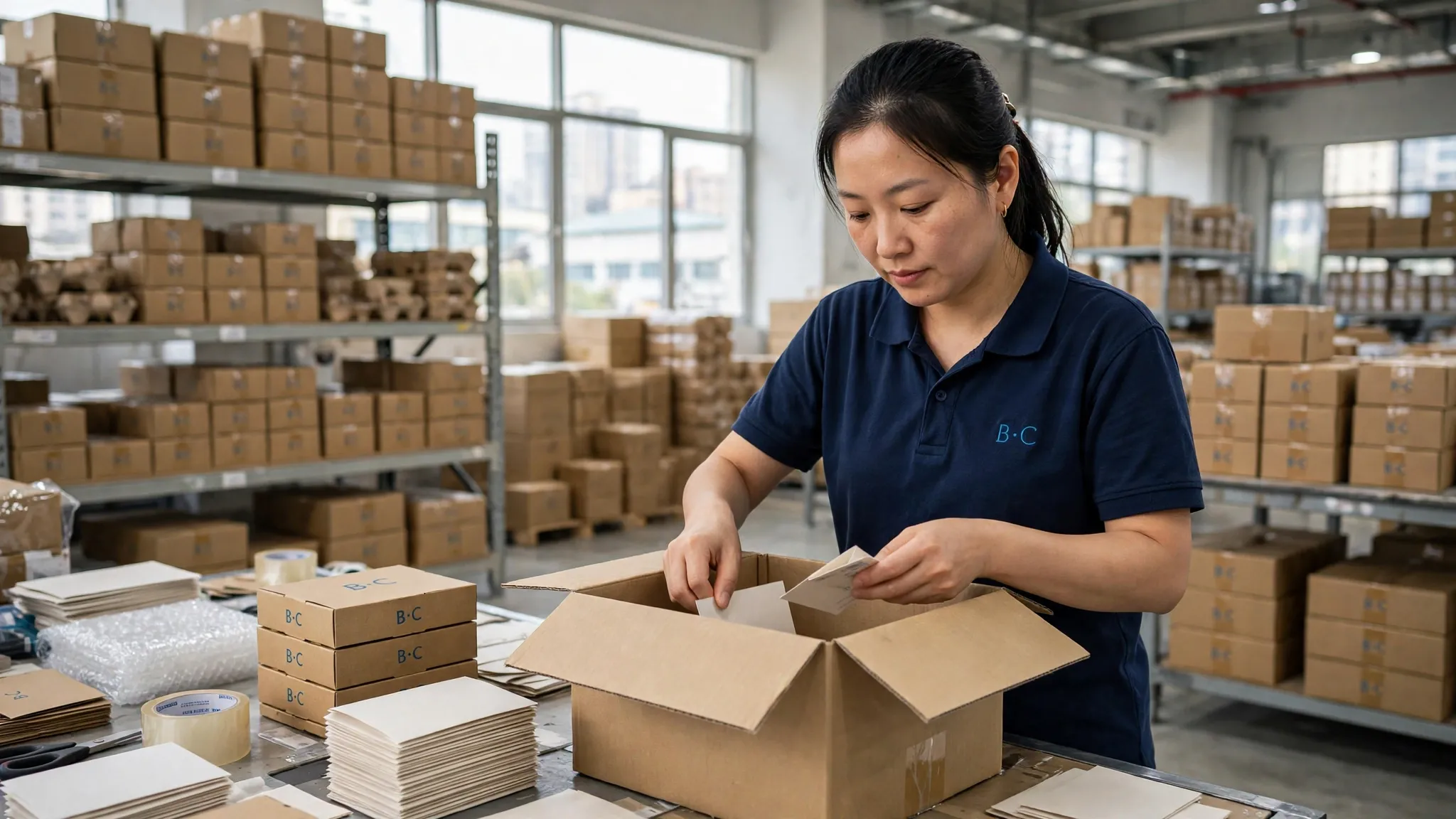
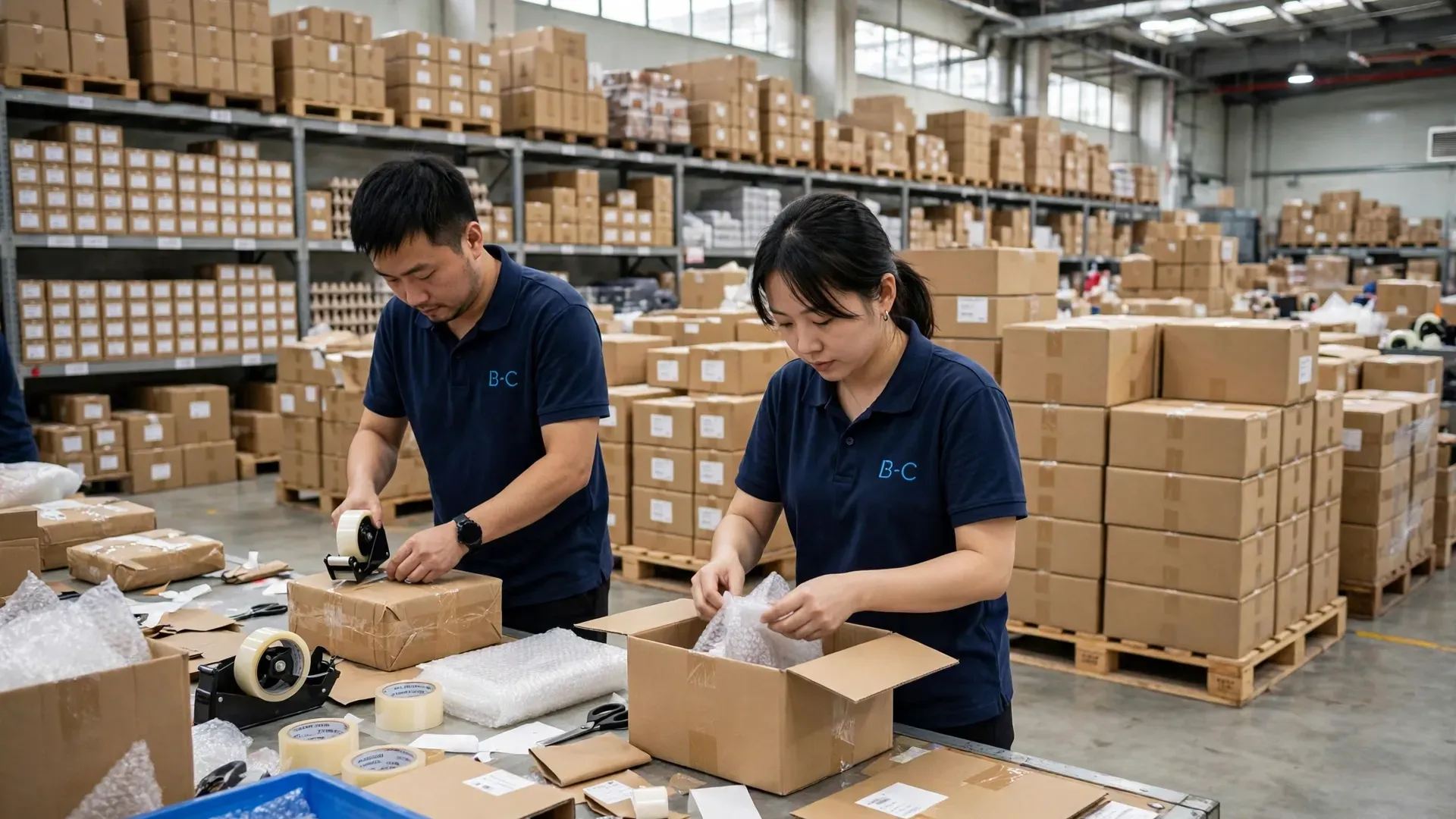
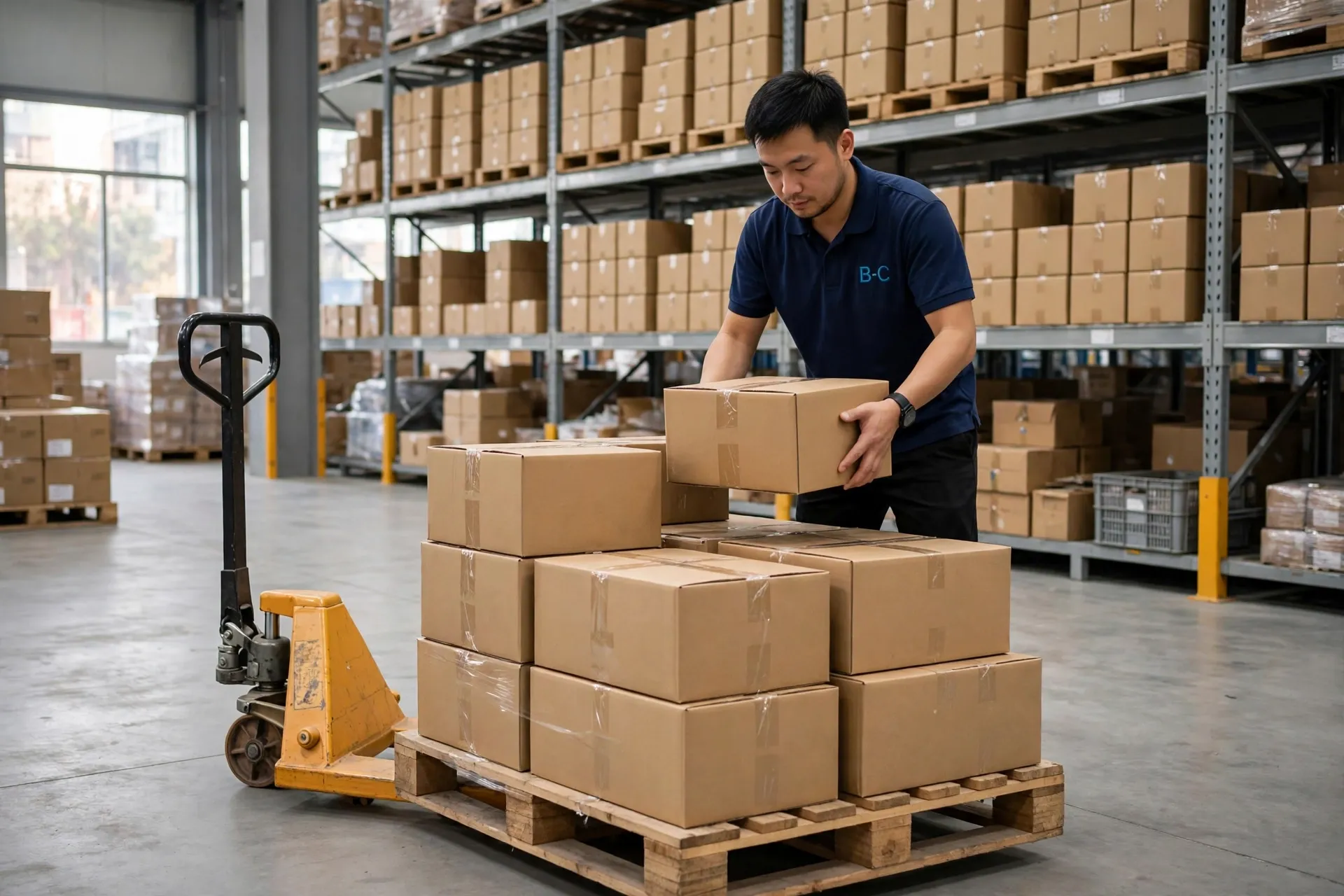
We can validate every address before the label is printed, flag the ones that do not check out, and contact the customer for confirmation before the parcel leaves our warehouse in Shenzhen. We can watch the tracking on every order, catch a delivery failure on the day it happens, and contact you with the options — re-delivery to a corrected address, return to the warehouse, or re-shipment — before the carrier's holding window closes. And we can re-pack and re-ship a returned parcel once the address is corrected.
What we cannot do is deliver to an address that does not exist, or make a local carrier deliver to a building it cannot enter. We cannot recover the freight on a parcel that was shipped to a wrong address the customer supplied and confirmed — that cost sits with the order, and the honest answer is to prevent it rather than promise to absorb it. And we cannot hold a parcel at a foreign depot indefinitely while an address is sorted out; the carrier's clock runs whether anyone acts or not. What we can do is make sure the address is checked before shipping, and that a failure is caught and acted on the same day.
The bottom line
A wrong address is a small error with a large bill attached, and for a parcel shipped from China the bill is larger than for a domestic order: double freight, depot storage, a lost customer, and sometimes a lost parcel. Most failures come from five fixable mistakes — a missing unit number, a wrong postcode, a name mismatch, a format error, or a missing phone number — and most of them are caught by validation before the label is printed. Validate every address, confirm the flagged ones with the customer, and have a plan for the failures that still get through. The cheapest failed delivery is the one that never leaves the warehouse.
If you want every order validated and every delivery failure caught the day it happens, get a fulfilment quote in 24 hours — send us your order volume and destinations, and we will set up the address checks and the failure handling for your store.
Related: B&C Sourcify Fulfilment Services — China warehouse fulfilment, address validation and delivery-failure handling from Shenzhen.