FBA Prep at the Supplier or a Prep Center? Where Each Step Should Happen
Polybagging, FNSKU labels, carton labels — FBA prep done wrong means rejected shipments and extra fees. Here is which step belongs at the supplier and which belongs at a prep center.
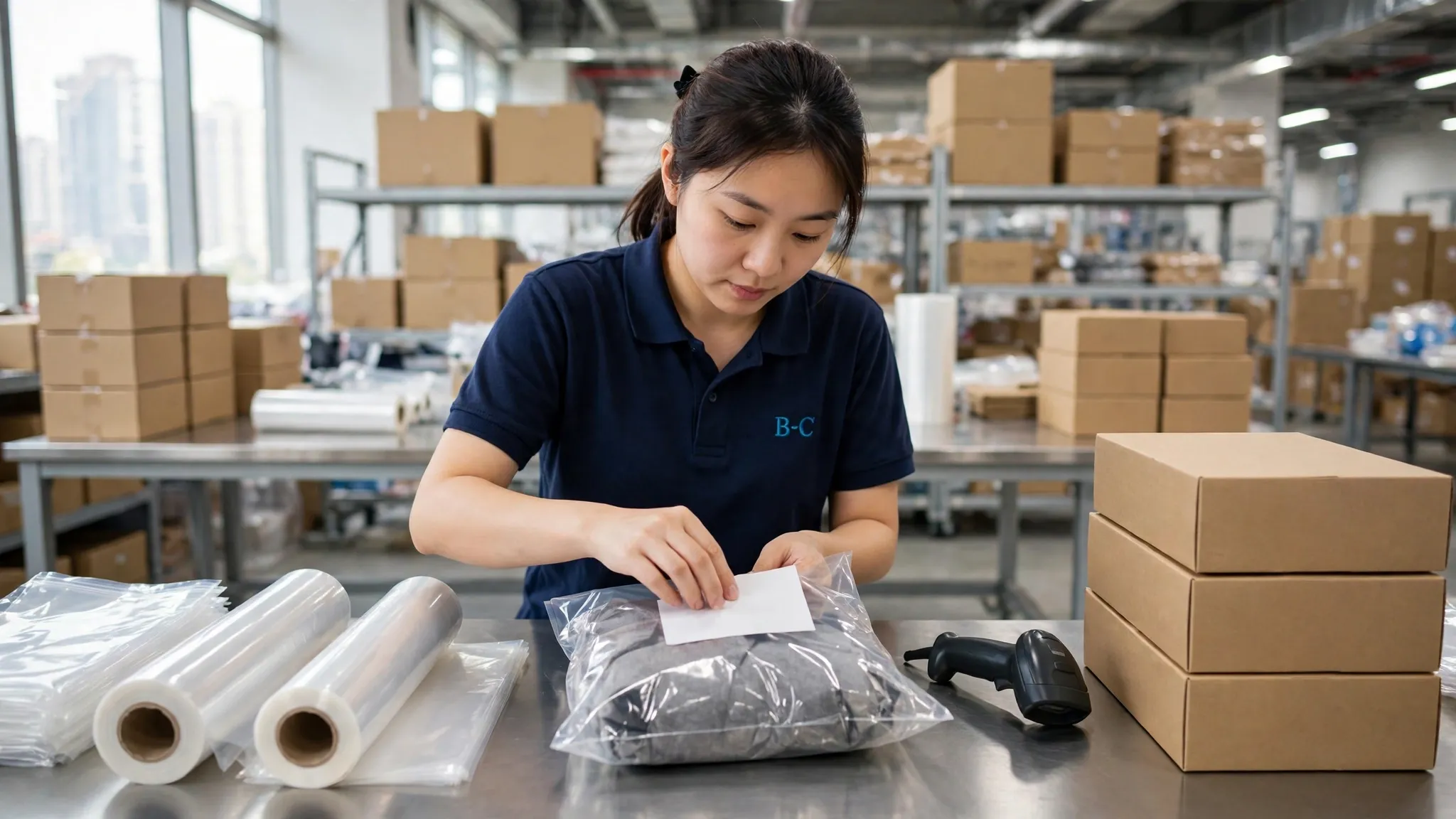
Amazon does not inspect your product for you. It checks whether the shipment arrives exactly the way its fulfillment centers expect it: the right label on the right unit, the right bag on the right item, the right carton label on the right box. Get any of those wrong and the shipment can be refused at the dock, sent back for rework, or accepted with a charge for Amazon to fix it. The prep work itself is not complicated. The decision that matters is where each step should happen — at the supplier, or at a prep center after the goods leave the factory.
There is no single right answer. Suppliers are cheaper and faster for the steps they can do reliably. Prep centers exist for the steps where an independent check is worth more than the saving. This guide walks through each FBA prep step, says where it usually belongs, and gives you a way to decide for your own orders.
What FBA prep actually involves
FBA prep is the work that turns factory output into Amazon-acceptable inbound units. The steps depend on the product, but most shipments need some combination of the following.
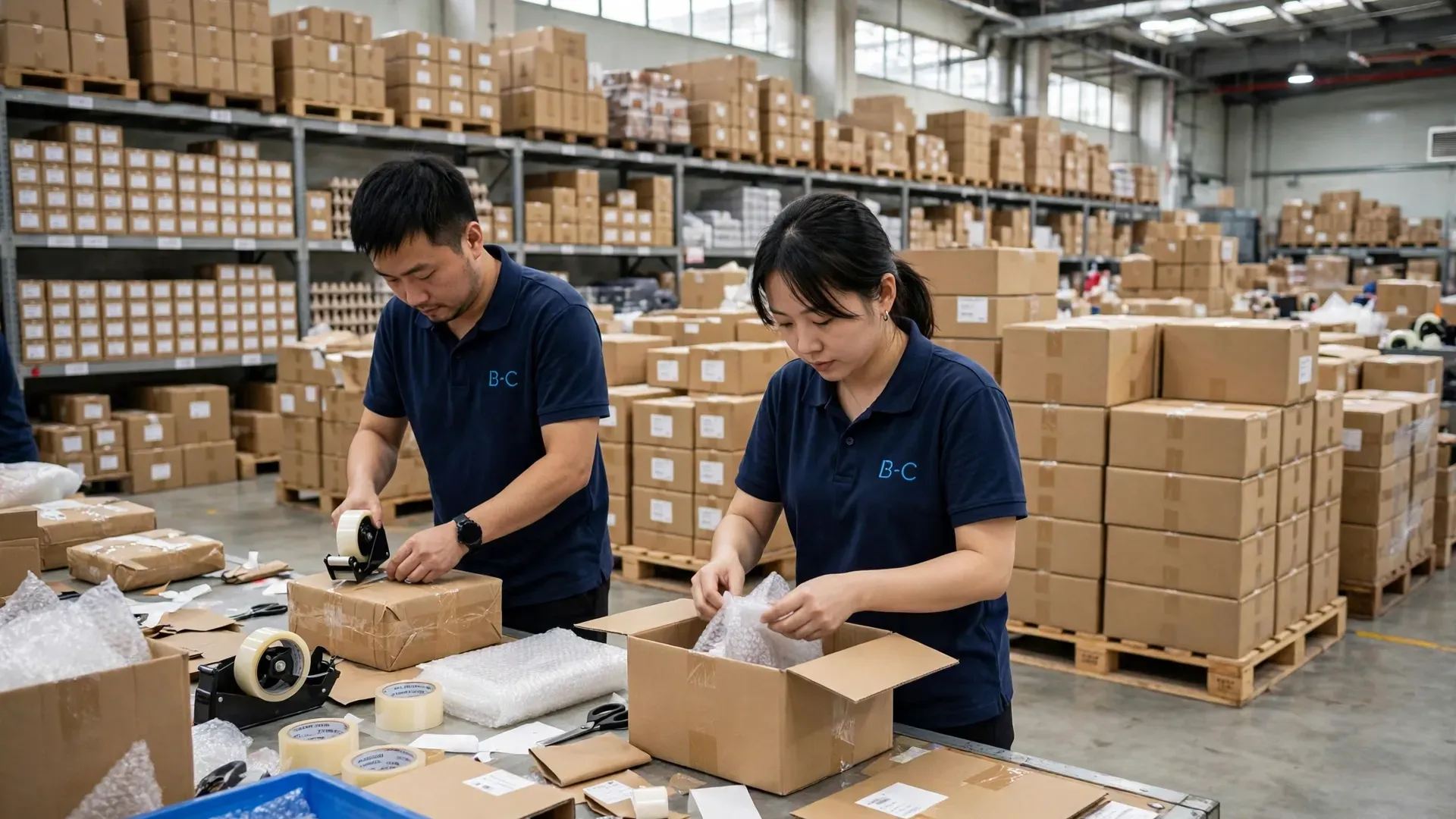
Polybagging: units that need protection, or that Amazon requires to be bagged, go into a sealed polybag. Bags above a certain size must carry a suffocation warning printed on the bag itself. A plain bag without the warning is one of the most common reasons a shipment is flagged.
Labelling: each unit needs its FNSKU label — the barcode Amazon uses to identify your listing — placed over the original manufacturer barcode so only one scannable barcode is visible. A unit with two visible barcodes, or a label on the wrong product, creates inventory errors that are painful to unwind.
Bundling and sets: products sold as a set must be bagged or shrink-wrapped together as a single sellable unit, clearly marked as a set, so the warehouse cannot split them apart by mistake.
Carton packing and labelling: units go into cartons that meet Amazon's weight and size limits, with each carton carrying the correct carton label. Mixed-SKU cartons need to be declared as mixed; a carton that contains products the label does not list will be held.
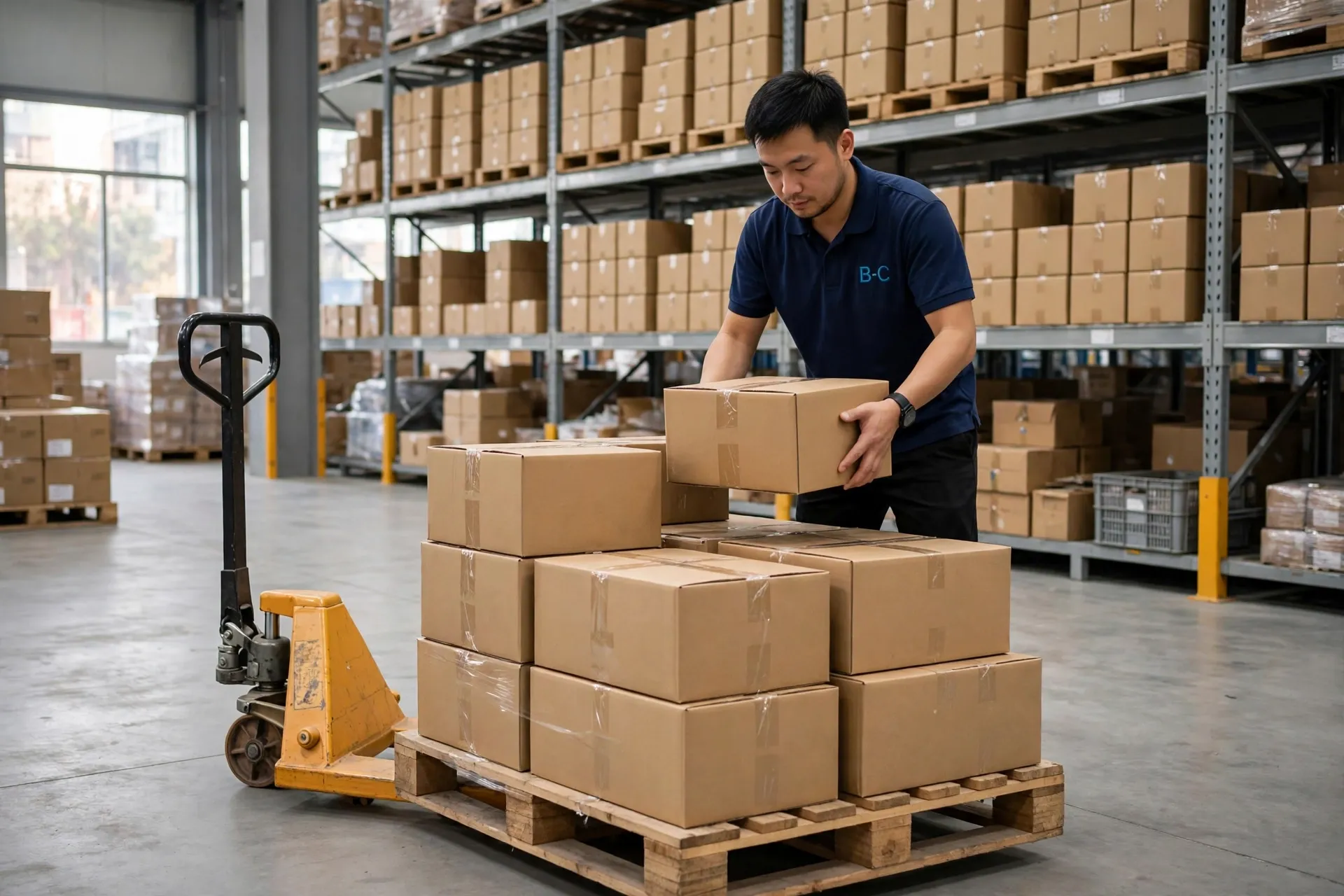
Palletising: large shipments go on pallets that meet Amazon's pallet requirements, with the shipment labelled as a palletised load.
None of this is optional. Amazon publishes these requirements, and its receiving teams apply them. The question is never whether the work gets done. It is who does it, and who checks it.
What your supplier can do well
The strongest argument for supplier prep is that the work happens at the point of packing, before the goods are ever handled a second time. A factory that packs your product every day can polybag and label units on the line, seal the cartons, and load the shipment in one pass. That means no second freight leg, no second handling fee, and no extra days in transit.
Supplier prep works best when four conditions hold. First, the prep is simple and repetitive — polybagging, applying a label, packing a standard carton. Second, the supplier has done it before for Amazon sellers and understands what an FNSKU label is and where it goes. Third, you have a golden sample and a written prep instruction with photos, so "label here, bag like this" is not left to interpretation. Fourth, you or someone on the ground can check the first batch before it ships.
The risks are real and they are all versions of the same problem: no independent check. A factory that applies labels will not catch its own labelling mistake. A wrong FNSKU on a whole production run is discovered only when Amazon receives it — or worse, when customers start receiving the wrong product. Suppliers also tend to optimise for their own convenience: cartons packed to the factory's standard rather than Amazon's, mixed products in one carton because it was easier, a suffocation warning skipped because the bags on hand did not have one printed. None of this is malice. It is what happens when the party doing the work is also the party grading it.
Supplier prep also breaks down when the prep is not uniform. If your order mixes several SKUs, several colours, or a set that has to be kitted from parts made in different places, the factory is rarely the right place to assemble it. Kitting across suppliers is warehouse work, not factory work.
What a prep center is for
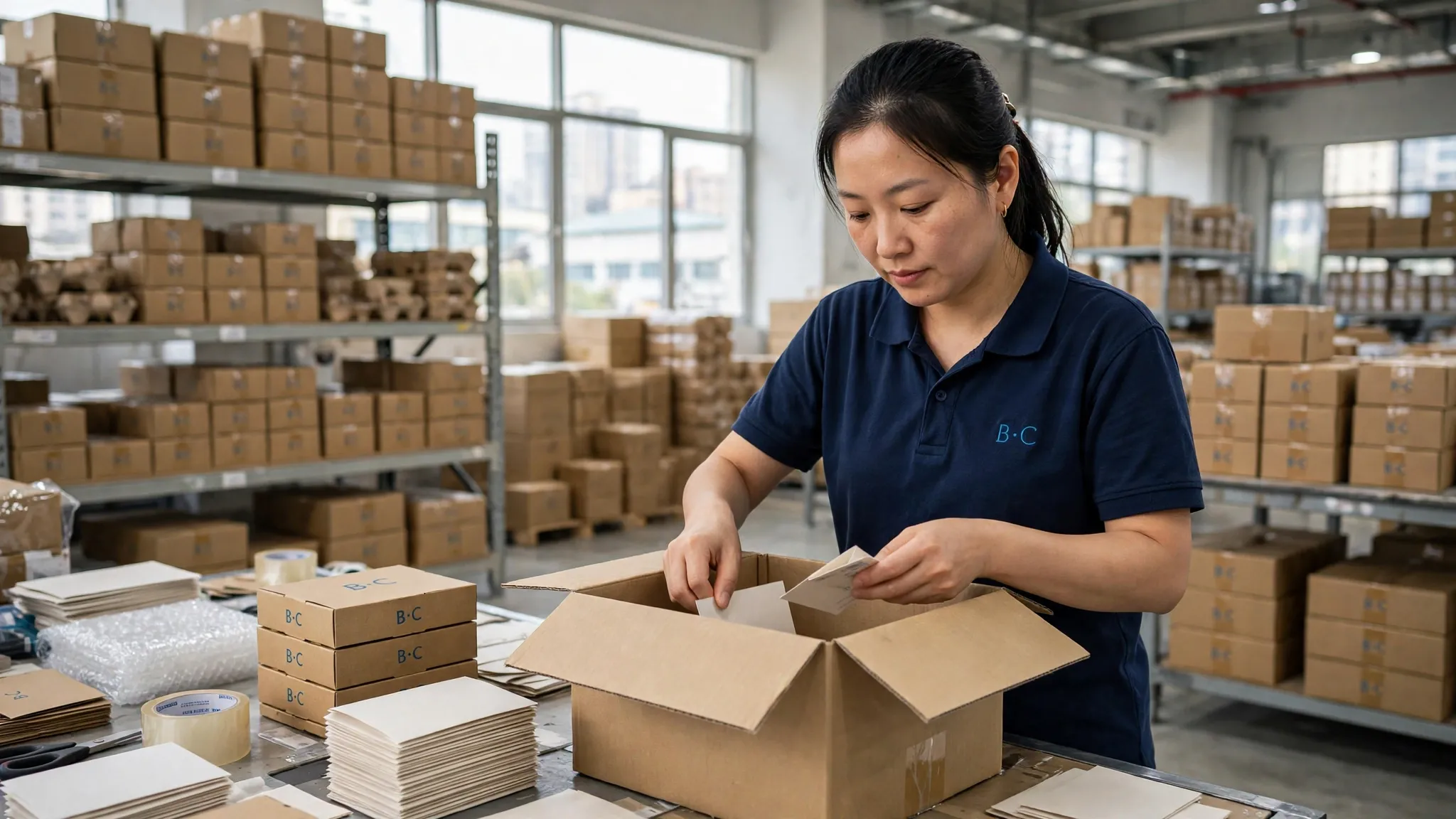
A prep center receives your goods after they leave the factory and prepares them to Amazon's requirements before forwarding them to a fulfillment center. Its value is not the labour — it is the second pair of eyes and the specialisation.
A good prep center does three things a supplier cannot. It inspects on receipt, so a labelling error, a wrong colour, or a damaged batch is caught before the goods reach Amazon rather than after. It applies prep to a single standard across many suppliers, so a shipment assembled from five factories arrives at Amazon as one consistent load. And it fixes problems: relabelling, rebagging, re-boxing, splitting a mixed shipment, or holding stock while a listing issue is resolved. A factory will rarely do any of that once the goods have left its gate.
Prep centers also handle the cases suppliers struggle with. Products with expiry dates need date checks and first-in-first-out rotation. Fragile products need proper dunnage and drop-tested packing. Products that need bubble wrap, corner protection, or a "do not separate" sticker need someone whose whole job is packing to a spec. And when Amazon rejects a shipment, a prep center can receive it back, fix it, and send it in again — a supplier generally cannot.
The cost of a prep center is a second handling step: freight from the factory to the center, the center's per-unit prep fee, and a day or two of transit. For a small order that is not much money. For a large, simple, single-SKU order from a reliable supplier, it can be money spent to check work that did not need checking.
Where each step should happen
A practical split, based on what we see work in practice:
Polybagging belongs at the supplier when the bag spec is simple and the supplier has the right bags in stock, including the suffocation warning where required. It belongs at the prep center when the bag type varies by SKU, or when the supplier's bags have failed a check before.
FNSKU labelling belongs at the supplier only when the supplier has labelled correctly on previous orders and you have a photo-verified check of the first batch. For a first order, a new supplier, or any order where a labelling mistake would be expensive, put labelling at the prep center, where each label is checked against the shipment manifest as it is applied.
Bundling and kitting belong at the prep center or at your own warehouse in most cases. Assembling a set from parts that arrive separately is exactly the kind of work a factory line is not set up to do carefully, and a wrong kit is a customer complaint waiting to happen.
Carton labelling and palletising belong to whoever ships the goods to Amazon. If the supplier ships direct to the fulfillment center, the supplier must label the cartons. If the goods go through a warehouse or prep center first, that is where the cartons are built and labelled — and that is also where a carton can be opened and fixed if something is wrong.
Expiry and condition checks belong at the prep center, always. A factory will not rotate your stock or check dates on receipt. A prep center does that as part of receiving.
How to decide for your order
Four questions decide the split.
How reliable is this supplier at prep? If you have shipped with them before and the prep was right, keep it with them. If this is a first order, or a previous order had a labelling or packing problem, route the goods through a prep center for the first shipment and move steps back to the supplier once they prove they can hold the standard.
How complex is the prep? One SKU, one bag, one label: supplier. Multiple SKUs, sets, colour variants, expiry dates, fragile items: prep center.
How big is the order? For a small test order, the cost of a prep center is a small share of the order and the check is worth it. For a large repeat order of a simple product, supplier prep saves real money on every unit, and a spot check on a sample of cartons is usually enough.
What happens if it goes wrong? If a labelling mistake means a rejected container or a month of stranded inventory, pay for the independent check. If the worst case is a single carton being fixed, accept the supplier's prep and check it yourself on arrival.
Most sellers end up with a hybrid: simple steps at the supplier, verification steps at the warehouse or prep center, and the final carton and shipment built where the goods are last handled. That split changes as the relationship matures — more moves to the supplier as trust is earned, and moves back to the prep center the first time a standard slips.
The mistakes that cost the most
The expensive failures are almost always the same few. A label applied to the wrong product, so two listings share one barcode and inventory mixes. A polybag without the suffocation warning, so the shipment is held at receiving. A carton labelled as one SKU that contains another, so Amazon refuses the whole carton. A set shipped as loose units, so customers receive one piece of a three-piece set. And a shipment sent to the wrong fulfillment center because the shipment plan changed after the cartons were labelled. Every one of these is preventable, and every one is cheaper to catch before the goods leave China than after they arrive at Amazon.
The cheapest insurance is a photo check before dispatch: a photo of the label on the unit, a photo of the bag with the warning visible, a photo of the sealed carton with its label, and the carton count against the shipment manifest. Ask for it on every order, whichever route you choose. If your supplier or prep center cannot send those photos, that tells you something about the route.
What we can and cannot do
We can receive your goods at our Shenzhen warehouse, inspect them against your shipment plan, and do the full prep in-house: polybagging with the correct warning, FNSKU labelling checked against the manifest, kitting and bundling, carton packing and labelling to Amazon's requirements, and photo verification of every step before the shipment leaves. We can also split the work with your supplier — they do the simple steps on the line, we verify and finish the shipment — and we can receive a rejected shipment back from Amazon, fix it, and send it in again.
What we cannot do is override Amazon's requirements. If a product needs a specific prep step, it needs it whoever does the work, and we will tell you when a requested shortcut would get the shipment refused. We also cannot guarantee Amazon will accept a shipment when the listing data itself is wrong — a label is only as good as the FNSKU it carries, and that comes from your Seller Central account. And we cannot relabel goods that are already inside a fulfillment center without a removal order; once Amazon has the stock, the fix has to go through Amazon's process.
The bottom line
FBA prep is a decision about where the check happens, not about whether the work is hard. Simple, repeatable steps belong at the supplier once they have proved they can do them. Labelling, kitting, and anything that needs an independent eye belongs at a prep center or a warehouse that checks the work as it goes. Start cautious — prep center for the first order, photos of everything — and move steps to the supplier as they earn it. The sellers who lose money on prep are not the ones who pay for a check. They are the ones who discover the mistake at the Amazon dock.
If you want your next FBA shipment prepped and photo-verified before it leaves China, get a fulfillment quote in 24 hours — send us the product, the shipment plan and your prep requirements, and we will confirm which steps your supplier should do and which we should handle.
Related: Amazon FBA Inbound Placement Fees: How to Split Shipments Without Splitting Your Margin; FBA Prep: Amazon Inbound Rejections and How to Avoid Them; B2C Fulfillment from China.