Amazon FBA Inbound Placement Fees: How to Split Shipments Without Splitting Your Margin
Amazon's inbound placement fee is the cost of shipping to one location instead of five. This guide covers the three split options and how sellers shipping from China plan around them.
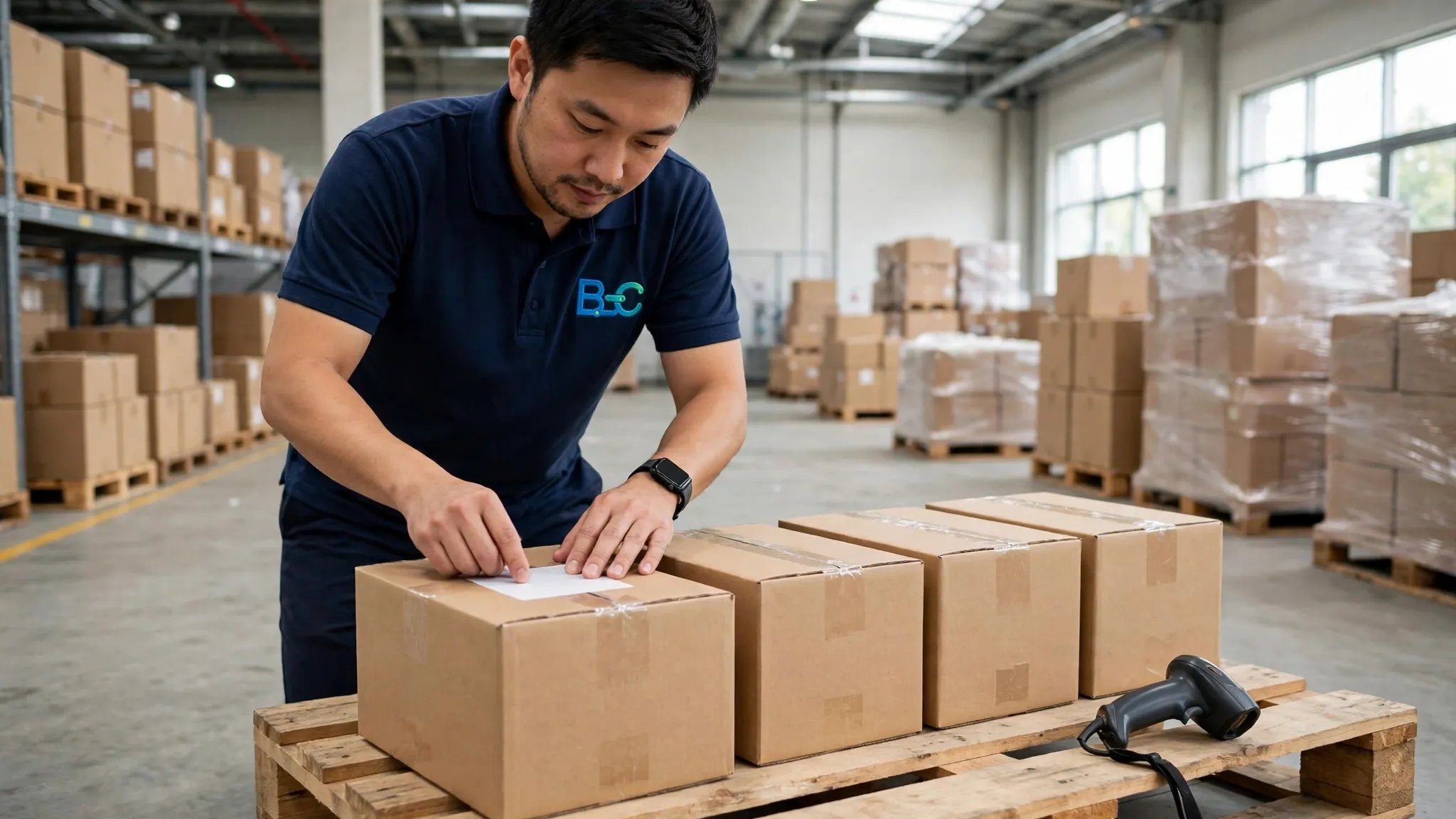
If you ship from China straight into Amazon FBA, there is a line item that did not exist in your costing a few years ago — and it is quietly taking a slice out of every shipment: the FBA inbound placement service fee.
It is not a huge fee per unit. That is exactly why it gets ignored. But on a container-sized restock, "a few dimes a unit" becomes a four-figure charge that nobody budgeted for — and it lands about 45 days after your goods are received, long after you set your price. Here is what the fee actually is, what the three shipping options really cost, and how sellers shipping from China plan around it without giving the margin back.
What the fee is, in plain terms
Since March 2024, Amazon no longer redistributes your inventory across its US network for free. When you create an FBA shipping plan in Seller Central, you choose how your inventory enters the network:
- You send to fewer locations — Amazon does the spreading for you, and charges a per-unit placement fee for it.
- You split the shipment across the locations Amazon wants — you do the spreading, and the placement fee drops to zero.
The fee is charged per unit, based on the product's size tier and weight band, and it also varies by inbound region — sending everything to a single West Coast location, for example, generally sits at the expensive end for minimal splits. Amazon shows an estimate for each option when you build the plan, and the final amount is billed roughly 45 days after the shipment is received, under Service fees in your Payments dashboard.
The three options, with real numbers
Using Amazon's published US rate card (example ranges — your exact figure depends on size tier, weight and destination region; always check the current fee schedule in Seller Central before costing a shipment):
| Option | What you do | Placement fee (per unit, examples) |
|---|---|---|
| Minimal shipment splits | Send everything to 1 inbound location | Small standard approx. $0.14–$0.32; Large standard approx. $0.20–$1.90 by weight band (common mid-weight items land around $0.30–$0.70); Bulky items approx. $1.10–$6.50 |
| Partial shipment splits | Send to 2–3 locations | Reduced fee — offered mainly for bulky tiers (roughly $0.55–$3.50); for most standard-size plans Amazon offers minimal or optimized instead |
| Amazon-optimized splits | Send to 4–5+ locations Amazon assigns | $0 — but only if each item ships in at least 5 identical cartons or pallets, same quantity and same item mix in every carton |
Run the math on a typical restock: 2,000 units of a large-standard product on a minimal split at roughly $0.49 a unit is about $980 in placement fees alone — before freight, before duties. On a bulky product at $3–$6 a unit, a single consolidated shipment can carry a placement bill larger than the ocean freight that brought it over.
So the fee is avoidable. The catch is that "avoiding" it means shipping to five US destinations instead of one — and that is where shipping from China changes the calculation.
Why China-direct shipping flips the usual advice
Most US-based advice says "always pick Amazon-optimized, it's free." For a seller whose goods are already in a US warehouse, that is usually right. From China, it is not that simple:
- Five destinations means five freight legs. Splitting one consolidated ocean shipment into five US inbound locations either means five separate international consignments (expensive, slow, five sets of paperwork) or landing everything at one US point and paying a US-side service to re-split it — which adds handling cost and a week or more of lead time.
- The 5-identical-carton rule is a packing rule. Optimized splits only waive the fee if every item goes in at least five identical cartons with identical contents. If your factory packs mixed cartons, or your carton count per SKU is three, the free option may not even appear for that plan.
- Sometimes paying the fee is the cheaper answer. For a small, light SKU, a $0.25 placement fee can be less than the extra freight and handling of splitting. For a bulky SKU at $4 a unit, it almost never is. This is a per-SKU calculation, not a store-wide policy.
The sellers who come out ahead are the ones who decide the split strategy before the goods leave China — because that is when carton configuration and routing are still cheap to change.
The practical playbook from China
1. Build the Amazon plan before the goods are packed, not after. Create the shipping plan in Seller Central while your stock is still at the factory or in a China warehouse. The placement options and fee estimates you see determine how cartons should be packed — identical cartons, quantities per carton, which SKUs travel together. Packing to the plan costs nothing extra; re-packing after arrival costs real money.
2. Standardise cartons at the factory. If a SKU is a repeat seller, fix its standardised carton (same units per carton, same mix) and order in multiples that divide cleanly into five or more identical cartons. This single habit is what unlocks the $0-fee optimized option on future restocks.
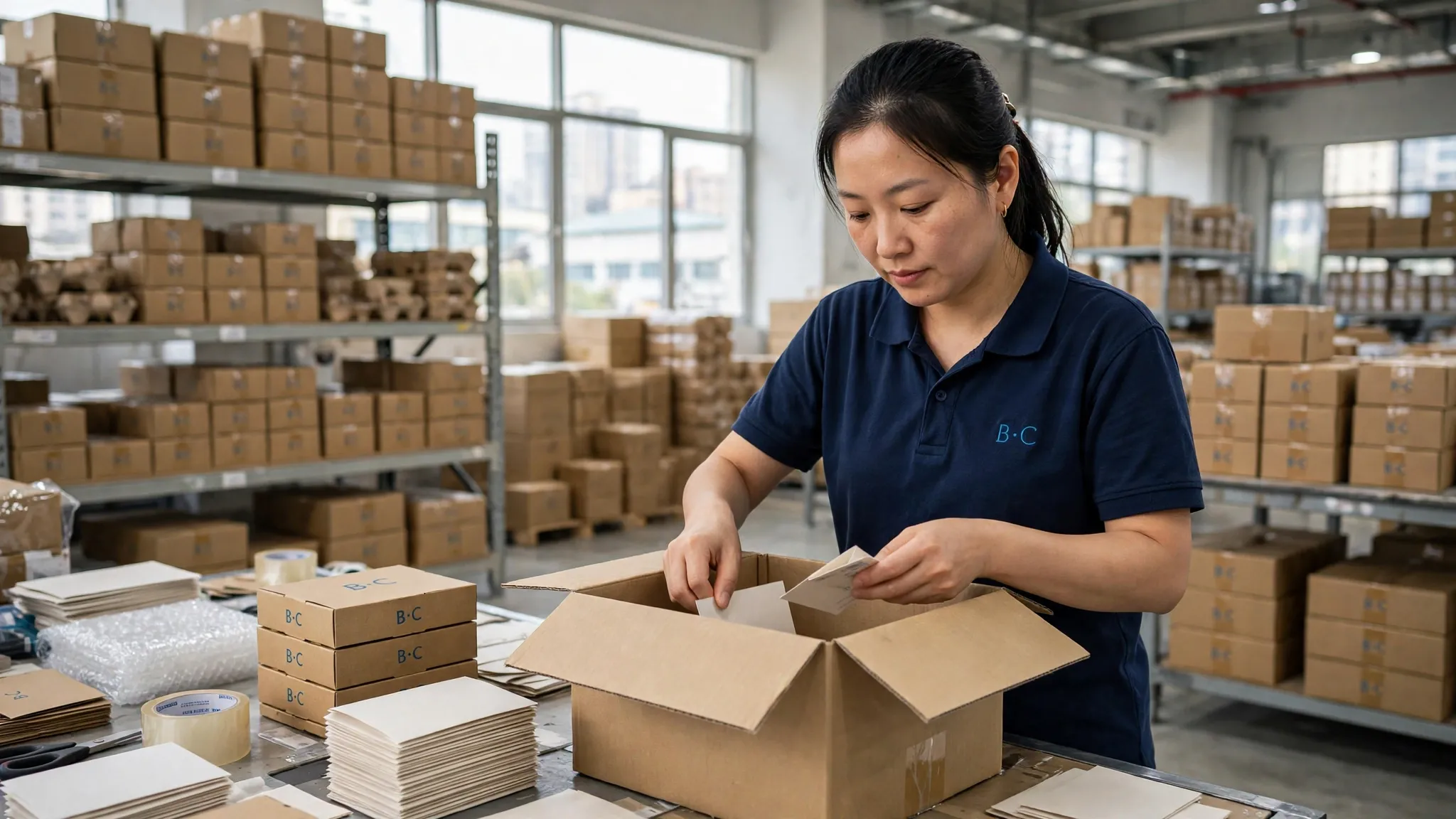
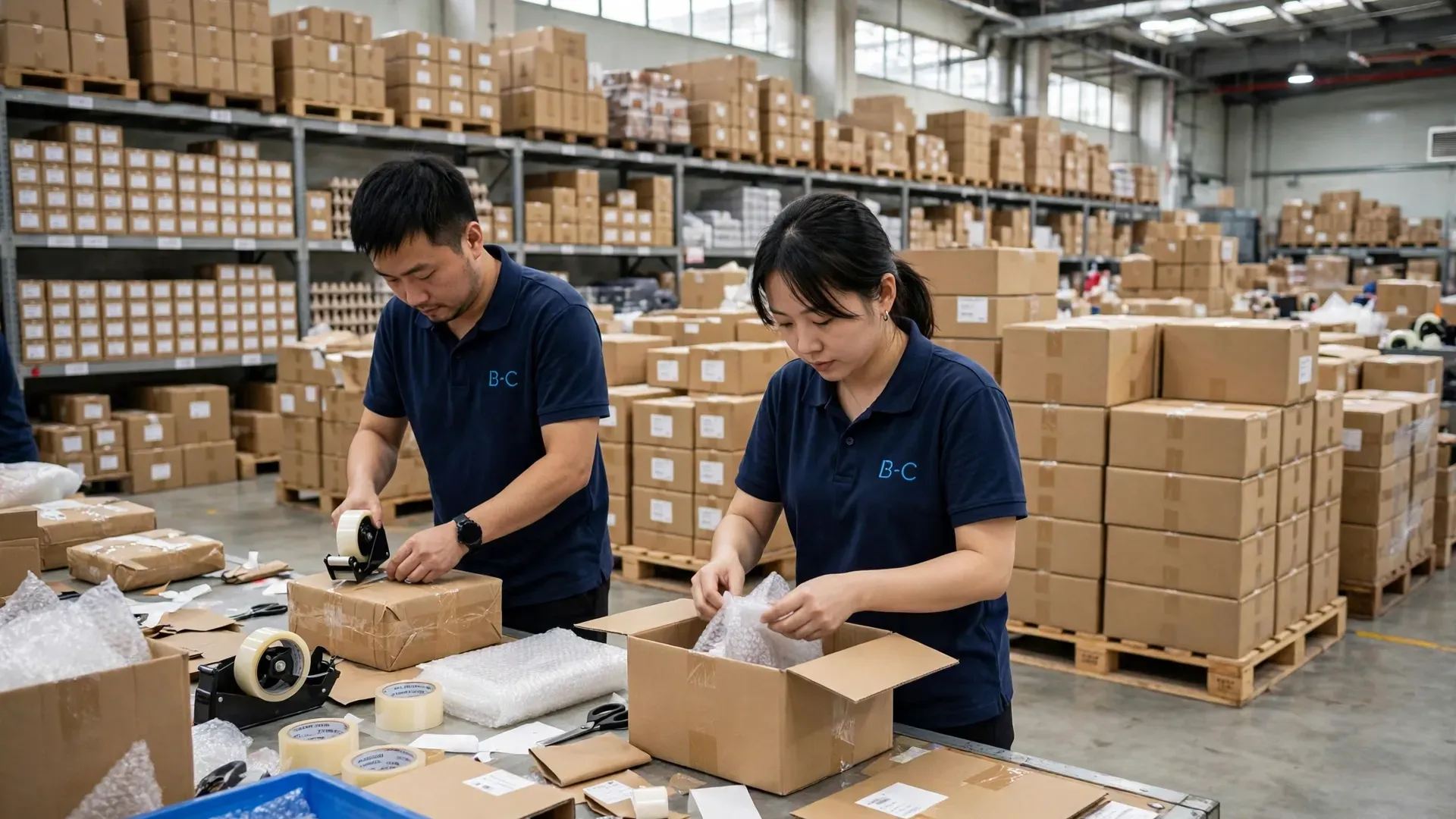
3. Consolidate in China, split on paper. Ship one consolidated ocean or rail consignment to the US as usual, but prepare the Amazon split in China first: goods held briefly in a China warehouse can be labelled, cased and documented per destination before departure, so the US leg — whether direct to the assigned centres or via one US receiving point — follows the plan instead of improvising. The splitting work is far cheaper done in Shenzhen than in California.
4. Price the fee in when minimal is genuinely better. For small, light, high-turnover SKUs, run both numbers: (placement fee × units) versus (extra freight + re-split handling + extra days out of stock). If minimal wins, choose it on purpose and put the fee in your unit cost — do not let it surface 45 days later as a surprise.
5. Keep bulky SKUs out of minimal splits by default. Placement fees scale hard with size and weight. For bulky products, plan the split first and the freight second — or evaluate Amazon's AWD (Amazon Warehousing and Distribution) programme, where you ship in bulk to Amazon's upstream storage and Amazon handles distribution downstream; check its current terms in Seller Central, as programme rules and pricing change.
What we do differently
The split decision is made in China or it is made badly. That is the whole point of having a warehouse at the origin: the cartons can be built to the Amazon plan before the goods leave, instead of being rebuilt in the US at American labour rates.
We hold your goods in our Shenzhen warehouse and release them against your Amazon shipping plan, so packing follows the plan rather than the other way round. We split, re-case and label cartons to FBA requirements — including building identical-carton configurations for the SKUs you restock — and we coordinate direct-to-FBA dispatch with the paperwork for each split. And we tell you the landed cost of each routing option before you commit, so the choice between paying the placement fee and paying for the split is made on numbers, not on habit.
What we can and cannot do
Being straight about both sides is how we work.
What we can do, from our Shenzhen warehouse: hold your goods in China and release them against your Amazon shipping plan; split, re-case, label (FNSKU and carton labels) and consolidate cartons to FBA requirements; coordinate direct-to-FBA dispatch and the paperwork for each split; and tell you the landed cost of each routing option before you commit — our fulfilment charges are per-order and agreed upfront, with nothing added afterwards.
What we cannot do: we cannot change Amazon's fee schedule or guarantee that the optimized option will be offered for a specific plan — Amazon decides that at plan creation, based on your cartons and inventory. We cannot promise a placement fee of $0 on every SKU; on some small, light products the honest advice is to pay the minimal-split fee because splitting would cost more. Final fee amounts are Amazon's, billed by Amazon — we will show you the estimate we planned against, but the number on your Amazon statement is the one that counts.
The bottom line
The inbound placement fee is Amazon charging you for consolidation you used to get free. Sellers shipping from China cannot dodge it by reflex — the free option costs freight and packing discipline instead. Decide per SKU, pack to the plan in China, and put whichever cost remains into your price on purpose.
If you are planning a restock and want someone on the ground in China to work through the split options with your actual carton data, send us the SKU list and quantities for a fulfilment quote within 24 hours and we will come back with the routing we would choose and what it costs — no obligation, and the numbers in writing before anything moves.
Related: B2C Fulfilment from China — our fulfilment service for DTC brands and marketplace sellers, covering warehousing, pick and pack, FBA preparation and international shipping.