Industry Insights
Ship from China or Stock in a US Warehouse? A Decision Framework for New and Growing Sellers
New product, new seller or unstable volume? Keep stock in China and ship per order. Bulk-stock a US warehouse only after the product proves it sells — seven dimensions decide when.
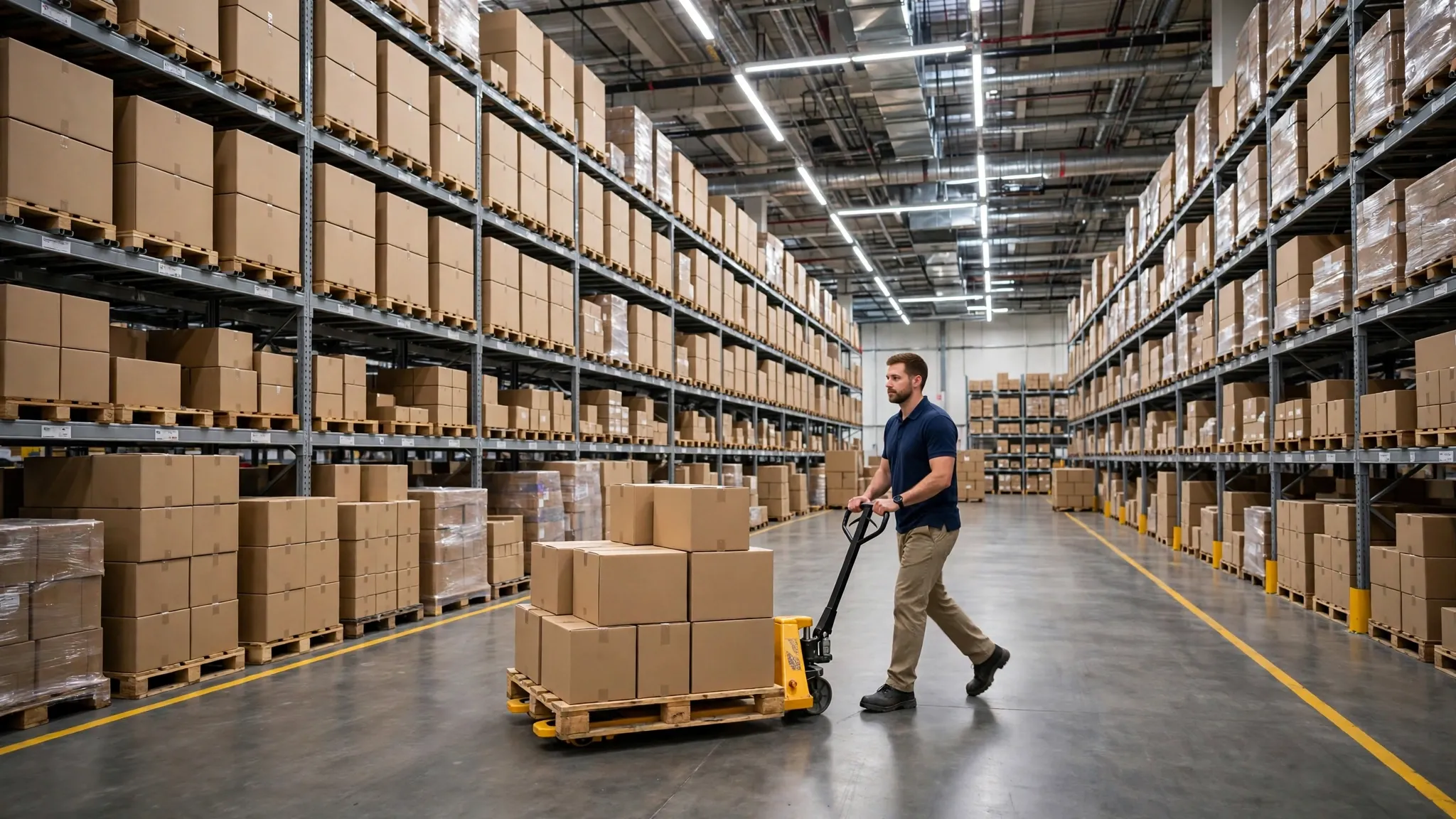
Almost every seller who starts sourcing from China asks this question as if it had one permanent answer: should my stock sit in a China warehouse and ship per order, or should I bulk-ship it to a US warehouse? It does not have a permanent answer, because the right choice depends on where the product is in its life — and choosing the "grown-up" option too early is one of the most expensive mistakes new sellers make.
Here is the advice we give our own clients, stated up front: if the product is new, you are new, or order volume is still low and unstable, keep the stock in China and ship per order. Move bulk stock to a US warehouse only after the product has proven it sells. The rest of this article explains how to judge that for your own store, dimension by dimension — and how the cost comparison actually works, because the two routes are priced in completely different ways.
The two models, defined plainly
China warehouse, ship per order. Stock (or supplier access) sits in China. Each customer order is picked, packed and shipped internationally as a single parcel. You pay per order: the unit purchase, a per-order handling (operation) fee, and the parcel's shipping. No bulk freight commitment, no overseas rent on unproven stock.
US warehouse, bulk stocking. You ship a bulk quantity by sea or air to a US 3PL or Amazon, pay receiving and monthly storage, and orders are picked and delivered domestically. Per-unit freight is much lower and delivery is fast — but the stock, the rent and the risk are all yours from the day the container lands.
The seven dimensions that decide it
- Demand stability. This is the master variable. A product selling a predictable number of units every week can be stocked anywhere. A product being tested — new listing, new ads, unknown conversion — generates lumpy, fragile demand, and bulk stocking converts that uncertainty into rent. If you cannot forecast next month's sales within a reasonable band, the product has not earned a US warehouse yet.
- Order volume. US warehousing has fixed costs that only dilute at volume: receiving, storage minimums, account and pick fees structured for steady flow. At a handful of orders a day, per-order shipping from China is usually the cheaper total despite the higher per-parcel freight. The crossover is not a magic number — it is wherever the per-unit bulk freight saving, multiplied by stable volume, exceeds the warehousing fixed layer. Sellers crossing into consistent daily volume in the dozens per SKU are typically the ones who should run the numbers seriously.
- Size and weight. Small, light products travel well internationally — a 200-gram item barely notices the difference between the two models' freight. Bulky or heavy products are the opposite: per-parcel international shipping punishes them on every single order, while bulk sea freight spreads their volume across a container. Heavy or oversized items graduate to bulk shipping earlier, sometimes from day one.
- Margin room. Per-order shipping from China is a variable cost that comes straight out of each sale's margin. If your retail price and product cost leave a comfortable margin, that cost is absorbable while you test. If the margin only works at bulk freight rates, the product was never really a dropship candidate — it needs proven volume before it works at all.
- Delivery-time sensitivity. Some niches tolerate an international delivery window without blinking; others convert noticeably worse the moment delivery passes a few days. (As a typical example only: economy international lines from China to the US commonly run around 7–12 business days — actual times are carrier- and season-dependent, and we never guarantee a delivery date.) If your category competes on speed, that argues for US stock once volume supports it; if your buyers already expect to wait, it doesn't.
- Return rate. Every category has one, and the two models handle returns very differently. Stock held in the US can accept domestic returns, be inspected, and go back on the shelf. A parcel shipped from China usually cannot economically come back — high-return categories (apparel sizing is the classic case) should factor a write-off or partial-refund posture into the China-route math, or use a US return address arrangement where available.
- Cash and SKU breadth. Bulk stocking locks cash into inventory before a single unit sells; the China model spends roughly as orders arrive. And if you are testing ten SKUs to find two winners, bulk-shipping all ten guarantees eight piles of slow stock. Testing breadth belongs in China; depth in proven winners belongs in the US.
How the cost comparison really works
Sellers often compare the two routes by freight alone — "international parcel: expensive; bulk sea freight per unit: cheap" — and conclude the US warehouse wins. That comparison leaves out the two lines that decide the real answer:
- The China route's full per-order cost = unit purchase + per-order handling fee + per-parcel international shipping. Everything in it is variable: no orders, (almost) no cost. What it never contains is rent on stock that is not moving.
- The US route's full per-unit cost = bulk freight per unit + receiving + monthly storage (charged per pallet or cubic metre, whether the stock sells or not) + domestic pick, pack and last-mile delivery. Against the US route's lower variable cost stands its fixed layer — and its tail risk. Unsold bulk stock does not sit still; it bills you every month, and if the product stalls, the exit is discounting or disposal: warehouse rent plus a clearance loss, paid twice on the same goods. That is why the sequence matters more than the arithmetic: the China route's higher per-order cost is, in effect, the price of information — it buys you proof of demand before you commit to stock. Once the proof exists, the US route's arithmetic wins and keeps winning. We break down the China-route per-order cost line by line in our article on what Shopify fulfillment from China really costs per order.
The graduation path most sellers actually take
In practice, the answer is rarely "China or US" — it is "China, then US, by SKU." Test broadly from the China warehouse. When one SKU shows stable daily sales for a sustained period, bulk-ship that SKU to the US while the long tail stays in China and keeps shipping per order. Keep the China route running even after graduation: it is your stock-out insurance when the US shelf empties mid-replenishment, and your testing bench for whatever comes next. One caution on timing: graduating an unproven seasonal product in October, because the calendar feels urgent, is how January clearance losses are made — seasonal bulk stocking demands proven demand most of all. Multi-channel sellers can run both routes under one roof; our overview of multi-channel fulfillment from China shows how the allocation works.
Signals that it is time to re-run the numbers
You do not need a calendar reminder to revisit this decision; the business sends signals. Re-run the comparison when any of these show up: one SKU starts producing steady daily orders instead of occasional ones; your per-parcel shipping cost climbs because order weights are rising; delivery-time complaints or conversion questions about shipping appear in your support inbox; or your China-route orders for a single SKU start resembling a bulk shipment cut into parcels — which is precisely what they have become. Each signal means the fixed layer of a US warehouse has something real to dilute against.
What we do / what we do not do
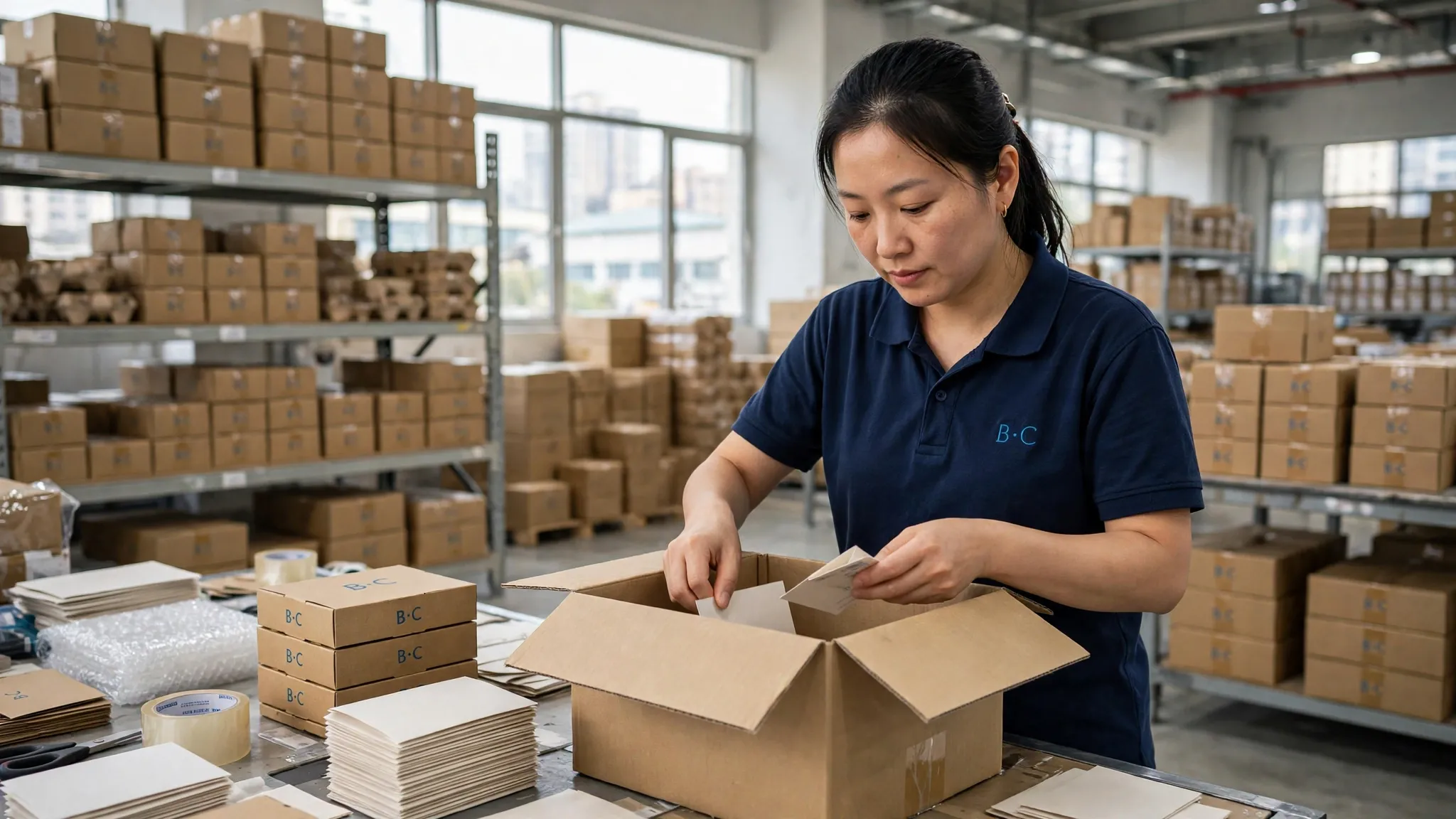
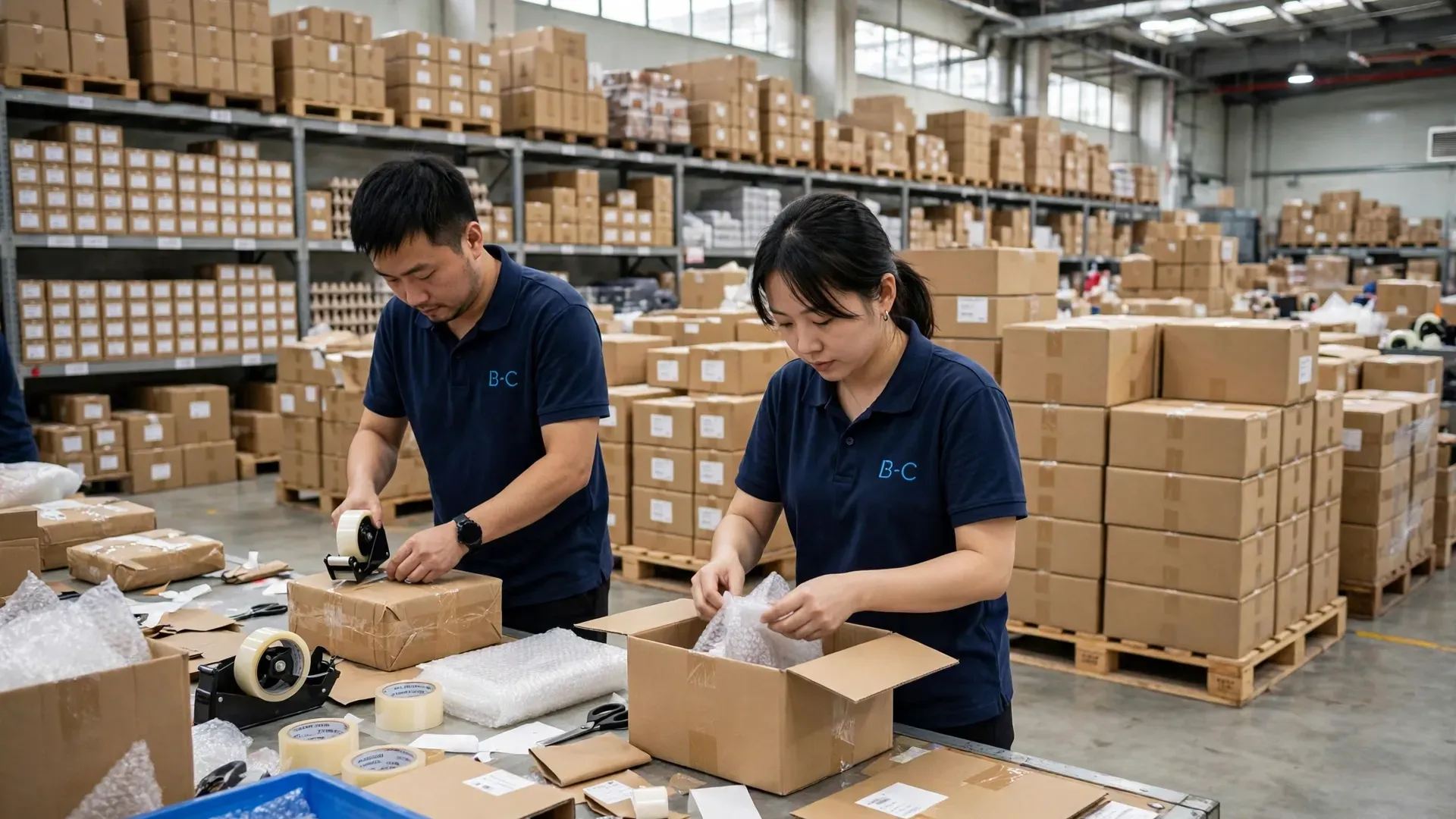
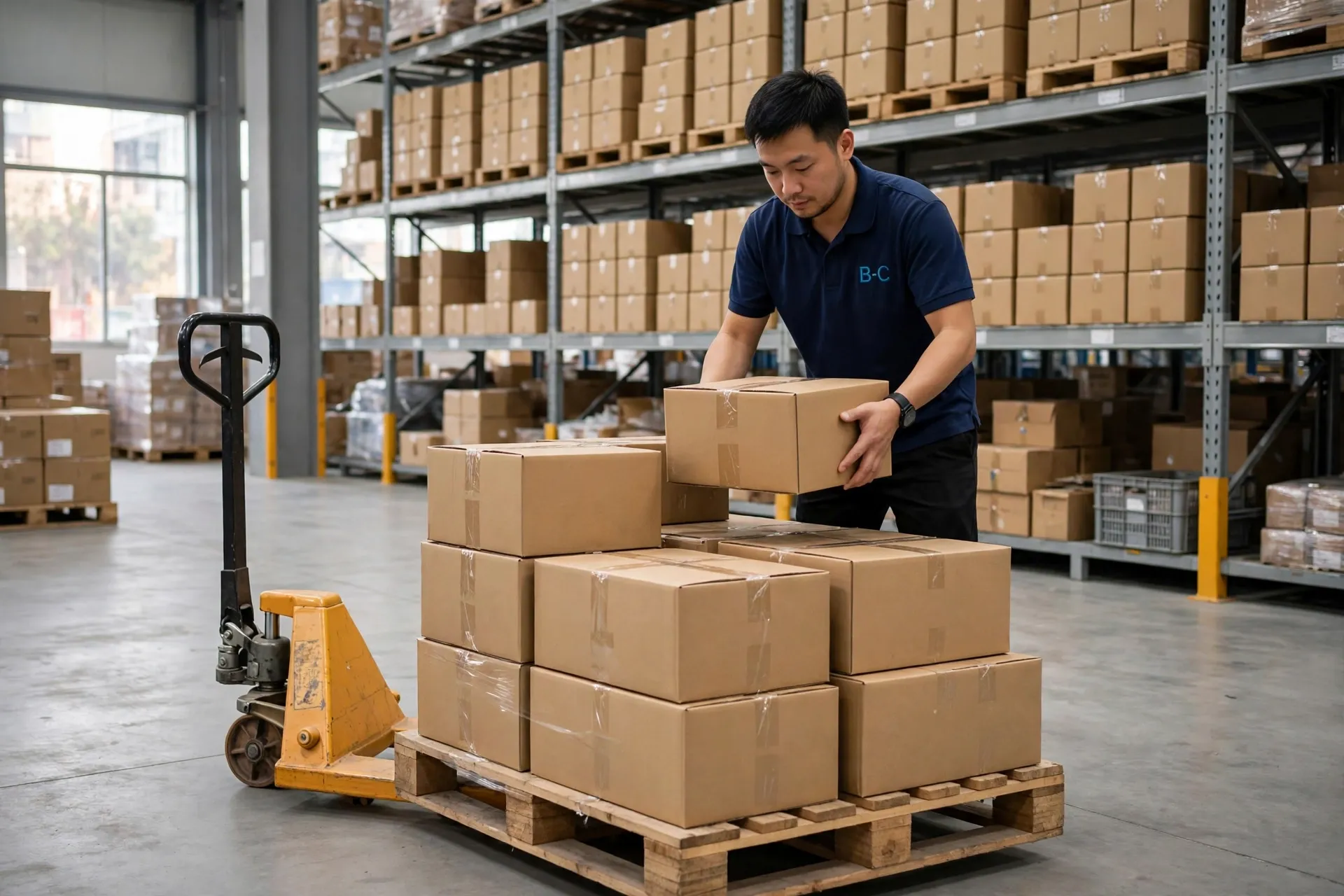
We operate the China side of both models: stock held in our Shenzhen warehouse with per-order picking, packing, per-unit quality checks and labelling, shipped per order under a simple structure — per-item purchase plus a per-order operation fee plus shipping, written down in advance, with no extra charges appearing later. When a product graduates, we handle the bulk side too: consolidation, export packing and FBA prep, and shipment to your US warehouse or 3PL. What we do not do: we do not run our own US warehouse, so domestic US fulfillment itself is your 3PL's or Amazon's job — anyone who implies otherwise about their own network should be asked for the warehouse address. We also cannot make the decision risk-free in either direction: we can model both routes against your product's weight, dimensions and current volume, but the demand proof only exists once the orders do.
Not sure which side of the line your product sits on? Send us the product, its weight and size, and your current daily orders — Get a Fulfillment Quote in 24 Hours — and we will price the China route for you and tell you honestly whether the US route already makes more sense. That judgement call is free; getting it wrong is not.