Oct 17, 2026Sourcing Guides
How to Source Custom Portable Bluetooth Speakers from China: The Engineering Behind the Sound
A custom speaker program is six engineering decisions, not a print on the grille: driver and chamber, battery, housing and mold, board, seal, market file, each locked before tooling.
A custom speaker program stands on six decisions: driver and chamber, battery, housing and mold, board and Bluetooth solution, seals, and the market file. None show up in a catalog photo, and each gets pricier to change once the tool is cut. We are a Shenzhen team with factory roots: a family-owned sheet metal factory at the base, mold and PCBA beside it. Here is the order we lock them in.
A Speaker Is Built in Six Decisions
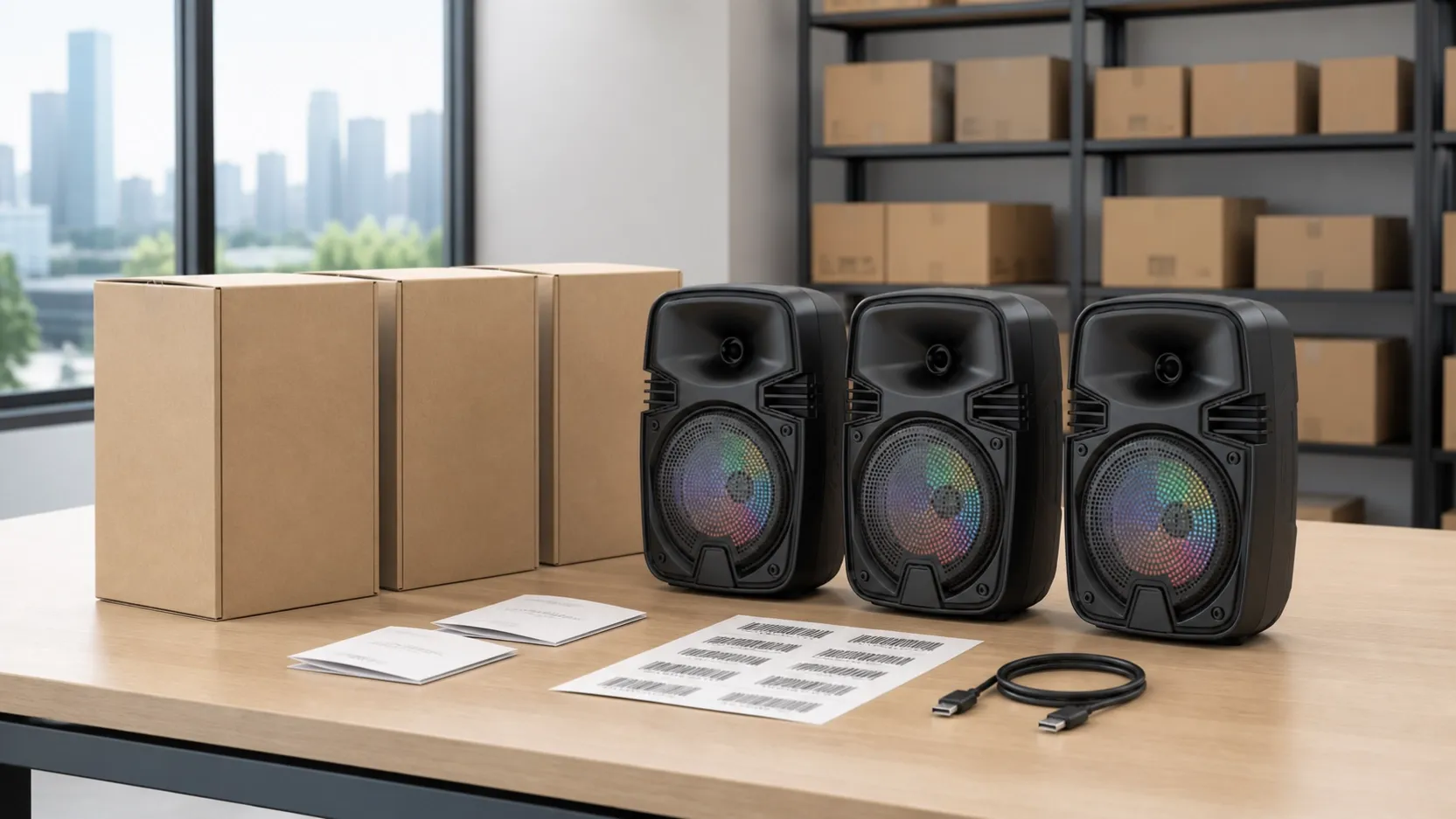
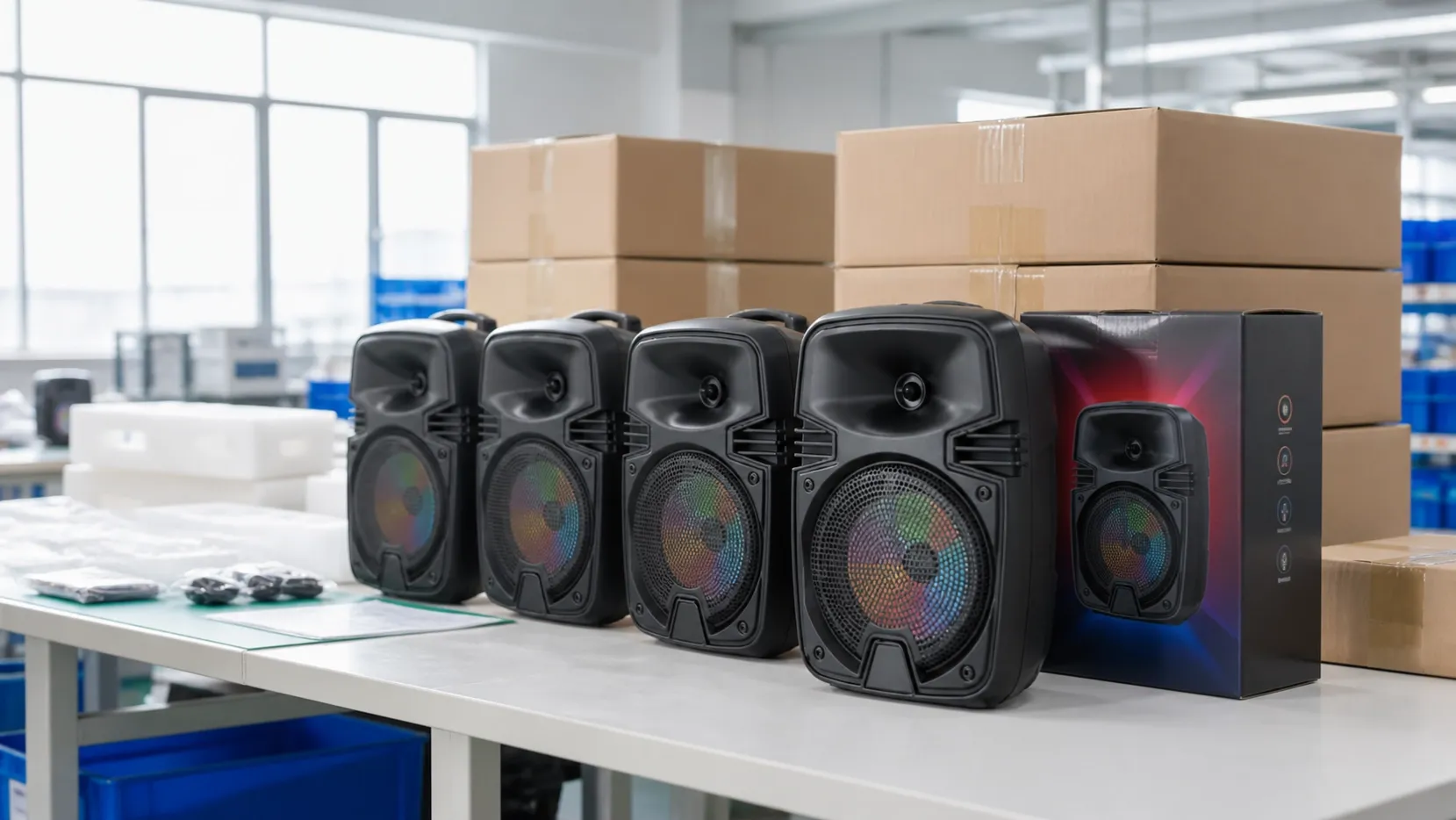
The portable audio range covers five families: mini portables, outdoor rugged builds, party speakers, smart units and soundbars. Custom, for us, lives under the shell; logo methods, pad printing through silicone badge, settle last. Driver and chamber decide the sound. The battery decides runtime and the weight in a hand. Housing and molds decide fit, finish and the cost structure. The board and Bluetooth solution decide how the product behaves and what service it needs. Seals decide where the speaker can travel, and the market file decides where it can be sold. Take any of the six lightly and the second production run is where you find out. The formats, pocket units through party audio, are cataloged on our portable audio page (/industry/bluetooth-speakers-portable-audio-odm). Spec targets by channel and region are covered elsewhere.
Driver and Chamber Decide the Sound
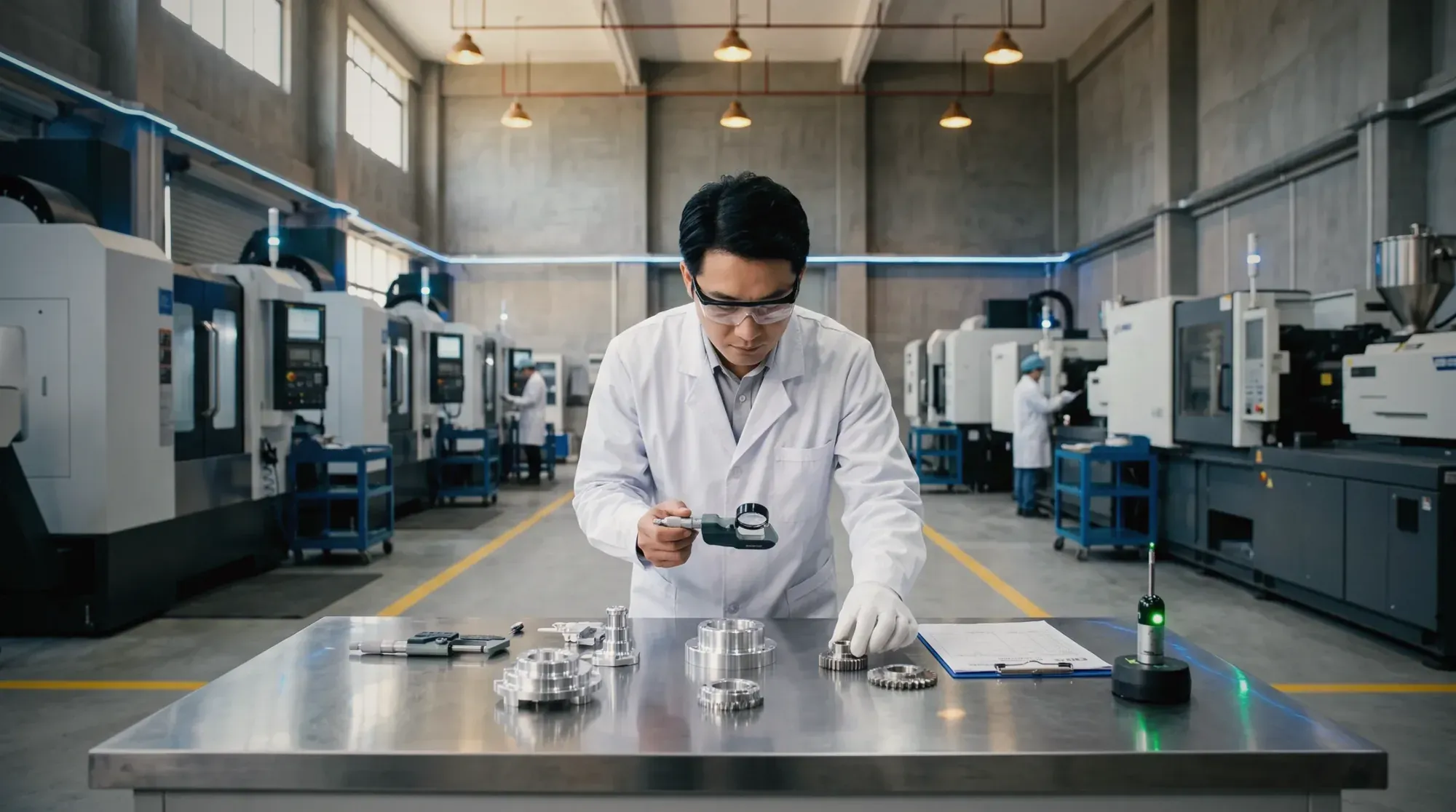
Sound is the easiest thing to promise and the hardest to repeat. A driver only sounds the way it was voiced when it sits in the chamber it was voiced for. So the two get chosen together. Air volume, porting and unit are matched first on paper, then in a physical sample. The plastic around them is part of the equation: chambers, face panels and end caps come from injection molds, and we sign off on the first shot before committing to volume. The promise goes on paper too: frequency response, distortion and output level, measured and recorded for every batch, so matching the approved sample is a logged fact, not a hope. EQ tuning, including companion app work, is where a brand's signature lives, and it belongs in the same test file. The full pre-shipment check, item by item, has its own write-up (/knowledge-hub/bluetooth-speaker-quality-control-checklist-before-shipment).
The Battery Is a Wear Item, Not a Spec Line
A battery is the one speaker component that gets worse from its first day of work. It sets the weight, the runtime claim and the failure mode at year two, and it is the favorite place for a quiet substitution between runs. So the cell gets treated as a locked item: cell family, capacity class and protection board written into the spec file, so a later batch cannot slide into a cheaper build. Verification follows the same discipline. Every production batch gets a full charge and discharge cycle, down and back up, so what gets tested is the cells installed, not a supplier datasheet. A runtime figure is worth printing only when it can be reproduced under a stated condition. Under all of this sits a resource most buyers never see: our lines into the equipment supply chain behind China's leading battery automation builders.
Housing and Molds: The Tooling Behind the Look and the Sound
Every visible part of a speaker is a molded part, and every molded part is a wall of the chamber in disguise. The shell a customer touches is the same cavity that shapes the sound. Tooling decides both, and we sit in the design before anyone cuts steel: how each part releases, where weld lines and gate marks land on a visible surface, how the rugged builds get their structure. Then the first shot comes out. Approve it, and the program becomes repeatable; wave it through, and every batch after it inherits the mistake. Colors get pinned to a Pantone reference so two runs match under store light. For planning: minimums for a model typically open at 500 to 1,000 units, samples clear in 10 to 15 days after tooling confirmation, and volume runs 25 to 40 days behind the sample batch.
The Board and the Bluetooth Solution: Decisions You Can't Fix Later
Behind every speaker sits a board doing three jobs at once: amplification, radio and charge management. The amplifier sets the headroom the sound has. The radio decides what the unit can connect to. The charge path decides how the battery ages. This is the part of a program with the least room to move once production starts, so radio versions and chip families go into the spec file by name and into the test routine. SMT placement, component sourcing and a powered functional test run on every board here, and the radio link gets checked at open-field distance. Custom EQ and over-the-air updates turn a retail product into a serviceable one, which is a selling point right up to the day it becomes a support line.
Sealing Is a Construction, Not a Sticker
Water resistance is decided by parts that never make it onto a spec post: gasket lines, port covers, the fit tolerance between panels, how steadily the line sets the seal. The rugged models we build carry an IP67 rating that is the output of the construction, not a component anyone can order. The level follows the use case. A speaker by a pool, one clipped to a bike frame, one on a shelf: three different seals, and overbuilding costs sound while underbuilding costs returns. On the line, the claim gets verified the same way, with units pulled at random from each batch, because a sealed design and a sealed unit are two different things. Lock the construction, then lock how it gets checked.
Lock the Market File Before Tooling
Two documents decide whether a speaker can legally travel: the radio paperwork for your market, and the battery transport file for a product built around a lithium cell. The timing is what gets missed. A market file belongs to the tooling plan, not the loading plan: the exact configuration that carries the file has to be settled while the mold is still a drawing, and making paperwork fit a finished product is the expensive direction. Three things get settled: which market this version targets, which configuration the file covers, and how the record travels, boarding the shipment instead of chasing it. First-order mechanics, artwork and packaging get their own piece. Decide it with the drawings, not at the dock.
Name the Speaker You Want to Beat
Send the build through the request form (/contact-us): the spec you are working to, or the model you want to beat. That factory gets checked at no charge, from its official registry entry to its licensed business scope and any litigation on record, and you get our read on the build itself: which of the six to lock first, and where this design usually breaks. First pass back inside 24 hours. Contracts sit with Dore Technology Co., Ltd., and we work from Shenzhen.