Sourcing Guides
After the Deposit: How to Follow Your China Order Through Production, Milestone by Milestone
The riskiest weeks of a China order come after the deposit. Follow five production milestones — from order lock-in to final inspection — and catch problems while they can still be fixed.
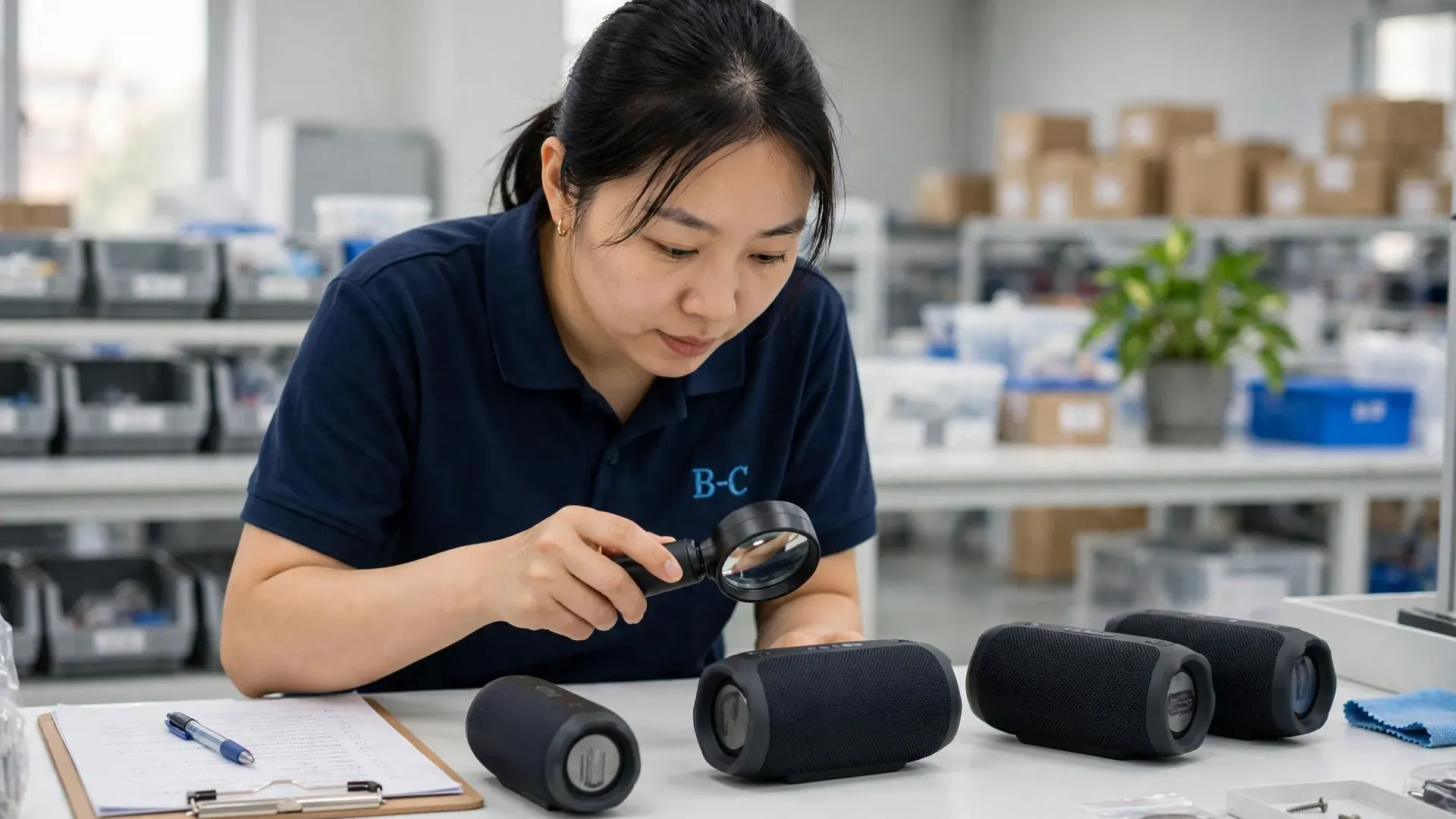
The riskiest weeks of a China order are not the sourcing or the shipping. They are the weeks in between — after you have wired the deposit and before the goods exist in their final form. Most of the defects that surface at a pre-shipment inspection were actually decided much earlier: a material quietly substituted in week one, a component downgraded in week two, a production slot that slipped in week three while the delivery date on your proforma invoice stayed exactly the same.
Buyers who hear from their factory exactly twice — "deposit received" and "goods are ready" — have no chance to catch any of this. By the time a problem is visible, the goods are finished, the vessel is booked, and the only remaining options are expensive ones. This article sets out the alternative: a milestone structure for following an order through production from overseas, what to verify at each checkpoint, and where orders without follow-up most often go wrong.
The five milestones that matter
- Order lock-in (before production starts). Before any material is cut, the order should exist in one written, versioned form: the confirmed specification sheet, the packaging and labelling files, the agreed delivery date — and what that date actually means. "Delivery on the 20th" can mean ex-factory, at the port, or loaded on the vessel; the three can differ by a week. The approved golden sample belongs in this document set too, because every later check is a comparison against it. Orders that skip this step spend the rest of production arguing about what was agreed.
- Raw materials in. This is the highest-value checkpoint of the whole order, and the one buyers almost never verify. Material substitution happens here, not on the production line: a lower fabric grade, a thinner steel, a cheaper resin, bought in bulk before a single unit is made. Once the material is converted into product, the substitution is baked in and a finished-goods inspection can only document it, not undo it. Verification is simple and does not require being in China: dated photographs of the material with the order reference visible, the supplier's material invoices, and certificates where the product category requires them.
- First pieces off the line. The first finished units reveal whether the factory understood the order. Checked against the golden sample — dimensions, finish, function, packaging — they catch misunderstandings while correcting them costs almost nothing. A first-article problem ignored at this stage becomes a full-order problem at the next stage.
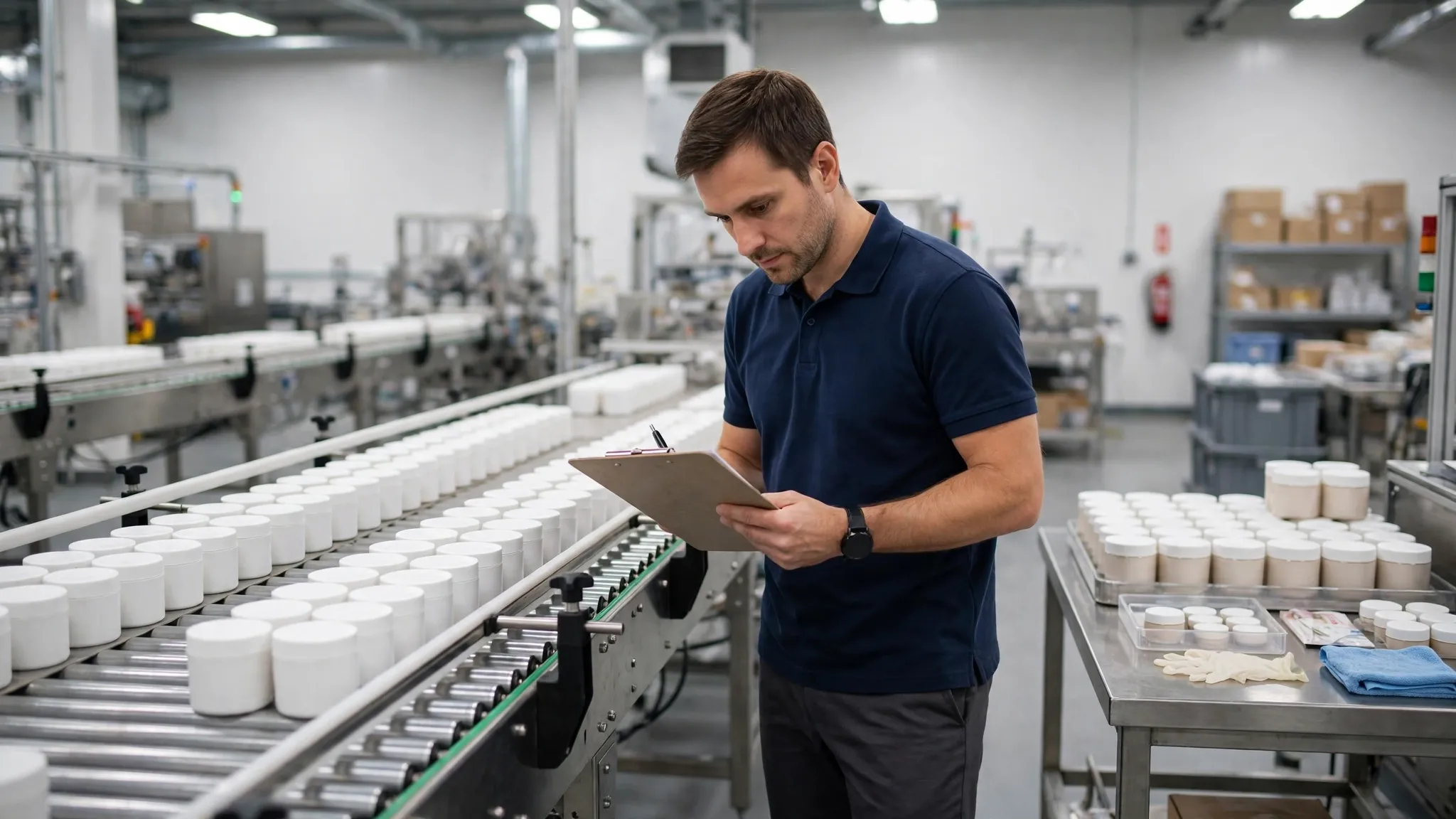
- Mid-production (roughly 30–60% complete). This is the point a during-production inspection exists for. Enough units are finished to judge consistency — not just whether one unit is right, but whether the five-hundredth is the same as the first — and enough time remains to correct drift, re-brief the line, or adjust the schedule honestly. Mid-production is also where a slipping order first becomes provable: if 20% is finished at the halfway date, the promised completion date is fiction, and it is far better to learn that with three weeks to react than with three days.
- Completion and pre-shipment inspection. The final checkpoint: a pre-shipment inspection against your acceptance standard (AQL sampling is the usual framework), packing and labelling verified, quantities counted. In our order structure this milestone carries financial weight — the balance payment is released after the final inspection passes, not before. That single linkage changes factory behaviour more than any amount of messaging, because it makes passing inspection the factory's own interest. We explain the payment structure in detail in our guide to paying Chinese suppliers safely. See setting acceptance limits before inspection.
What a usable milestone update looks like
A milestone on a calendar is only useful if the update attached to it carries evidence, not adjectives. "Production is going smoothly" is not an update. A usable milestone report — whether it comes from the factory, a third-party inspector, or us — contains the same five elements every time:
- The milestone and the date it was verified — not the date it was supposed to happen.
- The quantity state — units finished, units in process, cartons packed, expressed as numbers against the order total.
- The evidence — dated photographs or short video with the order reference in frame, and for material-in, the purchase documents behind the material.
- Exceptions, named specifically — "carton print is one shade darker than the proof, within tolerance, photo attached" is an exception you can decide on; silence is not the same as no exceptions.
- The next checkpoint and its date — so a slip shows up as a moved date in writing, not as a surprise later. If your current updates do not contain these five elements, you are receiving reassurance, not follow-up. The distinction matters because every corrective action in production — re-briefing a line, expediting a material, rebooking a vessel — is triggered by a fact arriving early enough. Milestone discipline is simply the system that makes those facts arrive on a schedule instead of by luck.
Where orders without follow-up actually break
The failure pattern is remarkably consistent across product categories:
- The silent material swap. The quoted material is not the purchased material. It is rarely discoverable from finished goods photographs, and it is the single most common root cause behind "the mass production does not match the sample."
- Spec drift. No single change is announced, but tolerances loosen as the run progresses — stitching density drops, wall thickness thins, a finish step gets shortened. Each unit is almost right; the batch is not.
- The schedule fiction. The delivery date is confirmed every time you ask, right up to the week it is missed. Without a mid-production count, there is no evidence to challenge it, and the missed vessel, peak-season surcharge or stock-out lands on you.
- The reassuring photo. Production photographs that turn out to be from an earlier order, a sample run, or another customer's goods. Any photo without your order reference, packaging, or date evidence in frame proves very little. None of these require a dishonest factory. They require only a busy factory, a distant customer, and no checkpoint between deposit and delivery.
If you follow up yourself: the minimum viable version
You do not need to fly to China to run a basic version of this. Put the milestone calendar in the purchase order itself, with a named deliverable at each step: material evidence at material-in, dated photographs and a short line video at first pieces, a finished-quantity count with photographs at mid-production, and an independent pre-shipment inspection before the balance is paid. Ask for photos with the order number in frame. Treat a missed milestone update the way you would treat a missed payment — raise it the same day, not at the end of the month. This discipline alone removes most of the failure modes above.
Its limit is equally clear: photographs verify what the factory chooses to show. They cannot test a material, measure a tolerance, or count a warehouse of cartons — and a mid-production inspection, by definition, requires someone standing in the factory.
What we do / what we do not do
This is the stage our project-manager follow-up system is built for. After first reply from our customer service team, a named project manager follows each order against the milestone calendar. Our local team goes into the factory at the points where evidence matters — material-in and mid-production — checks against the retained golden sample (one sealed sample stays with us, one with the client, as described in our guide to golden samples and mass production quality), and reports in English with a pass / not-yet / fail judgement per milestone while a problem can still be fixed. The typical arrangement we replace: an agent who forwards the factory's own chat updates to you, translated. Forwarded updates are the factory grading its own homework; milestone verification is someone checking the work itself.
What we cannot do, stated plainly: we cannot guarantee a factory never slips — we can guarantee you learn about a slip at mid-production instead of at the port. We do not station an inspector on the line every day; the system is milestone-based, which is where the evidence is. And follow-up runs both ways: if samples, print files or packaging proofs wait two weeks for your approval, that time comes out of the production schedule, not out of thin air.
Order already placed and gone quiet? Or about to place one? Send us the product, quantity and target delivery date — Get a Factory Quote in 24 Hours — and we will tell you how the milestone plan for that order would look before you commit. If you have not chosen the factory yet, start one step earlier with a Free Supplier Background Check: follow-up protects an order, but it cannot fix the wrong supplier.